Ahmedabad to host IPL final; Mullanpur to stage first two play-offs
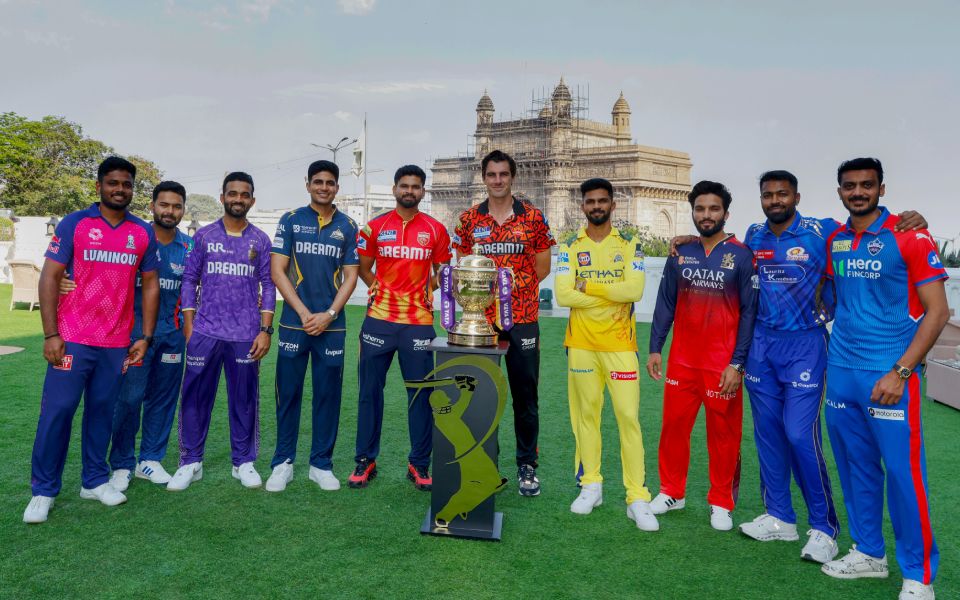
New Delhi, May 20 (PTI): Ahmedabad will host the Indian Premier League's final on June 3 along with Qualifier 2 while Mullanpur will stage the first two play-off games this month, the BCCI announced on Tuesday.
Considering the monsoon, the BCCI has also shifted the May 23 fixture between Royal Challengers Bengaluru and Sunrisers Hyderabad in Bengaluru to Lucknow. The last match at the Chinnaswamy Stadium was washed out.
Hyderabad and Kolkata were supposed to host the play-offs as per the original dates but the IPL schedule had to be revised in the wake of the India-Pakistan military conflict that halted the event for a week.
The BCCI has also taken the monsoon season into consideration before deciding on the venues.
"The new venues for the Playoffs were decided by the IPL Governing Council keeping in mind the weather conditions and other parameters," said the BCCI in a statement.
"Similar to the playoffs stage, an additional one hour will be allocated to the playing conditions for the remaining matches of the league stage, starting Tuesday, 20 May," the statement added.
Qualifier 1 and the Eliminator will take place in Mullanpur on May 29 and 30 while Ahmedabad will stage Qualifier 2 and final on June 1 and 3. Ahmedabad had earlier hosted the IPL final in 2022 and 2023.
Destination ▶ Playoffs
— IndianPremierLeague (@IPL) May 20, 2025
🏟 New Chandigarh
🏟 Ahmedabad
Presenting the 2️⃣ host venues for the #TATAIPL 2025 playoffs 🤩 pic.twitter.com/gpAgSOFuuI
🚨 News 🚨
— IndianPremierLeague (@IPL) May 20, 2025
Schedule for TATA IPL 2025 Playoffs announced.
Additionally, Match no. 65 between #RCB and #SRH shifted to Lucknow from Bengaluru.
🔽 Details | #TATAIPL
Let the Truth be known. If you read VB and like VB, please be a VB Supporter and Help us deliver the Truth to one and all.
Centre spent Rs 76.13 lakh on print media ads for RSS centenary, reveals RTI
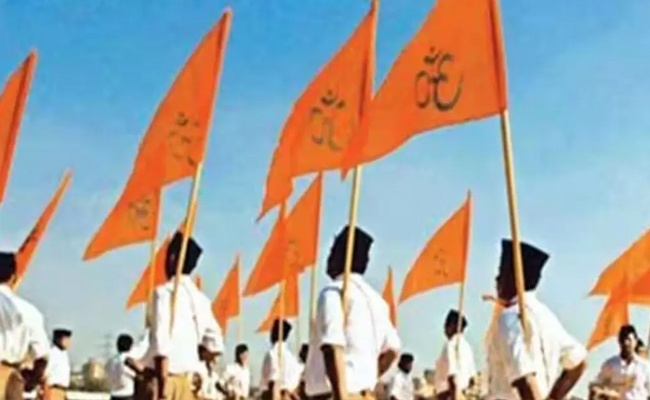
New Delhi: The Union Ministry of Culture allegedly spent Rs 76.13 lakh on print advertisements marking the 100-year celebrations of the Rashtriya Swayamsevak Sangh (RSS), according to a Right to Information (RTI) reply.
The information was sought by RTI activist Ajay Basudev Bose, who filed an application seeking details on expenditure incurred by the ministry for advertisements commemorating the RSS centenary.
Bose shared a picture of the reply from the ministry on his official ‘X’ handle.
“It is informed that an amount of Rs 76,13,129 has been spent on advertisement given in various print media by the Ministry of Culture on the occasion of the completion of 100 years of RSS,” the government’s reply stated.
RTI reply shows Min of Culture Govt of India spent a Whopping Rs 76L,13K,129 on Advertisement in Print Media on occasion of 100 yrs of #RSS
— AJAY Basudev Bose (@AjayBos93388306) April 16, 2026
When Everyone knows RSS is Not Registered & Does not Pay any Tax is it justified to spend Tax Payers Money on such Private event??@RSSorg… pic.twitter.com/dW4IUtdNCg
Bose questioned the expenditure in the post X, “when Everyone knows RSS is Not Registered & Does not Pay any Tax is it justified to spend Tax Payers Money on such Private event??”
Reacting to the development, Karnataka’s IT-BT and Panchayat Raj Minister Priyank Kharge also criticised the spending.
In a post on X, he asked why public money was being used for what he described as a “private ideological project.”
"Modi Sarkar spent Rs 76,13,129 of public money on newspaper advertisements to celebrate 100 years of the RSS. Why is Government spending taxpayers money on an unregistered, non-tax-paying organisation to celebrate their centenary?," he added.
Why is public money being used to serve a private ideological project?
— Priyank Kharge / ಪ್ರಿಯಾಂಕ್ ಖರ್ಗೆ (@PriyankKharge) April 16, 2026
Modi Sarkar spent ₹76,13,129 of public money on newspaper advertisements to celebrate 100 years of the RSS.
Why is Government spending taxpayers money on an unregistered, non-tax-paying organisation to… pic.twitter.com/EoZ6Pim3IM
According to reports, the RSS describes itself as a volunteer-based organisation and has stated that it functions as a body of individuals rather than a registered entity.
Founded by Keshav Baliram Hedgewar in 1925, the organisation is marking its centenary year beginning from Vijaydashami in 2025, with the milestone observed on October 2.