AIFF suspends EC member Deepak Sharma for alleged physical assault of two women players
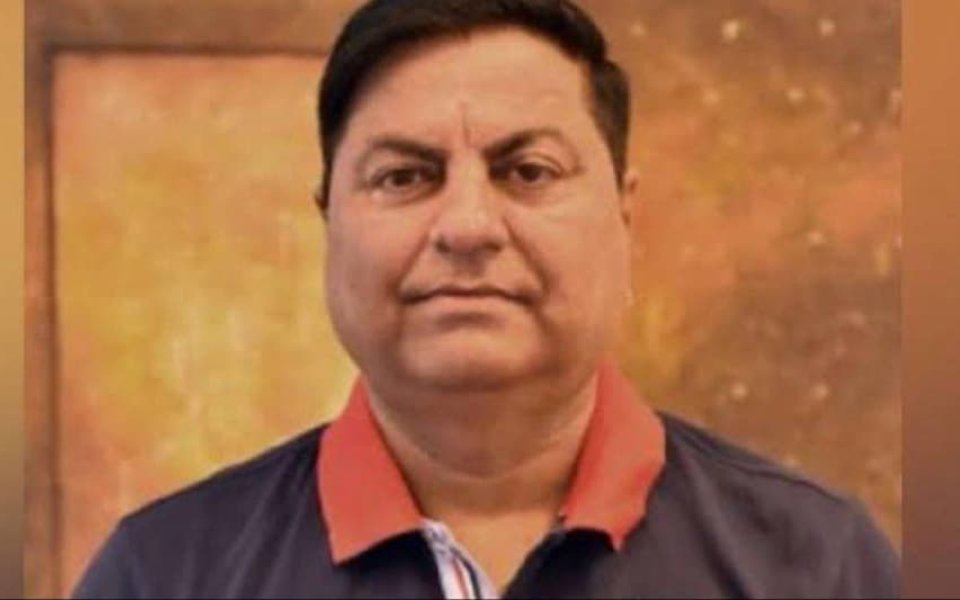
New Delhi, Apr 2: The All India Football Federation (AIFF) on Tuesday suspended its executive committee member Deepak Sharma until further notice for his alleged physical assault of two women players in Goa.
Two footballers of Himachal Pradesh-based Khad FC, taking part in the Indian Women's Football (IWL) League second division, had alleged that Sharma, the owner of the club, had barged into their room and physically assaulted them on the night of March 28.
On Saturday, the AIFF asked Sharma to refrain from football-related activities till the conclusion of a probe by a panel into his alleged incident. Sharma was arrested by Goa police after the host state association lodged a complaint and later released on bail.
"The AIFF Executive Committee has decided to suspend Mr. Deepak Sharma from participating in any football-related activities until further notice," the national federation said in a release.
Before that, the Emergency Committee of the AIFF comprising president Kalyan Chaubey, vice-president N A Haris and treasurer Kipa Ajay, on Monday took stock of the complaints received from the players against Sharma.
Thereafter, a meeting of AIFF member associations was held on Monday night and "Sharma was called and heard for a few minutes before he was advised to leave the meeting".
In the complaint sent to the AIFF, the two players said, according to sources, that Sharma was mostly in an inebriated state and they were "scared for their lives".
Sports Minister Anurag Thakur had also asked the AIFF to take "quick" and "strong legal action" against the official.
On Tuesday, the AIFF also dissolved the three-member committee formed on March 30 to probe the incident, and instead referred the matter to its Disciplinary Committee.
"The AIFF is determined to promote women's football in a safe and enabling environment and will take all necessary steps to ensure this. The case has now been referred to the Disciplinary Committee and will be taken up emergently," Chaubey said.
"The AIFF has taken all steps necessary to ensure the safe passage of the complainants to their hometowns and will continue to provide any support that might be necessary."
He said the AIFF has been at the forefront of development of women's football since he took charge as its president.
"There are currently 27,030 registered women players in the country with 15,293 registered between September 2022 and March 2024. The increase in number of women footballers in various age groups is one of the most encouraging trends," Chaubey said.
"This season, we started the IWL 2 for the first time, and there is a definite plan to introduce promotion and relegation in the IWL from the next season. India made their best-ever finish (runners-up) in Turkish Women's Cup recently and defeated European opponents."
Let the Truth be known. If you read VB and like VB, please be a VB Supporter and Help us deliver the Truth to one and all.
Delhi sizzles at 42.8 deg C, logs hottest day of year so far

New Delhi (PTI): The national capital sweltered on Saturday, recording its highest maximum temperature of the year so far. Several weather stations reported heatwave conditions across the city, even as the IMD has forecast rain from Monday to Wednesday, bringing some hope of respite to Delhiites.
While a yellow alert had been issued for Saturday, a similar alert remains in place for Sunday as well, warning people of isolated heatwave conditions.
On Saturday, Safdarjung, representative of the city's weather, recorded a maximum temperature of 42.8 degrees Celsius, 5.1 degrees above normal and a 0.9-degree rise from the day before, thus fulfilling the criteria for a heatwave.
According to the India Meteorological Department, a heatwave is classified when the maximum temperature is 40 degrees Celsius or above, and it is 4.5 degrees to 6.4 degrees above normal.
This was also the highest maximum recorded in Delhi in the last four years since 2022, when the maximum had reached 43.5 degrees Celsius on April 28, 2022.
Safdarjung recorded a minimum temperature of 25.2 degrees Celsius, 2.5 degrees above normal and a mere 0.7-degree rise from the day before.
Other weather stations also recorded isolated heatwave conditions. Lodhi Road recorded a maximum temperature of 42.6 degrees Celsius, 5.6 degrees above the normal; Ridge recorded a minimum of 44.5 degrees, 6.1 degrees above the normal; and Ayanagar logged a minimum temperature of 43.2 degrees Celsius, 4.8 degrees above the normal.
While the IMD had initially classified Friday as the season's first isolated heat wave, the MeT department later clarified on Saturday that it had been the third consecutive day of a heatwave.
IMD classifies a heatwave when at least two stations have met the required criteria. An IMD official clarified that while Delhi had fulfilled the heatwave condition only in one station on Thursday, the two-step criteria are actually for the entire subdivision of Haryana-Chandigarh-Delhi.
"On Thursday, one station, Rohtak to be specific, of Haryana and Ridge of Delhi, had satisfied heatwave criteria, thus making it the first day. Saturday was the third consecutive day of heat waves," an IMD official said.
Meanwhile, the weather department has issued a yellow alert for Sunday as well. The official added, "These conditions are likely to continue till Sunday.
Under the influence of the setting in of lower tropospheric level easterly winds, the maximum temperature might drop on Tuesday, as forecasts suggest very light rain possible from Monday.
According to forecasts by the MeT department, a spell of very light rain, along with thunderstorms and gusty winds, might bring some respite from Monday to at least Wednesday. The maximum temperature is forecast to fall to 38-40 degrees Celsius by the end of next week.
The minimum temperature is likely to be around 25-27 degrees Celsius for the next couple of days.
The 24-hour average air quality index (AQI) of Delhi stood at 243 (poor) at 4 pm, compared to an AQI of 226 (poor) recorded at the same time on Friday, according to the Central Pollution Control Board (CPCB).
According to CPCB standards, an AQI of 0-50 is considered 'good', 51-100 'satisfactory', 101-200 'moderate', 201-300 'poor', 301-400 'very poor', and 401-500 'severe'.
The Air Quality Early Warning System (AQEWS) for Delhi has forecast the AQI to remain in the poor category over the weekend and then improve to the moderate category in the subsequent days.