Andhra Cricket Association serves show-cause notice to Hanuma Vihari
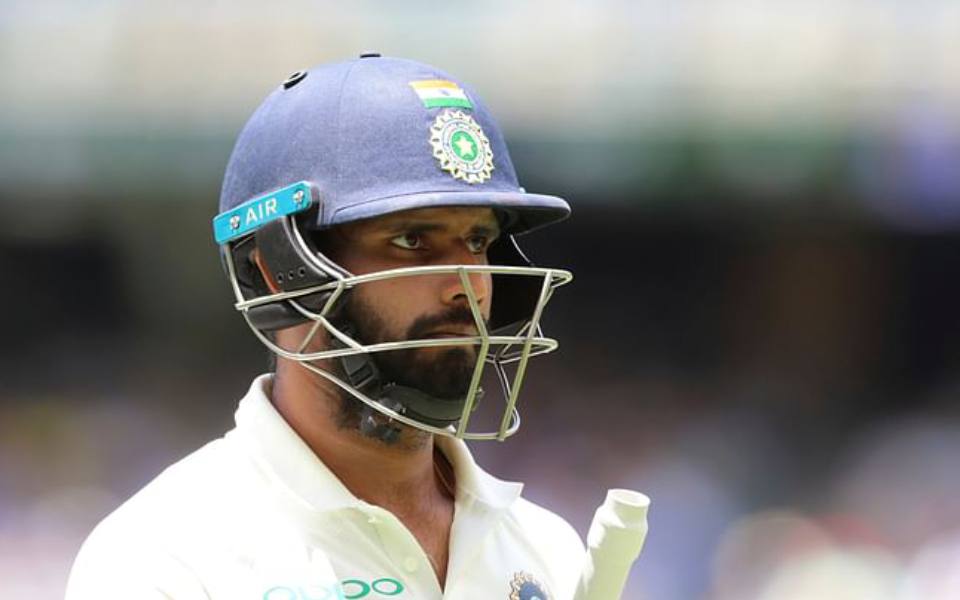
Bengaluru, Mar 28: The Andhra Cricket Association has served a show-cause notice to Hanuma Vihari a month after the India batter accused the governing body of unceremoniously removing him from captaincy and vowed not to play for the state again.
However, Vihari is yet to respond to the notice which was served after the ACA Apex Council meeting a few days ago.
"Yes, we have served him a show-cause notice and we are awaiting his reply," an ACA official told PTI on conditions of anonymity.
However, the official said the association did not want to prolong the issue.
"This is just to find what made him react the way he did last month. He has not reached out to us, so this is a chance for him to come out with his grievances.
"After all, we value Vihari and his contributions to the growth of state cricket as he has played a big part in Andhra going up in the ranks in domestic cricket," he added.
The train of unsavoury incidents began soon after Andhra lost to Madhya Pradesh in this year's Ranji Trophy quarterfinal.
The 30-year-old right-handed batter took to social media to accuse the ACA of stripping him of captaincy right after Andhra's first match of the season against Bengal.
However, at that time Vihari attributed the decision to "personal reasons."
But in his Instagram post, Vihari said the ACA acted under pressure from a local politician after his son, a 17th player during that match, complained that the middle-order batter shouted swear words at him.
"I have decided that I will never play for Andhra where I lost my self-respect," Vihari wrote in his emotional outburst.
Later, Vihari, who played 16 Tests for India, also posted a letter of support from his fellow Andhra players on his X account.
However, KN Prudhuvi Raj, the 17th player during the match against Bengal, also took to social media and lambasted Vihari for making false accusations against him.
"Personal attacks and vulgar language are not acceptable in any kind of human platform. Everyone in the team knows what happened that day," wrote Raj on his Instagram handle.
Let the Truth be known. If you read VB and like VB, please be a VB Supporter and Help us deliver the Truth to one and all.
Bird flu: Karnataka completes 10-day H5N1 surveillance, containment operation
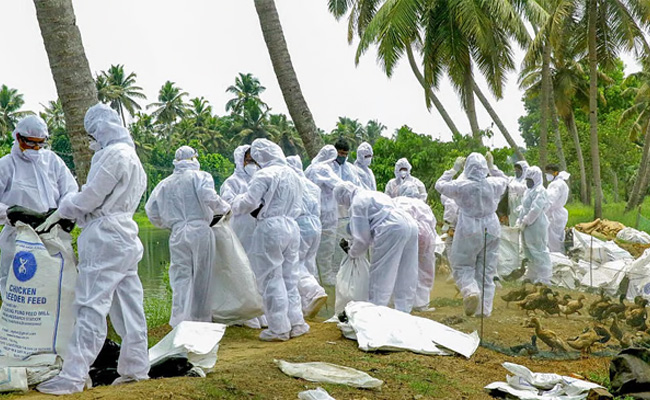
Bengaluru (PTI): The Karnataka government has successfully completed a 10-day intensive surveillance and containment operation following the detection of the H5N1 Avian Influenza outbreak here, officials said on Saturday.
The outbreak was reported in the State Poultry Rearing Training Centre in Mathkuru village, Hesaraghatta, on April 14, they said.
The surveillance was conducted by the Department of Health and Family Welfare of the state government in coordination with the Animal Husbandry and Veterinary Services Department, officials said.
According to an official statement, once the outbreak was confirmed, following laboratory reports from the National Institute of High Security Animal Diseases (NIHSAD-Bhopal), State and District Rapid Response Teams along with Hesaraghatta and Sonnenahalli PHC (Primary Health Centres) teams were immediately deployed.
An infected zone of 0-3 km and a surveillance zone of 3-10 km radius was established. The Department of Animal Husbandry and Veterinary Services, culled all the birds and safely disposed of eggs and of contaminated feed, adhering to national and international biosecurity protocols, it said.
The health department said the surveillance zone from the infective focus in the 10 km radius, a total population of 28,172 across 22 villages was surveyed from day 1 to day 10. Multiple rounds of surveillance were conducted and sanitation activities were completed as per protocol.
During the surveillance period, nasopharyngeal samples collected from all quarantined staff on Day 5, sent to NIV-Bengaluru, were found to be negative for H5N1, it said.
On day 10, nasopharyngeal samples were collected and the results are awaited. No human case of H5N1 infection has been detected in the infected or surveillance zones, the health officials said.
"All healthcare facilities in Bengaluru have been instructed to continue ILI/SARI (Influenza-Like Illness/Severe Acute Respiratory Infection) case surveillance, and ensure adequate stocks of PPE, triple-layer medical masks, oseltamivir, viral transport medium, and throat swab kits," it said.
The Department of Animal Husbandry and Veterinary Services issued a Sanitization Certificate on April 21, officials said.
"No poultry activity will be undertaken for a period of 90 days as a precautionary measure. During the three months of surveillance, the entire area of the farm will be repeatedly disinfected by fumigation (indoors) or sprays (open place) every 15 days," it further stated.
The public has been advised to avoid handling or consuming meat or eggs from sick or dead poultry and report sightings of sick or dead birds promptly to local veterinary or health authorities.
Ensure poultry meat and eggs are thoroughly cooked before consumption, as proper cooking effectively inactivates the virus, they said.
"The public is advised to follow official health advisories and avoid spreading unverified information," the department added.