Another Pujara master-class gives India day 1 honours at SCG
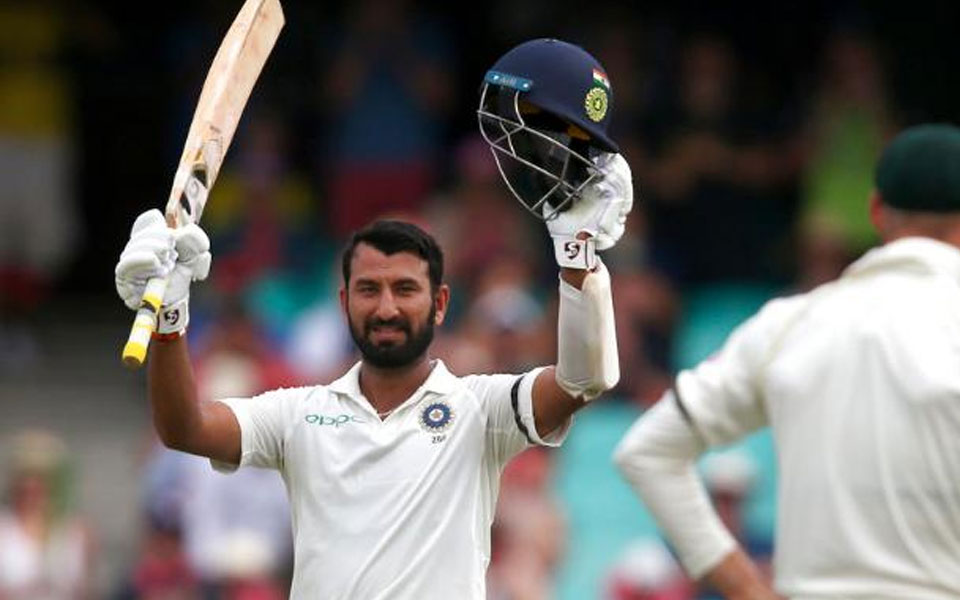
Sydney, Jan 3 : Cheteshwar Pujara played the anchor's role yet again with his third masterful hundred of the series, helping India dominate Australia on the opening day of the fourth and final Test here.
Leading 2-1 after the 137-run win in the Melbourne Test, India made a strong start by ending at 303/4 in 90 overs on Thursday. Opener Mayank Agarwal was another solid performer, continuing his good form with a 77-run knock.
At stumps, Pujara (130) and Hanuma Vihari (39) were holding fort for the visiting side, which is in pursuit of a maiden Test series triumph on Australian soil. Virat Kohli's men have already secured the Border-Gavaskar Trophy with their unassailable lead.
At the Sydney Cricket Ground, Pujara faced 250 balls, hitting 16 of them for fours, and added 75 runs for the unbeaten fifth wicket stand with Vihari.
Post tea, Australia were able to make a quick breakthrough as Virat Kohli (23) was caught down leg. They had consistently bowled towards the leg-stump against the Indian skipper, cramping him for room and the ploy worked as he gloved behind off Josh Hazlewood (2-51) in the first over after the break.
It brought Ajinkya Rahane (18) to the crease, who faced the same tactic. Cramping the batsmen for room, the hosts were able to put a check on the scoring rate as only 36 runs came in the first hour of play after tea.
Unlike his counter-attacking style in the first three Tests, Rahane was subdued on this occasion as he looked to settle down. But Mitchell Starc (1-75) had him caught behind in the 71st over with a sharp-rising unplayable bouncer.
India crossed 200 in the 63rd over, but needed a partnership at this juncture. Vihari proved to be a handy partner for Pujara as the duo put on 50 runs in 72 balls.
Vihari kept the scoreboard ticking with minimum fuss, batting at a strike-rate of 67.2.
He took pressure off Pujara at the other end, who was solid as ever, and celebrated his 18th Test hundred off 199 balls. In doing so, he went past 438 runs against England in 2012-13 as the most he had scored previously in a Test series.
This was also the fourth time he faced 200-plus deliveries in the current series, going past Sunil Gavaskar's record of three such instances back in 1977-78.
Earlier, Pujara put on 54 runs with Kohli as India reached 177-2 at tea. Post lunch, Agarwal and Pujara continued their second-wicket partnership to 116 runs. The duo put on an attacking show after the break, with their 100-run stand coming off 178 balls.
Agarwal reached his second Test half-century off 96 balls, inclusive of two sixes against Nathan Lyon (1-88) as the two batsmen rotated strike well and kept the scoreboard ticking.
India were scoring at a run-a-minute at one stage before drinks, as 64 runs came in the first hour of play after lunch.
Agarwal looked good for a hundred but threw it away when he holed out in the deep off Lyon in the 34th over and walked back shaking his head at an unnecessary shot.
Kohli then walked out to boos for the fourth Test running, but got going immediately with an immaculate cover drive. Australia resorted to more conservative bowling and kept his scoring rate in check.
But they had no response to Pujara's grounding knock again, albeit with a different pace. Another 44 runs were added in the second hour of play, with Pujara reaching his half-century off 134 balls, including three fours in an over from leg spinner Marnus Labuschagne (0-25) before the tea break.
In the morning, India were placed at 69-1 at lunch. This was after India won the toss and opted to bat. R Ashwin didn't pass the fitness test and was ruled out of this match. The visitors then made two changes, with KL Rahul and Kuldeep Yadav coming in for Rohit Sharma and Ishant Sharma.
Australia too made two changes with Peter Handscomb and Marnus Labuschagne replacing Aaron Finch and Mitchell Marsh.
Things didn't change much for Rahul (9) despite missing the Melbourne Test, as he edged twice in the first four balls faced only for the ball to go to the boundary.
He didn't last long however, edging Hazlewood to first slip in the second over, and his nightmare run on this tour continued.
This was the sixth opening pairing for India in 12 overseas Tests since January 2018, and only averages 21.56 in 23 overseas innings.
At the other end, Agarwal settled down and stroked a couple of cover drives. He looked solid in comparison to his Karnataka teammate and along with Pujara, drove the Indian run-rate forward.
In a series where low scoring has been the norm, India were scoring at 4.29 per over in the first hour as they reached 46-1 at drinks. India crossed 50 shortly thereafter, with the duo bringing on their 50-partnership off 104 balls.
Australia lost a DRS review in the 15th over, when Hazlewood had a loud shout against Pujara turned down. There was nothing on the snickometer with the ball coming off the batsman's thighs.
The hosts then resorted to run-saving tactics once again, and moved to a shorter length, targeting the batsmen's bodies. Pujara was hit a couple of times, once on the head.
Let the Truth be known. If you read VB and like VB, please be a VB Supporter and Help us deliver the Truth to one and all.
BJP to retain Assam, win Bengal; NDA to emerge strong in TN, Kerala, Pondy: Pradhan
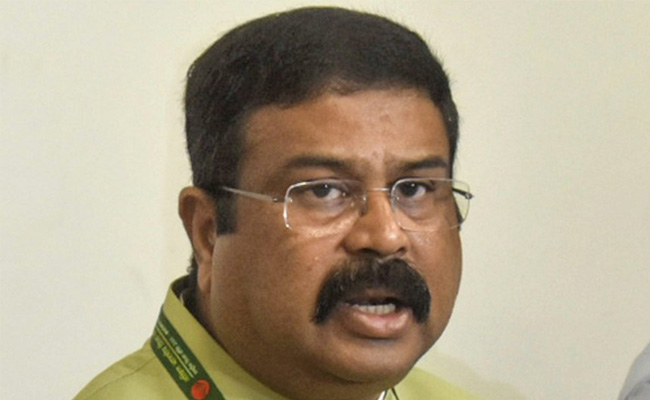
Bengaluru (PTI): Union Minister Dharmendra Pradhan on Thursday said the BJP would retain power in Assam, while expressing confidence that there would be a change of government in West Bengal, citing people’s continued faith in PM Narendra Modi and the party.
Asserting that NDA is likely to return to power in the union territory of Puducherry, he expressed confidence that the BJP-led alliance would emerge strongly in Kerala and Tamil Nadu.
The counting of votes for all five Assemblies—West Bengal, Tamil Nadu, Puducherry, Kerala, and Assam—will take place on May 4.
Polls were conducted in a single phase in Assam, Kerala, Puducherry, and Tamil Nadu, while West Bengal saw two phases of polling on April 23 and 29.
On April 9, Assam, Kerala, and Puducherry went to the polls, while Tamil Nadu voted on April 23.
“Beyond exit polls, all of us who worked in the election campaign this time in the five states (four states and one union territory) are confident that the BJP will retain power in Assam and that, for the first time in a long period, West Bengal is heading for a major change,” Pradhan said.
Speaking to reporters, the union education minister said there is significant anti-incumbency against the TMC government in West Bengal due to alleged misgovernance, appeasement politics, and corruption.
“The people of West Bengal are reposing their faith in the leadership of Prime Minister Narendra Modi, the policies of the BJP and the leadership of the state BJP. I am confident there will be a change of government in West Bengal,” he added.
Pradhan said that, in all probability, the NDA (All India N R Congress–BJP alliance) will retain power in Puducherry.
“In Kerala and Tamil Nadu, I think we are all confident that our alliance will emerge strongly,” he added.
Several exit polls on Wednesday predicted a thumping victory for the BJP in Assam and a clear edge for the party over the ruling TMC in West Bengal, while projecting a return of the DMK government in Tamil Nadu and a comeback by the Congress-led UDF in Kerala after 10 years.
However, some pollsters predicted a big win for the TMC in West Bengal and a hung House in Tamil Nadu, with actor-turned-politician Vijay’s TVK emerging as a spoiler for the DMK. Almost all forecasts indicated a return to power for the AINRC-led NDA government in Puducherry.