Arjun-Arvind rowing pair wins silver; coxed-eight team too comes in second
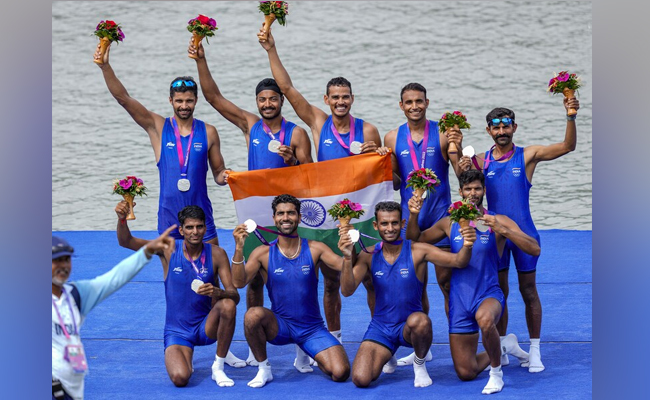
Hangzhou (PTI): Indian rowers powered their way to two silver and a bronze medal, launching their campaign in the Asian Games on a rollicking note here on Sunday.
On a pleasant morning with the conditions just perfect for rowing at the Fuyang Water Sports Centre, Arjun Lal Jat and Arvind Singh opened the country's account with a silver medal in the men's lightweight doubles sculls event.
The Indian duo clocked 6:28.18s to finish behind China's Junjie Fan and Man Sun, who won gold with 6:23.16s.
The Uzbekistan pair of Shakhzod Nurmatov and Sobirjon Safaroliyev bagged the bronze clocking 6:33.42s.
The silver was just the preview of the things to come as the gruelling men's coxed eight event saw a keen tussle between China and India before the latter finished second with a time of 5:43.01s, which was 2.84s behind the host team, which clocked 5:40.17.
The Indian men's coxed-eight team comprised Neeraj, Nareskh Kalwaniya, Neetish Kumar, Charanjeet Singh, Jaswinder Singh, Bheem Singh, Puneet Kumar and Ashish.
Indonesia, who clocked a time of 5:45.51s were third.
The achievement is all the more creditable given that rowers from powerhouse Uzbekistan and Japan finished fourth and fifth respectively.
In the coxless pair event, India Babulal Yadav and Lekh Ram had to settle for bronze with a time of 6:50.41 sec, behind gold medallists Hong Kong, China (6:44.20 sec) and Uzbekistan 6:48.11.
India has sent a huge contingent of 33 rowers at the continental games.
Arvind, following his exploits in lightweight doubles sculls, said the pair was aiming for gold but an injury setback two months back had hampered training.
"We missed training for 20 to 25 days as I was having lower-back pain two months back. Otherwise, we would have won the gold medal," said Arvind.
He added that their next target will be to aim for glory at the 2024 Paris Olympics.
"We will now work for the Paris Olympics and then try to win gold at the 2026 Asian Games."
Arvind credited his quick recovery to his physiotherapist.
"I did recovery-related exercises and our physiotherapist prepared me very well to regain strength. He helped me recover in one month," added Arvind.
His team-mate Arjun too said that they had the gold medal on their mind when they started the race.
"Gold was the target but we did our best. Our coach told us to just do our best. We could not do our (personal) best of 6:19, which we did at our Army nodal centre in Pune," said Arjun.
On the reason they fell back after taking a sizeable lead around the 500m mark, Arjun said, "We pushed hard and did our best today."
Let the Truth be known. If you read VB and like VB, please be a VB Supporter and Help us deliver the Truth to one and all.
Allahabad HC orders probe into 'reinstatement' of teacher in UP's Barabanki
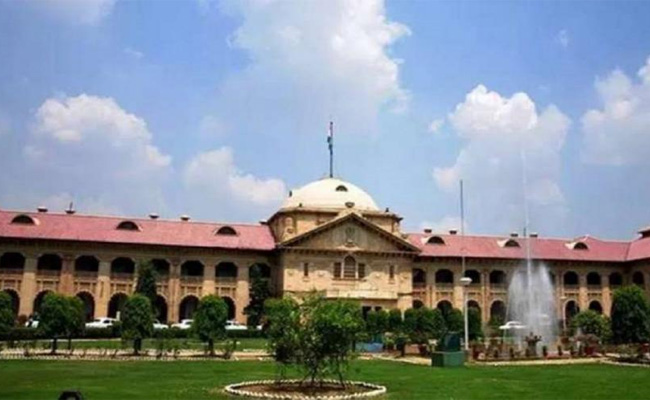
Lucknow (PTI): The Lucknow Bench of the Allahabad High Court on Friday ordered a probe by the special task force (STF) into alleged irregularities in the rejoining of a teacher at City Intermediate College in Barabanki, observing that the reinstatement appeared to be prima facie illegal.
The court also directed the recovery of the salary paid to the teacher during the disputed period.
A bench of Justice Rajeev Singh passed the order on a petition filed by the college management committee. The court expressed doubts over the roles of the District Inspector of Schools (DIOS), Barabanki, the college principal and the teacher concerned and hence, directed a detailed inquiry into the matter.
Taking note of alleged manipulation of records and misleading submissions, the court ordered the immediate transfer of the Barabanki DIOS to ensure a fair probe. It also directed the initiation of disciplinary proceedings against the then joint director of education of the Ayodhya division.
In its order, the court found that the teacher, Abhay Kumar, was initially appointed as an assistant teacher in 2018 but joined an Eklavya Model Residential School in Chhattisgarh as a lecturer in June 2024 without obtaining permission from the management. His subsequent request to retain the lien was rejected.
Despite this, he was allowed to rejoin the Barabanki College in September 2025 on the directions of the joint director of education and the DIOS, and was even paid the salary for October 2025. The court termed the rejoining "wholly illegal" and lacking any legal basis.
The bench also expressed concern over lapses in communication within the education department and directed the Uttar Pradesh chief secretary to ensure that official orders are communicated through email and WhatsApp as well, to prevent disputes.
The matter is next listed for hearing on May 28 when a compliance report is sought.