Ashwin bats for "disallowing" run where non-striker backs up too far
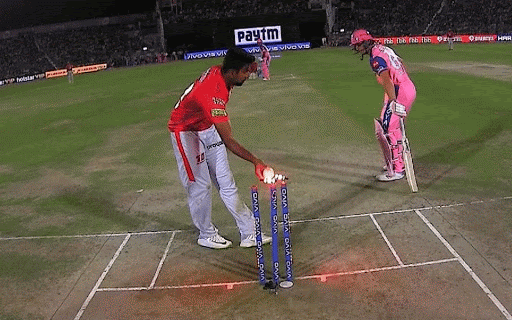
New Delhi: India's premier spinner Ravichandran Ashwin wants technology to be used to track the batsman at the non-striker's end who is backing up too far, which he believes is an unfair advantage for the batting side.
He has always been consistent about his stand and suggested that the technology used to check front foot no balls can be also used to keep a tab on non-strikers backing up even before the bowler reaches the popping crease.
"Just hope that technology will see if a batsmen is backing up before the bowler bowls a ball and disallow the runs of that ball every time the batter does so!! Thus, parity will be restored as far as the front line is concerned," Ashwin put forth his view point on a series of tweets.
Ashwin has been one of the big advocates of "Mankading" and his dismissal of Jos Buttler during Kings XI Punkab's IPL encounter against Rajasthan Royals grabbed headlines last year.
"Many of you will not be able to see the grave disaparity here, so let me take some time out to clarify to the best of my abilities.
"If the non-striker backs up 2 feet and manages to come back for a 2, he will put the same batsmen on strike for the next ball," he said.
"Putting the same batsmen on strike might cost me a 4 or a 6 from the next ball and eventually cost me 7 more runs instead of may be a 1 and a dot ball possibility at a different batsmen. The same will mean massively for a batter wanting to get off strike even in a Test match," he explained elaborately.
For Ashwin, its all about restoring the balance between bat and ball in a game that is loaded heavily in favour of willow wielders.
"It is time to restore the balance in what is an increasingly tough environment for the bowlers," he said.
Technology won't be a hindrance, feels Ashwin.
"We can use the same tech that we are proposing for a no ball check 120 balls in a T20 game," said Ashwin.
Let the Truth be known. If you read VB and like VB, please be a VB Supporter and Help us deliver the Truth to one and all.
Bengaluru: KAS officer, driver caught in Rs 30 lakh bribe case
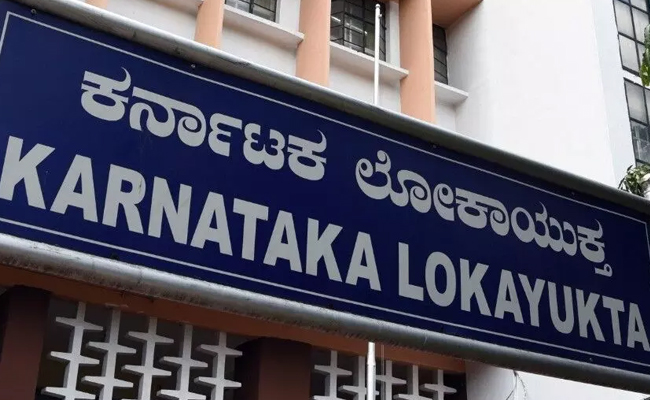
Bengaluru: Lokayukta police have arrested a KAS officer and his driver for allegedly demanding and accepting a Rs 30 lakh bribe to pass a favourable order in a pending RRT case.
The accused have been identified as Nagaprashanth (KAS), serving as Special Assistant Commissioner (North) and Special Land Acquisition Officer-1, KIADB, and Kumar, a driver associated with his office, Deccan Herald reported.
Based on a complaint by Ravi Kumar, a resident of Attur in Yelahanka, Lokayukta team laid a trap.
According to investigators, the accused had demanded Rs 30 lakh, of which Rs 15 lakh was allegedly collected earlier by the driver on the officer’s instructions.
On Wednesday, the driver was caught red-handed while accepting the remaining Rs 15 lakh, leading to the arrest of both him and the officer.
Both accused have been taken into custody, and further investigation is underway.