Ashwin replaces Anderson as No.1 ranked Test bowler
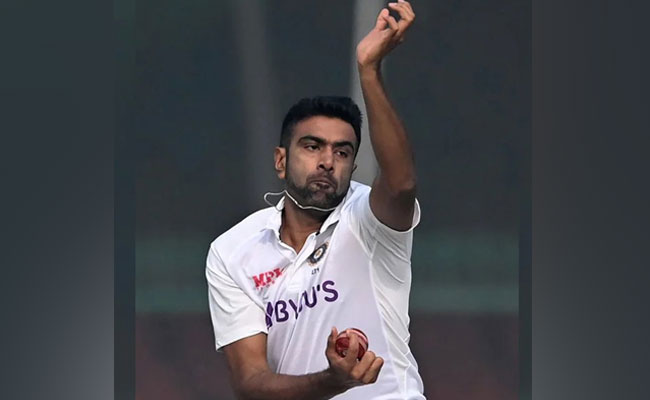
Dubai(PTI): Veteran Indian off-spinner Ravichandran Ashwin on Wednesday jumped to the top of the latest ICC Men's Test Bowling Rankings, replacing England pacer James Anderson.
Ashwin claimed the top spot after taking six wickets in India's emphatic victory over Australia in the second Test in New Delhi.
Anderson dropped to second place after England's stunning loss to New Zealand in the Wellington Test.
The 36-year-old Ashwin first claimed the top honour among Test bowlers in 2015, and has returned to the top spot on several occasions since then.
Ashwin bagged big wickets in India's win in Dehli, removing Marnus Labuschagne and Steve Smith in the same over of the first innings before returning to pick up Alex Carey for a duck.
The off-spinner was at it again in the second innings, picking up three of the top five while his spin-bowling accomplice Ravindra Jadeja rattled through the rest of the Australia batters from the other end.
Ashwin has an opportunity to extend his latest stay in the No.1 spot in India's remaining two Tests on home soil in the ongoing Border-Gavaskar Trophy
Ashwin is the third No.1 Test bowler in as many weeks, after Anderson replaced Australia captain Pat Cummins at the summit last time around. The trio continue to make up the top three bowlers in the latest rankings.
Anderson is now five rating points behind Ashwin, who remains on 864 points.
Jadeja's 10 wickets in the second Test against Australia also sees him move up the bowling rankings into eighth spot,
Jadeja and Ashwin occupy the top two positions in Test All-Rounder Rankings.
England's Joe Root is the other big mover in the all-rounder rankings, up two spots to eighth.
Root's return to top form in Wellington also sees him leapfrog Travis Head and Babar Azam into third position in the MRF Tyres ICC Test Batting Rankings.
Marnus Labuschagne and Steve Smith remain first and second respectively among Test batters.
New Zealander Tom Blundell is a new arrival in the top 10, rising four places to seventh after he helped the Black Caps to their famous follow-on victory by one run in the second Test against England.
England young gun Harry Brook continues his meteoric rise up the batting rankings after another superb century, climbing 15 places to draw level with Virat Kohli in 16th.
Let the Truth be known. If you read VB and like VB, please be a VB Supporter and Help us deliver the Truth to one and all.
T'gana RTC strike: Talks between govt, employees successful

Hyderabad (PTI): Talks between employees of Telangana State Road Transport Corporation (RTC) who were on strike and the state government concluded successfully on Friday as the government agreed to the key demands of the workmen.
Following a day-long marathon of talks between the leaders of the employees' Joint Action Committee (JAC) and the cabinet sub-committee, the government announced after midnight that it acceded to the demands, including a merger of RTC with the government, 11 per cent pay revision and elections to the employees' unions.
A committee comprising officials and employee leaders would be appointed over the merger of RTC with the government, it said.
The RTC management has also agreed to address the remaining issues as well, an official release said.
The employees would call off their strike and the RTC buses would hit the roads shortly, it said.
The employees had been on an indefinite strike since April 22 over a series of demands, including the merger of RTC with the government.
Earlier in the day, a driver of the RTC, who attempted suicide on April 23 during the strike, died at a hospital here in the early hours of Friday.
Shankar Goud, a 55-year-old driver, set himself ablaze by pouring petrol at Narsampet in Warangal district when the employees were staging a protest on Thursday in support of their demands.
Goud suffered serious burns, was initially admitted to a state-run hospital in Warangal, and later shifted to a super-speciality hospital in Hyderabad for advanced treatment.
"He succumbed (to injuries) at about 1.30 am on Friday," a senior official said.
The driver’s body was taken to his relative’s village, Muttojipet in Warangal district, for funeral rites.
Tension prevailed in Muttojipet as his family members and RTC employees attempted to take the body to the Narsampet bus station, where he worked, to enable his colleagues to pay their last respects. However, police did not permit this, citing law-and-order concerns.
This led to a deadlock before the funeral could proceed.
Union Minister Bandi Sanjay Kumar criticised the Telangana government for not allowing the body to be taken to the Narsampet bus station.
Kumar, Minister of State (Home), visited Muttojipet village in Warangal district, where the funeral was held, and paid homage to Goud.
“They (family members) want to take the body to the bus depot for five minutes. Is the RTC bus depot in Pakistan or Bangladesh? They are emotionally attached to taking the body there. The government is hurting sentiments and creating fear among RTC employees,” Kumar told reporters.
He also expressed anger at the police for not allowing the body to be taken to the bus station and staged a protest, according to a release from his office.
RTC employees and BJP workers attempted to take the mortal remains in an ambulance to Narsampet, but were stopped by the police.
Later, after discussions with the police, the family members and RTC employees agreed to conduct the funeral in the village.
Sanjay Kumar, stating he would abide by the family’s decision, left the village after the funeral was conducted there.
Transport Minister Ponnam Prabhakar said an ex gratia of Rs 10 lakh, a house, and a government job would be provided to the kin of Goud.
Chief Minister A Revanth Reddy expressed shock over the employee’s death and conveyed deep condolences to the grieving family, according to the release.
The RTC employees’ JAC had earlier announced an agitation programme from April 24 to 29, including silent marches and submission of memorandums to MLAs and other leaders.