Asia Cup T20: India meet Pakistan on August 28, minimum two games assured between arch-rivals
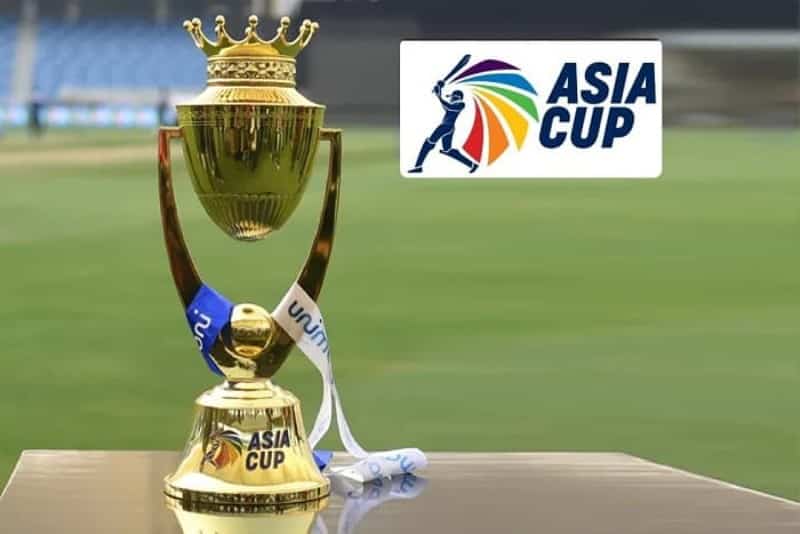
Dubai, Aug 2: India will start their campaign against arch-rivals Pakistan in the Asia Cup T20 here on August 28, Asian Cricket Council (ACC) president Jay Shah announced on Tuesday.
The squad that India will choose for the Asia Cup will effectively be the core group that will compete in the T20 World Cup in Australia unless there are injury related pull-outs.
BCCI secretary Shah, who also heads the continental body released the fixture of the tournament, which has been shifted out of Sri Lanka due to prevailing political and economic crisis in the island nation.
"The wait is finally over as the battle for Asian supremacy commences on 27th August with the all-important final on 11th September. The 15th edition of the Asia Cup will serve as ideal preparation ahead of the ICC T20 World Cup," Shah tweeted while releasing the fixture.
Asia Cup format is always dependant on which format's global event is round the corner and hence this time, it is a T20 event. Next year's Asia cup will be an ODI event.
Group A will comprise of India, Pakistan and a Qualifier (yet to be decided) while group B has Sri lanka, Bangladesh and Afghanistan.
The Indo-Pak matches are the main attraction of the tournament and expectedly the ACC has ensured at least two such matches. If the two teams reach the final, it will extend to three games.
India and Pakistan are expected to finish in top two after the league stage matches. That gives the teams another shot at each other in the 'Super 4's' stage. The top two teams then will qualify for the final on September 11 in Dubai.
There are 13 matches in all and 10 will be held in Dubai while three matches will be held in Sharjah.
Group A: India, Pakistan, Qualifier (TBD)
Group B: Sri Lanka, Bangladesh, Afghanistan
Fixtures:
Sat, Aug 27: Sri Lanka vs Afghanistan (Dubai)
Sun, Aug 28: India vs Pakistan (Dubai)
Tue, Aug 30: Bangladesh vs Afghanistan (Sharjah)
Wed, Aug 31: India vs Qualifier (Dubai)
Thu, Sep 1 : Sri Lanka vs Bangladesh (Dubai)
Fri, Sep 2 : Pakistan vs Qualifier (Sharjah)
Super Fours
Sat, Sep 3: B1 vs B2 (Sharjah)
Sun, Sep 4: A1 vs A2 (Dubai)
Tue, Sep 6 : A1 vs B1 (Dubai)
Wed, Sep 7: A2 vs B2 (Dubai)
Thu, Sep 8: A1 vs B2 (Dubai)
Fri, Sep 9: b1 vs A2 (Dubai)
Sun, Sep 11: Final (Dubai).
Let the Truth be known. If you read VB and like VB, please be a VB Supporter and Help us deliver the Truth to one and all.
Nashik court sends ‘godman’ Kharat to 3-day police custody in 7th sexual exploitation case
Nashik (PTI): A court in Maharashtra's Nashik has remanded self-styled astrologer-cum-godman Ashok Kharat to police custody till April 29 in the seventh case of sexual exploitation registered against him.
Kharat, a former Merchant Navy officer arrested on March 18, is accused of sexually exploiting several women and indulging in large-scale financial fraud by claiming to have divine powers and knowledge of black magic.
In the seventh case, Kharat sexually exploited a married woman who had approached him in search of solutions to her family problems.
ALSO READ: ED cracks down on suspected interstate liquor racket, raids 9 sites in Arunachal
The accused allegedly gave the woman something to drink, sexually assaulted her while her husband sat outside his office and threatened to kill her if she told anyone about it.
The Special Investigation Team (SIT), which is probing into 12 cases of sexual exploitation and financial fraud registered against Kharat in Nashik and Ahilyanagar districts, on Sunday filed a request application in the court demanding his custody in the seventh case.
Kharat was produced in court for a virtual hearing in the seventh case on Monday.
The prosecution demanded six-day police custody for Kharat, citing the discovery of a locker in Kharat's house during the investigation, from which the police recovered two blank cheques and other documents, all of which have to be probed.
The court agreed to the prosecution's demand and remanded Kharat to three-day police custody till April 29 in the case.
Kharat has been at the centre of a political firestorm, as he was well-connected, and photographs of him with political leaders and other important members of society have been surfacing in mainstream and social media since his arrest.