Australia foil RoKo show to etch seven-wicket win over India in 1st ODI
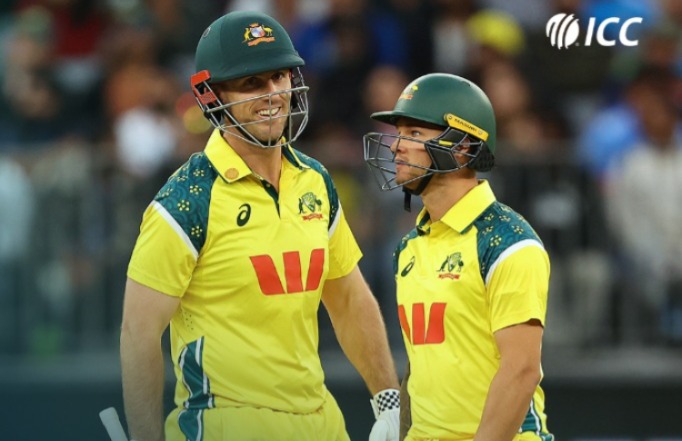
Perth (PTI): The grand comeback party of Virat Kohli and Rohit Sharma endured a quick 22-ball ending, and their lowkey outing reflected in India’s seven-wicket defeat against Australia in the rain-affected first ODI here on Sunday.
Asked to bat first, India laboured to a sub-par 136 for 9, after the match was revised to 26 overs for a side courtesy several rain interruptions, leaving the hosts to chase a DLS target of 131, which they duly reached in 21.1 overs.
Travis Head fell to Arshdeep Singh early, slashing the left-arm pacer to Harshit Rana at deep third man, and Matthew Short too walked back without any significant contribution.
But skipper and local man Mitchell Marsh (46 not out, 52 balls) used his brute power to keep Australia ahead of the curve with a crucial 55-run partnership with Josh Philippe (37, 29b).
The Indian pacers — Arshdeep, Mohammad Siraj and Harshit Rana — could not replicate the control of their Australian counterparts, offering plenty of freebies to the hosts’ batters.
Marsh fed on them with glee, crunching a six each of all three. An inside-out smash off Siraj over covers was the highlight.
Philippe gave his captain ample support with a busy knock, and his dismissal was a minor irritant in Australia’s march, which culminated in them taking 1-0 lead in the three-match series.
No Ro-Ko show
Earlier, India were robbed of the momentum by the constant weather interventions and relentless Australian new ball bowlers, except when KL Rahul (38, 30 balls) was in the middle.
But before the skies opened up on several occasions, Australian bowlers used the extra bounce on the Optus Stadium pitch to get rid of two old foes. Rohit (8), who was also playing his 500th match for India, walked in alongside new captain Shubman Gill to loud cheers from the Perth crowd, but his stay was snapped after just 14 balls.
Rohit played a sumptuous straight drive off Mitchell Starc, which offered a heady time ride back to the glory days.
But that was it for the day for the Mumbai man, as Josh Hazlewood's ability to find steep bounce from the quarter length ended his tenure. The ever-rising ball kissed the sticker of Rohit’s bat and travelled to debutant Matthew Renshaw at second slip.
Kohli walked in amid even louder cheer, but the familiar ODI greatness was nowhere to be seen. In a pre-match chat, Kohli had detailed how Australia had often brought the best out of him as a batter.
But on this instance, Starc elicited the worst out of Kohli — first through a habitual prod outside the off-stump. It eventually consumed Kohli. A drive on the up off the left-arm pacer took the edge of his bat and Cooper Connolly at backward point snaffled a wonderful catch to curtail Kohli's agonising eight-ball innings.
It was Kohli's first duck in Australia. Now, the veterans need something substantial in the subsequent ODIs at Adelaide and Sydney to convince the powers that be of their fire for a longer journey.
Unlike his senior colleagues, skipper Gill looked assured but a rather casual attempt to flick Nathan Ellis resulted in a down the leg side catch to wicketkeeper Philippe.
Vice-captain Shreyas Iyer perished in the same way. Hazlewood strangled him for space with a bouncer on ribcage that Iyer gloved to Philippe as India slid to 45 for four in the 14th over.
Finally, India found their wheels moving through a 39-run fifth-wicket alliance between Axar Patel (31) and Rahul before the former fell to spinner Matthew Kuhnemann. Rahul was quite impressive in his knock, dealing with the bounce effectively while getting on top of the ball nicely.
The straight drive and pull off Ellis off successive balls for fours were from the top draw. Rahul slipped into overdrive once spinners were introduced, and slammed Matthew Short for two sixes in a row.
Rahul and Washington Sundar added 30 runs for the sixth wicket. But the limited number of overs and late flurry of wickets affected India's acceleration in the backend.
Let the Truth be known. If you read VB and like VB, please be a VB Supporter and Help us deliver the Truth to one and all.
CBSE announces results for Class 10 board exams
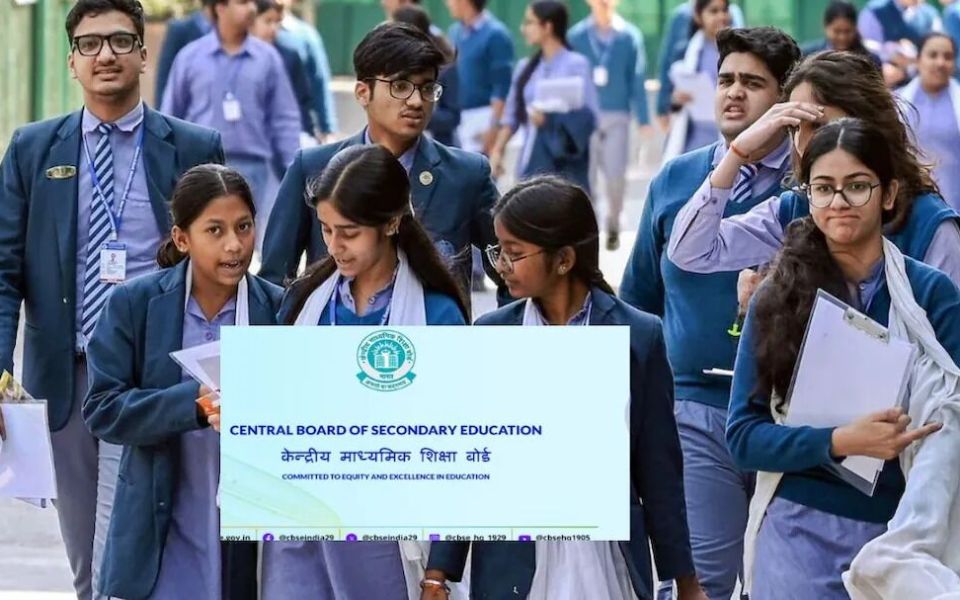
New Delhi (PTI): The Central Board of Secondary Education (CBSE) on Wednesday announced results for Class 10 board exams, officials said.
"The results have been declared," a senior board official said.
The CBSE started with two editions of board exams for Class 10 from this year. It was mandatory for students to appear in the first edition, the results of which have been declared.