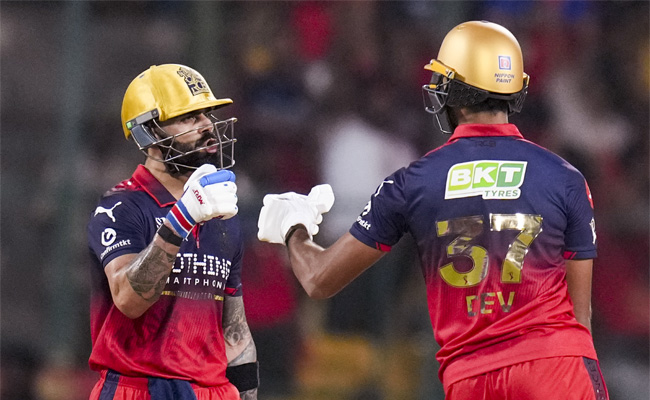
India ensure second WTC final berth, on verge of series win as Australia reach 158/2 at tea

Ahmedabad (PTI): India enjoyed some eventful gains on an uneventful day of cricket as they made the World Test Championship (WTC) final for the second time in a row and are on the verge of clinching the Border-Gavaskar Trophy for the fourth successive time, with the final game against Australia set to end in a drab draw.
At tea, Australia were 158 for 2, leading by 67 runs with the match likely to be called off in the final session once the mandatory overs start.
India have now beaten Australia by an identical 2-1 margin in their last four series -- 2017 (home), 2018-19 (away), 2020-21 (away) and the current one (2023).
The Indian team had already booked their summit date with the Aussies at The Oval in London from June 7-11 just before the post-lunch session had begun as Kane Williamson's magnificent hundred saw New Zealand eke out one of the most thrilling wins against Sri Lanka in Christchurch.
With a featherbed of a track on offer, which former Australian opener Mark Waugh sarcastically said can host a "22-day Test match", an outcome favouring either side was almost impossible, with only two completed innings in four days.
For Australia, it was important that their batters made best use of the flat surface and lack of pressure, as they have already qualified for the WTC final. Travis Head (90 off 163 balls) will certainly put pressure on David Warner when he comes back while Marnus Labuschagne (56 batting, 174 balls), after an underwhelming series, won't mind a quality consolation knock.
The Indian team could feel chuffed after back-to-back WTC final qualification but head coach Rahul Dravid and captain Rohit Sharma would know well that Australia will be a different proposition in the final where the track will certainly not aid the Indian spinners like it did in the first three Tests.
An Australian attack, comprising Mitchell Starc, Josh Hazlewood, skipper Pat Cummins and Nathan Lyon on an early June English track, could prove to be a handful but India have won two series against this attack in Australia.
The designer tracks, meant to help Ravichandran Ashwin, Ravindra Jadeja and Axar Patel, did serve their purpose but in cricket, ends don't always serve the means.
In England, India will have to play with a single spinner and that will be all-rounder Jadeja if he remains injury free. But not having Jasprit Bumrah and Rishabh Pant will hurt them in England way more than it would have in Indian conditions where pitches have done bulk of the job.
Kona Bharat (101 runs in 4 Test) isn't cut out for elite cricket and as a wicketkeeper isn't great shakes as he looked shaky against turning deliveries as well as when the wobbly seamers were bowling.
KL Rahul's form deserted him big time but there were two very significant gains that will boost the Indian team's confidence.
No one would have believed at the start of the series that Axar Patel (264 runs) will end up as the team's No. 2 run getter behind Virat Kohli (297 runs) with three half-centuries in four games. His batting has improved tremendously but less than five wickets in a four-Test series, where he was grossly under-bowled, doesn't do justice to his abilities.
Also, the Indian spin attack's limitations on a batting belter was once again exposed.
Ashwin had a tremendous first innings where he took six wickets and also ended up as the highest wicket-taker in the series. Ashwin, by far, looked the best spinner when the going got tough but the same couldn't be said about Jadeja and Axar, who were pedestrian and slightly out of sync the moment the surface had nothing to offer.
On the day, Head and Labuschagne hardly faced any difficulty while playing the two left-arm spinners as they moved between front-foot and back-foot at will. The only delivery from Axar that turned and bounced was the one that denied Head a well-deserved century.
Let the Truth be known. If you read VB and like VB, please be a VB Supporter and Help us deliver the Truth to one and all.
Allahabad HC orders probe into 'reinstatement' of teacher in UP's Barabanki
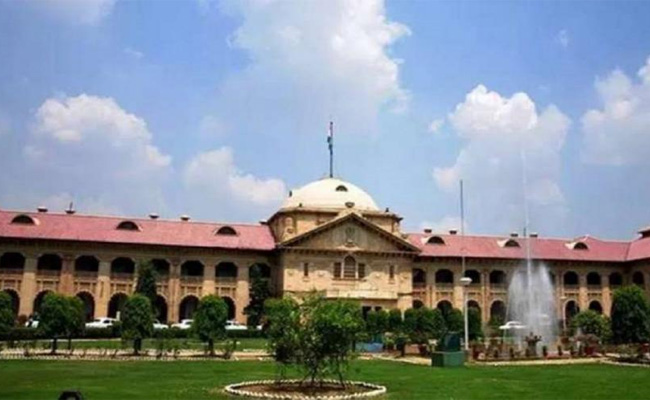
Lucknow (PTI): The Lucknow Bench of the Allahabad High Court on Friday ordered a probe by the special task force (STF) into alleged irregularities in the rejoining of a teacher at City Intermediate College in Barabanki, observing that the reinstatement appeared to be prima facie illegal.
The court also directed the recovery of the salary paid to the teacher during the disputed period.
A bench of Justice Rajeev Singh passed the order on a petition filed by the college management committee. The court expressed doubts over the roles of the District Inspector of Schools (DIOS), Barabanki, the college principal and the teacher concerned and hence, directed a detailed inquiry into the matter.
Taking note of alleged manipulation of records and misleading submissions, the court ordered the immediate transfer of the Barabanki DIOS to ensure a fair probe. It also directed the initiation of disciplinary proceedings against the then joint director of education of the Ayodhya division.
In its order, the court found that the teacher, Abhay Kumar, was initially appointed as an assistant teacher in 2018 but joined an Eklavya Model Residential School in Chhattisgarh as a lecturer in June 2024 without obtaining permission from the management. His subsequent request to retain the lien was rejected.
Despite this, he was allowed to rejoin the Barabanki College in September 2025 on the directions of the joint director of education and the DIOS, and was even paid the salary for October 2025. The court termed the rejoining "wholly illegal" and lacking any legal basis.
The bench also expressed concern over lapses in communication within the education department and directed the Uttar Pradesh chief secretary to ensure that official orders are communicated through email and WhatsApp as well, to prevent disputes.
The matter is next listed for hearing on May 28 when a compliance report is sought.