Axar Patel powers India to series-clinching win over WI in 2nd ODI
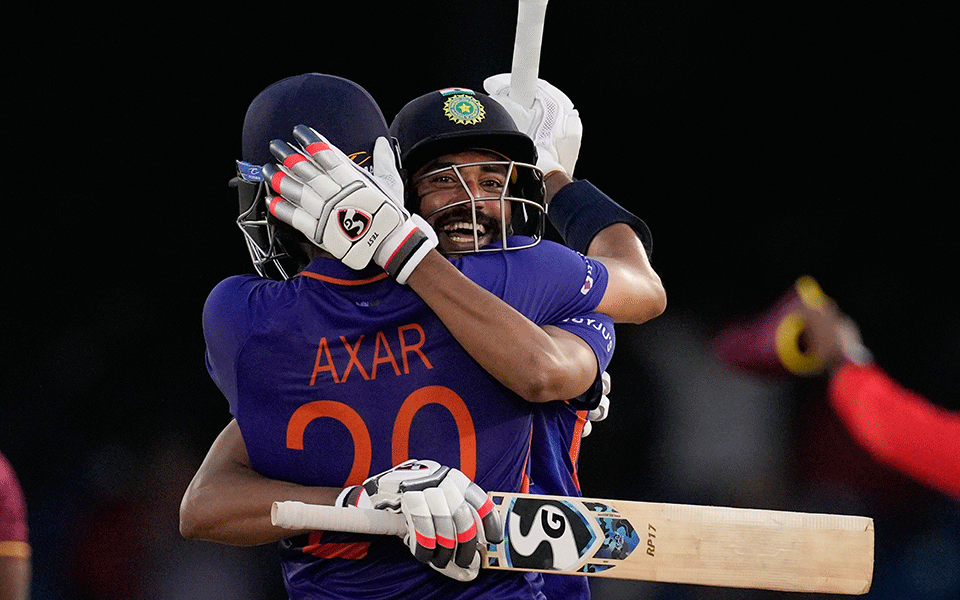
Port of Spain(PTI): Axar Patel smashed a whirlwind unbeaten 35-ball 64, his maiden ODI fifty, to steer India to a series-clinching two-wicket win over the West Indies in a tense second match here.
Set a stiff target of 312, the visitors were tottering at 205 for five in 38.4 overs but Patel rescued India with his six-hitting prowess, taking the visitors home with two balls to spare on Sunday.
Needing six runs off last three balls, Patel clobbered Kyle Mayers straight over his head for a six as India took an unassailable 2-0 lead in the three-match series.
Patel smashed five sixes and three fours in his unconquered innings and added 51 off 33 balls with Deepak Hooda (33). This was after Shreyas Iyer (63) and Sanju Samson (54) took the chase deep with well-paced fifties.
"It's very special, to get it in a crucial, series-winning cause is amazing. When I went out, I aimed for 10-11 an over. We thought it could be done as we have IPL experience," Patel, who was adjudged man of the match, said.
"We wanted to be calm and keep cover of the rate. This was special as this is my first ODI since 2017, even my first fifty came here."
India skipper Shikhar Dhawan was lavish in his praise for the all-rounder.
"The way Axar played was amazing. Our domestic and IPL cricket keeps us ready as we play in front of big crowds. As Axar said, he's done it multiple times in IPL. That brings a big stage."
West Indies skipper Nicholas Pooran said his side lost the game "in the last six overs."
"Axar played well and we didn't hold our nerves. We could not keep things down in the last five overs. We felt that it got easier to hit spinners. One wicket would have opened up things but Axar played brilliantly," he said.
Opting to bat, Shai Hope produced a masterclass 135-ball 117, while skipper Nicholas Pooran showed his big-hitting prowess with six maximums and one four during his 74 off 77 balls as West Indies posted an impressive 311 for six.
In reply, Shubman Gill (43) looked in good touch as he hit five boundaries during his 49-ball innings to give India a decent start but captain Dhawan (13) found the going tough at the other end.
Dhawan was the first to depart with Mayers producing a stunning catch at third man off the bowling of Romario Shepherd.
Mayers then pegged India back with two quick wickets, first getting rid off a well-set Gill and then removing Suryakumar Yadav (9), who once again dragged one to his stumps.
Iyer and Samson tried to take the chase deep with a 99-run partnership off 94 balls but once both departed, India still needed 105 runs from 11 overs.
It was the Patel show after that as he kept fighting despite losing Hooda and Shardul Thakur.
Earlier, Hope played the role of an anchor to perfection as he added 65 runs with opener Mayers (39), before forging another 62-run stand with Shamarh Brooks (35).
Hope then found his perfect ally in skipper Pooran as the two shared a 117-run stand. Hope, who was dismissed cheaply in first ODI, hit eight fours and three maximums in his 135-ball 115-run knock.
For India, spin duo of Patel (1/40) and Hooda (1/42) were economical but Yuzvendra Chahal (1/69) was expensive as he was smashed for six sixes and two fours.
Mohammed Siraj (0/47) bowled well but Avesh Khan (0/54 in 6 overs) had a forgettable ODI debut, while Thakur (3/54) made amends in the back end with three wickets.
Hope looked in full flow as he played some exquisite shots on the off side before reaching the three figure mark in his 100th ODI game with a six in the 45th over.
West Indies amassed 93 runs in last 10 overs.
"Hope's innings was impressive, it was exceptional as a batting group. We wanna win, we wanna win pretty bad in the next game. That's all we are aiming for," said Pooran
Let the Truth be known. If you read VB and like VB, please be a VB Supporter and Help us deliver the Truth to one and all.
Nashik court sends ‘godman’ Kharat to 3-day police custody in 7th sexual exploitation case
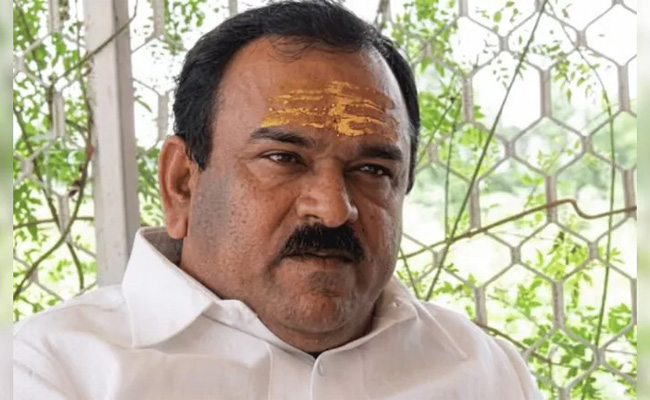
Nashik (PTI): A court in Maharashtra's Nashik has remanded self-styled astrologer-cum-godman Ashok Kharat to police custody till April 29 in the seventh case of sexual exploitation registered against him.
Kharat, a former Merchant Navy officer arrested on March 18, is accused of sexually exploiting several women and indulging in large-scale financial fraud by claiming to have divine powers and knowledge of black magic.
In the seventh case, Kharat sexually exploited a married woman who had approached him in search of solutions to her family problems.
ALSO READ: ED cracks down on suspected interstate liquor racket, raids 9 sites in Arunachal
The accused allegedly gave the woman something to drink, sexually assaulted her while her husband sat outside his office and threatened to kill her if she told anyone about it.
The Special Investigation Team (SIT), which is probing into 12 cases of sexual exploitation and financial fraud registered against Kharat in Nashik and Ahilyanagar districts, on Sunday filed a request application in the court demanding his custody in the seventh case.
Kharat was produced in court for a virtual hearing in the seventh case on Monday.
The prosecution demanded six-day police custody for Kharat, citing the discovery of a locker in Kharat's house during the investigation, from which the police recovered two blank cheques and other documents, all of which have to be probed.
The court agreed to the prosecution's demand and remanded Kharat to three-day police custody till April 29 in the case.
Kharat has been at the centre of a political firestorm, as he was well-connected, and photographs of him with political leaders and other important members of society have been surfacing in mainstream and social media since his arrest.