Bajrang Punia handed provisional suspension, WFI to approach WADA after NADA keeps it in 'dark'
‘Never refused to give my sample’: Bajrang Punia responds after NADA suspends him
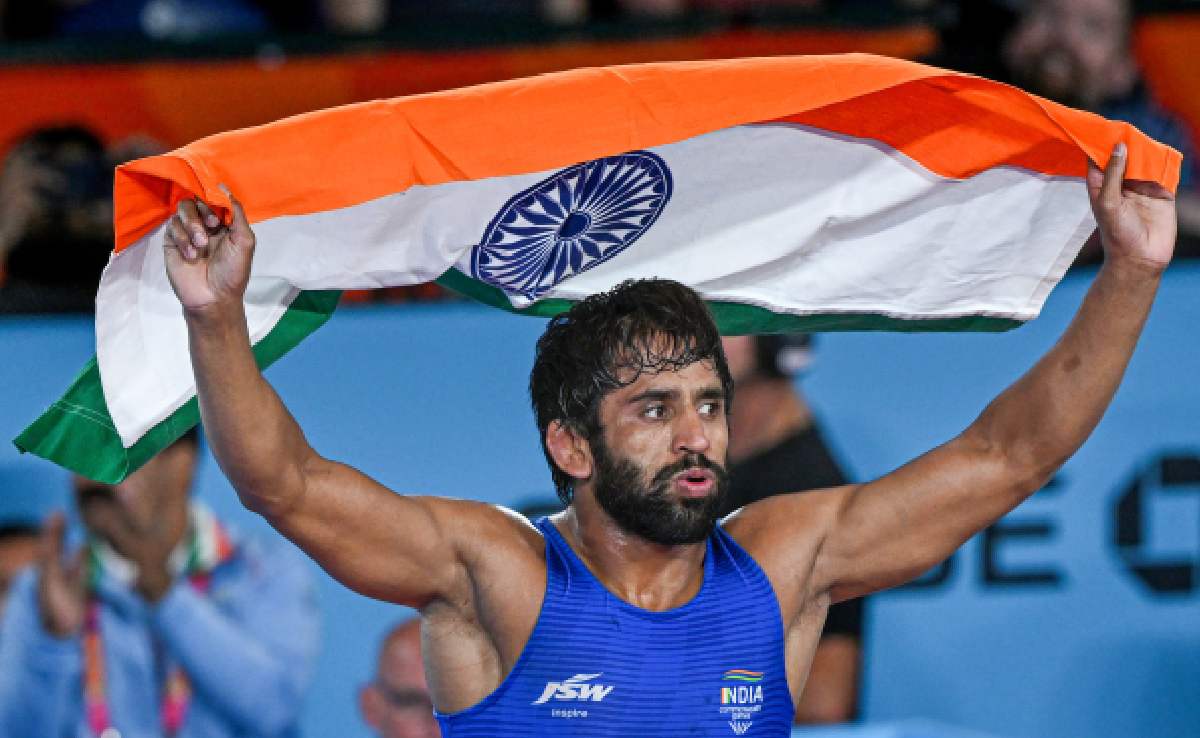
New Delhi, May 5: Bajrang Punia has been handed provisional suspension for refusing to give his sample for dope test during recent trials and the Wrestling Federation of India (WFI) is furious that NADA kept it "in dark" on the development and is planning to write to World Anti-Doping Agency (WADA) on the matter.
Bajrang was handed provisional suspension on April 23 by National Anti Doping Agency (NADA) and asked to send his reply by May 7 to avoid further disciplinary action.
The trials to pick the men's national team for the Asian Olympic Qualifiers in Bishkek were held in Sonepat on March 10 and Bajrang had walked off the venue without providing his urine sample after losing his bout.
Reacting to his suspension, Bajrang said he never refused to provide his sample to NADA officials.
"I want to clarify that I never refused to give my sample to NADA officials. I requested them to first answer me as to what action they took on the expired kit they brought to take my sample and then take my dope test," Bajrang wrote on X.
"My lawyer Vidush Singhania will reply to this letter," he wrote further.
The Tokyo Games bronze medallist also posted a video in which he displayed "expired kits" being sent for sample collection and asked the official why such kits were brought.
The video is from the time a dope sample collecting officer visited him to take samples. In the video, Bajrang said he was fortunate to have a team that noticed the expiry date and what would have innocent junior wrestlers done in case such kits reach them.
He also alleged that former WFI chief Brij Bhushan Sharan Singh was using such kits to scare women wrestlers who had the guts to come out in the open against him.
"I am not blaming you. This is work of the big crocodiles sitting above. Money talks in these matter," he was heard telling the officer in the video.
If Bajrang fails to come out clean with his reply, he will be out of the race for Paris Olympic Qualification.
According to the World Anti Doping Agency (WADA) Code, "Refusing, or failing without compelling justification, to submit to sample collection after notification as authorized in applicable anti-doping rules or otherwise evading sample collection is an anti-doping rule violation."
Meanwhile WFI President Sanjay Singh expressed his surprise that NADA did not inform them about the suspension.
"It's really surprising that NADA did not keep us in loop while suspending Bajrang. I had a meeting with NADA DG and other officials on April 25 and this matter was not raised in that meeting," Sanjay told PTI.
"They keep communicating with us on matters such as whereabout clause requirements, long list (for Paris Olympics) and so on. Even we had a discussion about the recent Federation Cup, where they sent officials to collect samples from the winners.
"But they did not let us know about this suspension of Bajrang Punia. I called NADA officials this morning and they had no answer to my query. Now, I plan to write to NADA and also inform WADA about this," he said.
It was reported that Vinesh Phogat had also initially refused to provide her sample after she won the women's 50kg trials in Patiala.
"We were not informed by anyone whose samples were taken after trials (in Sonepat and Patiala) and what came out of those samples. Just imagine if Bajrang had come to compete in the Federation Cup. We would have allowed him because we had no clue that he had been suspended," the WFI chief added.
Meanwhile, Bhupender Singh Bajwa, who was the head of the dissolved ad-hoc panel, told PTI they also have no communication regarding the suspension of Bajrang.
"I have got the mail checked. We have no such communication. We got a mail on April 18 about a warning to Bajrang but the April 23 communication is not with us. I don't know to which email ID they sent it," Bajwa said.
The World Qualifiers in Turkey from May 9 is the last chance for Indian wrestlers to lock quotas for the Paris Olympics. Sujeet Kalkal will represent India in the men's freestyle 65kg class, a category in which Bajrang competes.
If Sujeet wins the quota, the WFI may ask him and other quota winners to appear in one final trial to decide who represents India in the Paris Games, starting July 26.
So far, four Indian women wrestlers -- Vinesh Phogat (50kg), Antim Panghal (53kg), Anshu Malik (57kg) and Reetika Hooda (76kg) -- have qualified for the Olympics.
मेरे बारे में जो डोप टेस्ट के लिए ख़बर आ रही है उसके लिये मैं स्पष्ट करना चाहता हूँ !!! मैंने कभी भी नाडा अधिकारियों को sample देने से इनकार नहीं किया, मैंने उनसे अनुरोध किया कि वे मुझे जवाब दें कि उन्होंने पहले मेरा sample लेने के लिए जो एक्सपायरी किट लाई थी, उस पर उन्होंने क्या… pic.twitter.com/aU676ADyy3
— Bajrang Punia 🇮🇳 (@BajrangPunia) May 5, 2024
Let the Truth be known. If you read VB and like VB, please be a VB Supporter and Help us deliver the Truth to one and all.
No unannounced load shedding in Kerala, outages due to overload, says Minister
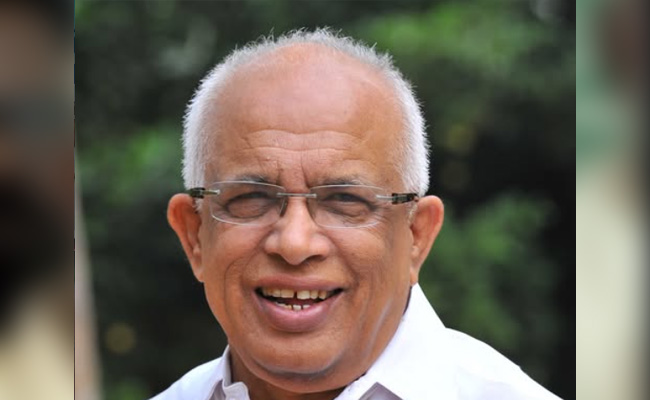
Palakkad (PTI): Kerala Electricity Minister K Krishnankutty on Saturday said there was no unannounced load shedding in the state, attributing recent power interruptions to temporary overload caused by high consumption.
Clarifying concerns raised from various parts of the state, the minister said the disruptions are not deliberate but occur when demand peaks, particularly between 10 pm and 11 pm.
"It is not being done intentionally. Power consumption has risen sharply, and when there is excessive and indiscriminate usage, the system experiences overload, leading to natural supply interruptions," he told reporters here.
His remarks come amid complaints that several areas have been witnessing frequent power cuts, often lasting around 15 minutes and occurring multiple times during the night.
Krishnankutty said the state's power demand has crossed 6,195 MW, putting pressure on the supply system. He added that around 70 per cent of Kerala's electricity is procured from outside, and existing power banking arrangements have been exhausted.
"We have approached the Regulatory Commission seeking permission to purchase more power. However, this will come at a higher cost," he said.
The minister said the government is trying to avoid increasing electricity tariffs and urged consumers to exercise restraint in usage to help manage the situation.
Responding to opposition criticism over the ruling LDF's earlier claims of a decade without power cuts, he said the current situation is not unique to Kerala.
A power crisis is emerging across the country, he said, and sarcastically asked the Opposition to take note of the role of natural factors in this.
Krishnankutty expressed confidence that the situation would improve within two days, while cautioning that long-term energy security would depend on enhancing in-state power generation.
He also warned that future generations could face serious challenges if adequate electricity production capacity is not developed within Kerala.