Bavuma, Rabada rested for white-ball series against India
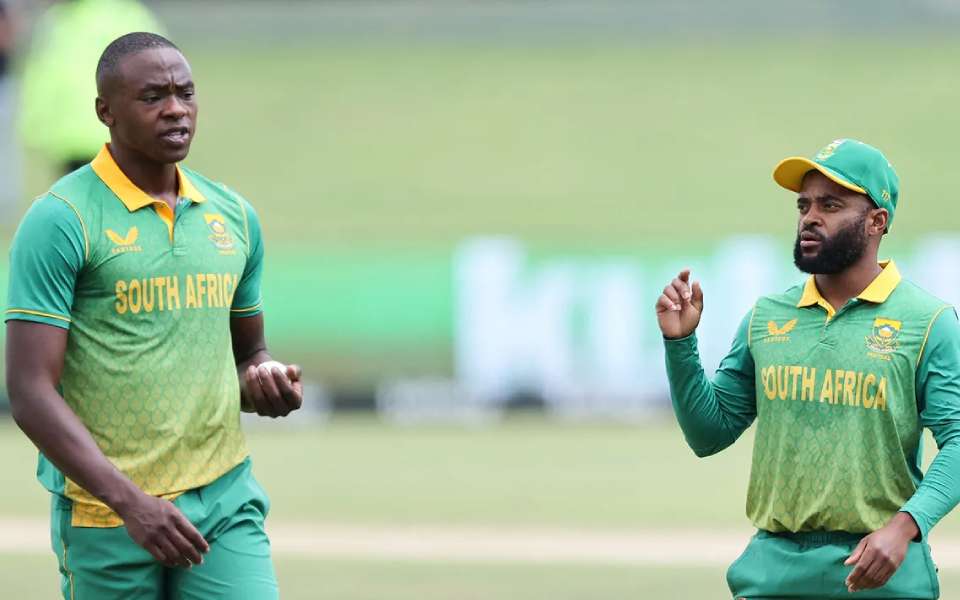
Johannesburg, Dec 4: South Africa skipper Temba Bavuma and pace ace Kagiso Rabada have been rested for the white-ball leg of this month's home series against India with the duo set to return for the two Tests.
The Proteas host India for a full series, which includes three T20Is, as many ODIs and two Tests, beginning with the shortest format on December 10 in Durban.
"Captain Temba Bavuma and Kagiso Rabada are amongst a group of players that have been omitted for the white-ball leg of the tour in order to play red-ball cricket as emphasis is placed on the Test series for which both will return," Cricket South Africa said on Monday.
Both India and South Africa are gearing up for the new World Test Championships cycle, starting with the Boxing Day Test in Centurion on December 26.
In Bavuma's absence, Aiden Markram will lead South Africa in the white-ball fixtures.
Wicketkeeper batter Tristan Stubbs, who has played 1 ODI and 16 T20Is, has been included in the Test side for the first time while Heinrich Klaasen has been left out of the red ball squad.
Pacers Gerald Coetzee, Marco Jansen and Lungi Ngidi have also been left out of the ODIs, which is low priority after the conclusion of the 50-over World Cup.
The trio is a part of the squad for the opening two T20Is and subsequently, the two Test matches.
With valuable WTC points at stake and next year's T20 World Cup looming large, South Africa like India have named several new faces in their ODI squads, including uncapped duo of medium pacer Ottniel Baartman and all-rounder Mihlali Mpongwana.
Batter David Bedingham (Test) and pacer Nandre Burger (all three) -- have also earned maiden national call-ups.
Squads:
South Africa T20I squad: Aiden Markram (captain), Ottniel Baartman, Matthew Breetzke, Nandre Burger, Gerald Coetzee (1st and 2nd T20Is), Donovan Ferreira, Reeza Hendricks, Marco Jansen (1st and 2nd T20Is), Heinrich Klaasen, Keshav Maharaj, David Miller, Lungi Ngidi (1st and 2nd T20Is), Andile Phehlukwayo , Tabraiz Shamsi, Tristan Stubbs, and Lizaad Williams.
South Africa ODI squad: Aiden Markram (captain), Ottniel Baartman, Nandre Burger, Tony de Zorzi, Reeza Hendricks, Heinrich Klaasen, Keshav Maharaj, Mihlali Mpongwana, David Miller, Wiaan Mulder, Andile Phehlukwayo, Tabraiz Shamsi, Rassie van der Dussen, Kyle Verreynne and Lizaad Williams
South Africa Test squad: Temba Bavuma (captain), David Bedingham, Nandre Burger, Gerald Coetzee, Tony de Zorzi, Dean Elgar, Marco Jansen, Keshav Maharaj, Aiden Markram, Wiaan Mulder, Lungi Ngidi, Keegan Petersen, Kagiso Rabada, Tristan Stubbs and Kyle Verreynne.
Let the Truth be known. If you read VB and like VB, please be a VB Supporter and Help us deliver the Truth to one and all.
Noida International Airport appoints Nitu Samra as interim CEO
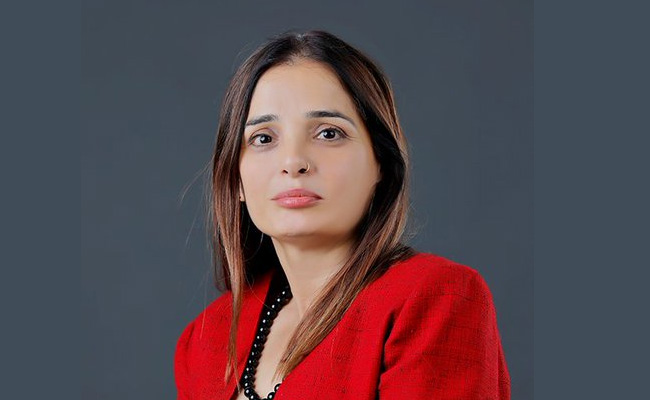
New Delhi (PTI): Noida International Airport on Friday announced the appointment of its Chief Financial Officer Nitu Samra as the interim Chief Executive Officer after authorities denied permission for foreign national Christoph Schnellmann to be at the helm.
"This change follows directions issued by the Bureau of Civil Aviation Security (BCAS) that the Chief Executive Officer of an airport in India is required to be an Indian national," NIA said in a statement.
Samra will replace Schnellmann, a Swiss national who has led Noida International Airport (NIA) as the CEO since August 2020.
The regulatory issue related to the requirement of having an Indian national as CEO has been delaying the start of commercial operations of the airport, which was inaugurated by Prime Minister Narendra Modi on March 28.
Schnellmann will join the airport's Board of Directors as Executive Vice Chairman. In this role, he will continue to support the project and its transition to operations, the statement said.
With immediate effect, NIA said Samra has been appointed as the CEO on an interim basis until the Board of Directors can conclude a formal selection process.
Samra has been serving as the CFO since October 2021 and was closely involved in the airport’s development journey, overseeing financial stewardship, governance, and strategic planning during a key phase of the project, the statement added.
NIA will be operated by Yamuna International Airport Pvt Ltd (YIAPL), a subsidiary of Zurich Airport International AG, under a public-private partnership.
Originally scheduled to commence passenger services in September 2024, NIA is being developed in four phases, along with a dedicated cargo terminal. It received an aerodrome license from the aviation regulator Directorate General of Civil Aviation (DGCA) in March.
YIAPL Chairman Daniel Bircher said that since the inauguration of the airport by the Prime Minister, the goal was to enable the start of operations as early as possible.
"This management change brings the airport into compliance with Bureau of Civil Aviation Security requirements while maintaining continuity in the airport’s leadership team. The newly structured team will support a smooth transition into operations, guided by clear and transparent governance and a strong corporate culture," he said.
On March 28, Civil Aviation Minister K Rammohan Naidu said commercial flight operations from the airport would start in the next 45 to 60 days.
Among the largest greenfield airport projects in the country, NIA will initially have a capacity to handle 12 million passengers per annum.
Once fully developed, the airport will have a total passenger handling capacity of 70 million.
The first phase of NIA has been developed at an investment of around Rs 11,200 crore. 'DXN' is the code for the airport.
The airport features a 3,900-metre runway capable of handling wide-body aircraft, along with modern navigation systems, including Instrument Landing System (ILS) and advanced airfield lighting.
The peak handling capacity in the first phase will be 30 flights per hour.
In the first phase, there will be 28 aircraft stands, and the projected cargo capacity is around 2.5 lakh tonnes.
Terminal 1 of the airport is spread across 1,37,985 square metres with 48 check-in counters. Over 40 acres of land have been earmarked for developing MRO (Maintenance, Repair and Overhaul) facilities at the airport.