BCB official calling Tamim 'an Indian agent' invites wrath of Bangladesh players
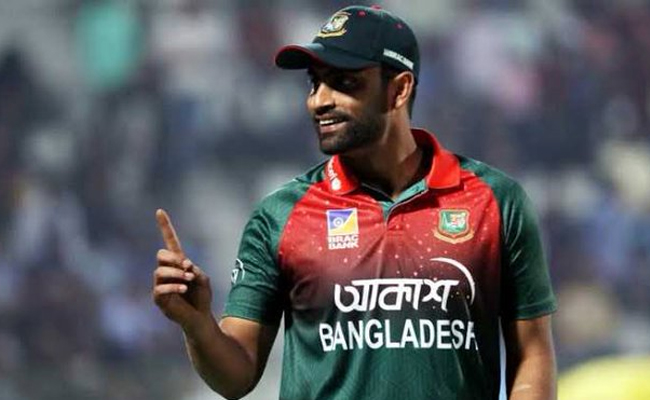
Dhaka (PTI): A senior Bangladesh Cricket Board (BCB) official calling former captain Tamim Iqbal "an Indian agent" has not gone down well with the players in the country.
Tamim, one of the finest openers to have come out of Bangladesh, had advised the BCB to not be driven by emotion while deciding the way forward on the national team's participation in the T20 World Cup in India.
Nazmul, chairman of BCB finance committee, called the left-hander opener "an Indian agent" in a Facebook post.
"This time, the people of Bangladesh witnessed, with their own eyes, the emergence of yet another proven Indian agent," he wrote.
The post received immediate backlash from former and current cricketers, including Taskin Ahmed, Momimul Haque and Taijul Islam.
Even the Cricketers' Welfare Association of Bangladesh (CWAB) expressed shock at Nazmul's comments.
"A comment made by BCB director M Nazmul Islam regarding former national captain Tamim Iqbal has come to the attention of the Cricketers' Welfare Association of Bangladesh. We are stunned, shocked, and outraged by it.
"Such a remark by a board official about the most successful opener in Bangladesh's history, who represented the country for 16 years, is utterly condemnable.
"Not only because it concerns a player like Tamim, but such comments about any cricketer of the country are unacceptable and insulting to the entire cricketing community," the players' body said in a statement.
The 36-year-old Tamim played 70 Tests, 243 ODIs and 78 T20 Internationals for his country in a fairly accomplished career.
"We strongly protest against this comment. When a responsible board director makes such remarks on a public platform, it also raises serious questions about the code of conduct of board officials," it said.
"We have already submitted a protest letter to the BCB president, demanding a public apology from the concerned board director and that he be brought under accountability. We hope the BCB president will take appropriate action as soon as possible," CWAB added.
Bangladesh wrote to the International Cricket Council to move their T20 World Cup games out of India after the BCCI instructed IPL franchise KKR to release Mustafizur Rahman ahead of the 2026 edition without giving a specific reason.
"Cricket is the life of Bangladesh. A recent comment surrounding a former national captain who has made a major contribution to the game has caused many to reflect," said pacer Taskin.
"I believe that such remarks directed at a former cricketer of the country are not helpful in the interest of Bangladesh cricket. I hope the concerned authorities will consider the matter seriously and adopt a more responsible stance in the future," he said.
Mominul added: "The comment made by BCB director M Nazmul Islam regarding former national captain Tamim Iqbal is completely unacceptable and insulting to the country's cricketing community. Such behaviour towards a cricketer is in direct conflict with the board's responsibility and ethics," said Mominul.
"A senior cricketer was not given even the minimum respect; instead, he was deliberately humiliated in public. Such remarks show a lack of even basic decorum regarding where and how to speak while holding such a high responsibility.
"I strongly condemn this comment and firmly demand a public apology from the concerned director and that he be brought under accountability. I call upon the BCB to take swift and strict action," said Mominul.
Let the Truth be known. If you read VB and like VB, please be a VB Supporter and Help us deliver the Truth to one and all.
Man rapes 13-year-old stepdaughter in Beed; booked
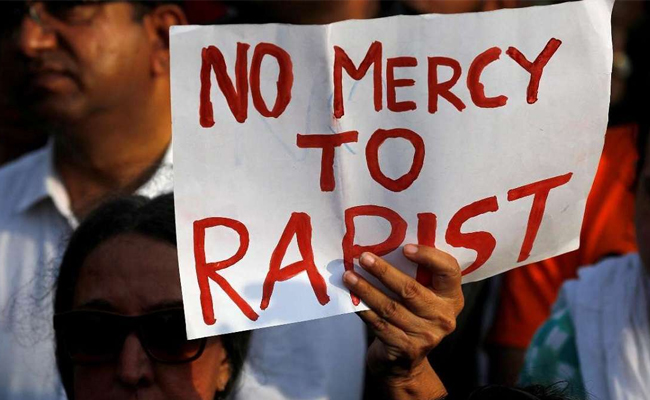
Beed, Apr 13 (PTI): A 13-year-old girl was allegedly sexually assaulted by her stepfather in Maharashtra's Beed district, police said on Monday.
Based on a complaint, the police have registered a case under the Protection of Children from Sexual Offences (POCSO) Act in connection with the incident, which occurred on April 9, an official said.
According to police, the teen's mother divorced her first husband nine years ago and married the accused, with whom she has a son.
On the afternoon of April 9, the accused allegedly sexually assaulted his stepdaughter while his wife was away and threatened her into silence, the official said.
He said that the assault came to light when the mother returned home and noticed a change in her daughter's behaviour and questioned her. The girl narrated the ordeal, following which a complaint was lodged at the Kaij police station.
_vb_65.jpeg)
_vb_90.jpeg)