BCCI issues warning to Virat Kohli, other star players ahead of Asia Cup, WC; Here's why
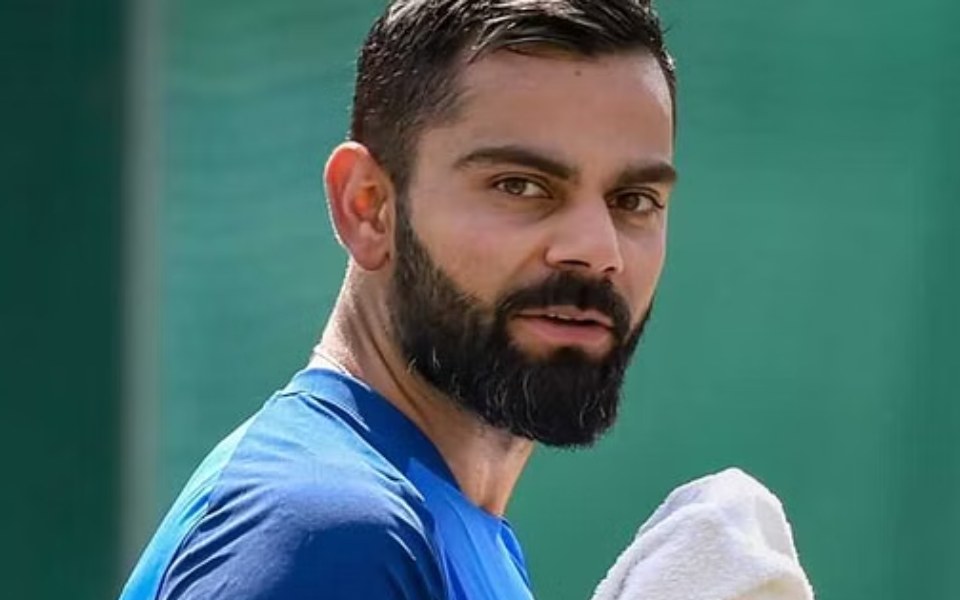
The Indian cricket team management has reportedly warned its players to refrain from sharing their fitness scores on social media platforms.
This directive came shortly after former Indian captain Virat Kohli shared his yo-yo test score on social media. The decision is believed to have been communicated by the Board of Control for Cricket in India (BCCI), which considers such information to be confidential.
According to sources, players participating in the preparatory camp at Alur in Bangalore were verbally warned about the board's stance. The BCCI has emphasized that posting such scores online could breach contractual agreements.
Kohli had shared his yo-yo test score of 17.2 on Instagram, leading to a reaction from BCCI officials who were not amused by the move.
An unnamed BCCI official confirmed, "Players have been informed verbally to avoid posting any confidential matter on social media platforms. They can post pictures while training but posting a score leads to breach of contract clause."
The ongoing conditioning camp for the Indian cricket team, which began on Thursday, involves a focus on fitness assessment. However, considering the non-stop cricket schedule, the yo-yo test scores can vary. Players have been advised to adhere to the set fitness parameters to ensure consistent standards.
Ahead of the upcoming Asia Cup in Sri Lanka, players who were provided with a 13-day fitness program will undergo a comprehensive body test, including blood tests. Trainers will evaluate their fitness levels, and those not meeting the standards will be addressed. The BCCI aims to ensure players are in top form as the World Cup approaches.
Notable players like Virat Kohli, Rohit Sharma, Hardik Pandya, Ravindra Jadeja, Mohammed Shami, and Mohammed Siraj, who returned from the West Indies tour, followed the 13-day fitness regimen. The program, spanning from August 9 to 22, is designed to keep players in optimal condition for the World Cup and to prevent potential injuries that could impact the Indian team's performance.
Let the Truth be known. If you read VB and like VB, please be a VB Supporter and Help us deliver the Truth to one and all.
T'gana RTC strike: Talks between govt, employees successful

Hyderabad (PTI): Talks between employees of Telangana State Road Transport Corporation (RTC) who were on strike and the state government concluded successfully on Friday as the government agreed to the key demands of the workmen.
Following a day-long marathon of talks between the leaders of the employees' Joint Action Committee (JAC) and the cabinet sub-committee, the government announced after midnight that it acceded to the demands, including a merger of RTC with the government, 11 per cent pay revision and elections to the employees' unions.
A committee comprising officials and employee leaders would be appointed over the merger of RTC with the government, it said.
The RTC management has also agreed to address the remaining issues as well, an official release said.
The employees would call off their strike and the RTC buses would hit the roads shortly, it said.
The employees had been on an indefinite strike since April 22 over a series of demands, including the merger of RTC with the government.
Earlier in the day, a driver of the RTC, who attempted suicide on April 23 during the strike, died at a hospital here in the early hours of Friday.
Shankar Goud, a 55-year-old driver, set himself ablaze by pouring petrol at Narsampet in Warangal district when the employees were staging a protest on Thursday in support of their demands.
Goud suffered serious burns, was initially admitted to a state-run hospital in Warangal, and later shifted to a super-speciality hospital in Hyderabad for advanced treatment.
"He succumbed (to injuries) at about 1.30 am on Friday," a senior official said.
The driver’s body was taken to his relative’s village, Muttojipet in Warangal district, for funeral rites.
Tension prevailed in Muttojipet as his family members and RTC employees attempted to take the body to the Narsampet bus station, where he worked, to enable his colleagues to pay their last respects. However, police did not permit this, citing law-and-order concerns.
This led to a deadlock before the funeral could proceed.
Union Minister Bandi Sanjay Kumar criticised the Telangana government for not allowing the body to be taken to the Narsampet bus station.
Kumar, Minister of State (Home), visited Muttojipet village in Warangal district, where the funeral was held, and paid homage to Goud.
“They (family members) want to take the body to the bus depot for five minutes. Is the RTC bus depot in Pakistan or Bangladesh? They are emotionally attached to taking the body there. The government is hurting sentiments and creating fear among RTC employees,” Kumar told reporters.
He also expressed anger at the police for not allowing the body to be taken to the bus station and staged a protest, according to a release from his office.
RTC employees and BJP workers attempted to take the mortal remains in an ambulance to Narsampet, but were stopped by the police.
Later, after discussions with the police, the family members and RTC employees agreed to conduct the funeral in the village.
Sanjay Kumar, stating he would abide by the family’s decision, left the village after the funeral was conducted there.
Transport Minister Ponnam Prabhakar said an ex gratia of Rs 10 lakh, a house, and a government job would be provided to the kin of Goud.
Chief Minister A Revanth Reddy expressed shock over the employee’s death and conveyed deep condolences to the grieving family, according to the release.
The RTC employees’ JAC had earlier announced an agitation programme from April 24 to 29, including silent marches and submission of memorandums to MLAs and other leaders.