BCCI postpones Ranji Trophy and other domestic tourneys amid COVID-19 surge
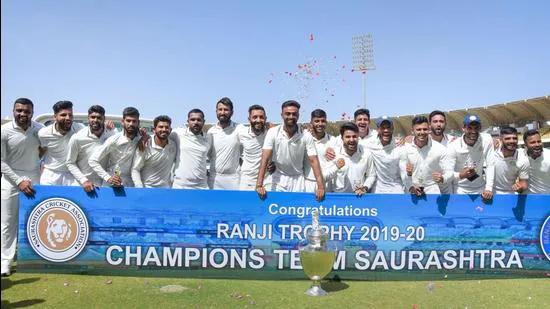
New Delhi, Jan 4: India's domestic cricket schedule was thrown into chaos on Tuesday when the BCCI decided to postpone major tournaments including Ranji Trophy and the Col CK Naidu Trophy due to a surge in COVID-19 cases across the country.
With as many as six members of the Bengal contingent including five players testing positive along with a few Mumbai players, it was inevitable that the blue riband tournament beginning January 13 had to be shelved indefinitely.
"The Ranji Trophy & Col C K Nayudu Trophy were scheduled to begin this month while the Senior Women's T20 League was scheduled to commence in February," BCCI secretary Jay Shah stated in a press release.
Shah said that BCCI didn't want to compromise on the health of its players, support staff and match officials which is the reason that for the second year in a row that the red ball competition in all probability will not be held.
"The BCCI will continue to assess the situation and take a call on the start of the tournaments accordingly," Shah added.
The BCCI had formed six separate bio-bubbles in six different cities with multiple grounds -- Ahmedabad, Chennai, Thiruvananthapuram, Mumbai, Bengaluru, Kolkata.
In fact, Mumbai team had arrived in Kolkata and then their out of favour India all-rounder Shivam Dube tested positive and had to be isolated.
CAB secretary Avishek Dalmiya had been admitted to a city nursing home as a precautionary measure after testing positive.
The situation is grim across all the major cities with Delhi recording 5481 cases on Tuesday while Mumbai had 10,860 new cases with hundreds of them being affected by new Omicron variant.
Bengal has seen a single day highest ever rise of 9073 cases as per state's health department.
Shah on his part thanked all the stakeholders for being able to organise more than 700 matches across all age-groups during the season.
"BCCI thanks and continues to appreciate the efforts of the healthcare workers, state associations, players, support staff, match officials and all the service providers who put their best foot forward to host more than 700 matches across 11 tournaments in the current 2021-22 domestic season," he said.
🚨 NEWS 🚨: BCCI postpones Ranji Trophy, Col C K Nayudu Trophy & Senior Women’s T20 League for 2021-22 season.
— BCCI (@BCCI) January 4, 2022
The ongoing Cooch Behar Trophy will continue as scheduled.
More Details ⬇️https://t.co/YRhOyk6680 pic.twitter.com/PvrlZZusSF
Let the Truth be known. If you read VB and like VB, please be a VB Supporter and Help us deliver the Truth to one and all.
Tribal man brings dead sister's skeleton to bank to withdraw money from her account
Keonjhar (PTI): A tribal man in Odisha's Keonjhar district on Monday brought the skeleton of his dead sister to a bank to withdraw the money deposited in her name, police said.
The incident occurred at Maliposi branch of Odisha Grameen Bank located at Patana block of Keonjhar district. The man was identified as Jeetu Munda (50) of Dianali village. He was seeking to withdraw Rs 20,000 from the bank account of his elder sister, Kalra Munda (56), who died on January 26, 2026.
"I have run several times to the bank, and the people there told me to bring the account holder to withdraw money deposited in her name. Though I told them that she had died, they did not listen to me and insisted on bringing her to the bank. Therefore, out of frustration, I dug the grave and brought out her skeleton as proof of her death," an illiterate Jeetu Munda told reporters.
Patana Police Station Inspector in charge (IIC) Kiran Prasad Sahu, who reached the bank after getting information, said, "Jeetu is an illiterate tribal man. He does not know what the legal heir or nominee is. The bank officials have failed to make him understand the procedure to withdraw money from the dead person's account."
However, after the incident, the police assured Jeetu Munda that they would facilitate the withdrawal of money from the bank account of his dead sister. Later, the skeleton was again buried at the graveyard in presence of police.
Meanwhile, local Block Development Officer (BDO) Manas Dandpat said that he was not approached by anyone for the legal heir of late Kalra Munda. "Today only, I came to know about it. We will see what can be done to resolve the issue," the BDO said.
Meanwhile, bank sources said that the nominee in Kalra Munda's bank account was also dead. Therefore, Jeetu Munda was the lone claimant over the money deposited in her name.
The local administration has directed the bank officers to make arrangements and ensure that Jeetu Munda, who is the only claimant as per the rules, gets the money as soon as possible.