Bengaluru FC look to seal AFC Cup berth

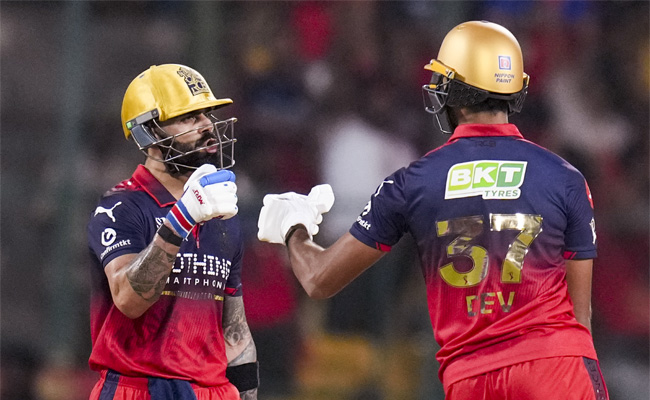
Bengaluru: Boosted by three away goals, Bengaluru FC will look to seal qualification in the group stages of the AFC Cup when they take on Maldivian side TC Sports Club at the Kanteerava Stadium here on Tuesday.
A Thongkhosiem Haokip brace and Erik Paartalu's fourth goal since signing for Bengaluru gave the Albert Roca-coached southern outfit a 3-2 win in Male last week after they allowed TC to come back from two goals down to level things in what was a strange second half.
The visitors need to win by either a two-goal margin or win scoring more than three goals if they are to edge Bengaluru out and Roca, while sounding confident, warned his side against complacency.
"This tie is far from over. Yes, we've scored three away goals but we've also conceded two and I don't see why they won't take the game to us on Tuesday. That said, we are always confident of our abilities and more so at home. We need to focus and get the job done," said Roca.
Bengaluru seemed to be cruising with two quick second-half goals at the National Stadium when lapses in defence saw the hosts hit back through Anatolii Vlasichev and Ibrahim Mahudhee.
But a Haokip screamer in the 78th minute took out the fight from TC in what were difficult conditions.
"We had a tough time coping with the weather and pitch conditions in Maldives. Thankfully we have the chance to get the job done at home and we need to make the most of the familiar conditions," he said.
The win came at the cost of an injury to defender Harmanjot Khabra who had to be substituted after he picked up a hit to his chest. Khabra missed out on the ISL fixture against FC Pune City and won't be available for selection on Tuesday as he continues to recover.
Roca chose to rest names like Sunil Chhetri, Gurpreet Singh Sandhu, Juanan Gonzalez, Dimas Delgado and Lenny Rodrigues and whether the Spaniard hands them a role in the fixture at home, remains to be seen.
"I am happy with the way the youngsters on the team have responded to responsibility and they surely need more game time. I will leave the decision late on whether or not I include players who didn't travel to the Maldives, in the squad for Tuesday," said Roca.
Group E, as it stands, has three slots filled with Abahani (Bangladesh), Aizawl FC and New Radiant (Maldives) booking their place in the continental competition.
Let the Truth be known. If you read VB and like VB, please be a VB Supporter and Help us deliver the Truth to one and all.
Allahabad HC orders probe into 'reinstatement' of teacher in UP's Barabanki
Lucknow (PTI): The Lucknow Bench of the Allahabad High Court on Friday ordered a probe by the special task force (STF) into alleged irregularities in the rejoining of a teacher at City Intermediate College in Barabanki, observing that the reinstatement appeared to be prima facie illegal.
The court also directed the recovery of the salary paid to the teacher during the disputed period.
A bench of Justice Rajeev Singh passed the order on a petition filed by the college management committee. The court expressed doubts over the roles of the District Inspector of Schools (DIOS), Barabanki, the college principal and the teacher concerned and hence, directed a detailed inquiry into the matter.
Taking note of alleged manipulation of records and misleading submissions, the court ordered the immediate transfer of the Barabanki DIOS to ensure a fair probe. It also directed the initiation of disciplinary proceedings against the then joint director of education of the Ayodhya division.
In its order, the court found that the teacher, Abhay Kumar, was initially appointed as an assistant teacher in 2018 but joined an Eklavya Model Residential School in Chhattisgarh as a lecturer in June 2024 without obtaining permission from the management. His subsequent request to retain the lien was rejected.
Despite this, he was allowed to rejoin the Barabanki College in September 2025 on the directions of the joint director of education and the DIOS, and was even paid the salary for October 2025. The court termed the rejoining "wholly illegal" and lacking any legal basis.
The bench also expressed concern over lapses in communication within the education department and directed the Uttar Pradesh chief secretary to ensure that official orders are communicated through email and WhatsApp as well, to prevent disputes.
The matter is next listed for hearing on May 28 when a compliance report is sought.