Bengaluru's Mohsin Ahmed leads in Indian Crossword League
Patna: Reigning champion Mohsin Ahmed of Bengaluru has established lead at the end of the first scoring round of the eighth edition of the annual global contest Indian Crossword League, popularly called IXL.
Ahmed is followed by Chennai's Ramki Krishnan at the second position. Ramki has won the contest four times in the last seven editions, an IXL release said on Sunday.
Three overseas players Sowmya Ramkumar (3rd), Philip Coote (6th) and Koh Ting Sween Kenny (7th) have also made it to the top 10. The contest, which was open to Indians across the world earlier, has been thrown open to foreigners from this edition, the release said.
There will be eight more weekly online rounds before the offline 'Grand Finale' to be held in Bengaluru, the date for which will be decided later.
The top 30 participants on the cumulative leader board will take part in the final. Started in 2013, IXL has been acknowledged as one of its kind by the Limca Book of Records, the release said.
Let the Truth be known. If you read VB and like VB, please be a VB Supporter and Help us deliver the Truth to one and all.
Karnataka School Edu Dept prohibits children from being made to dance to obscene songs
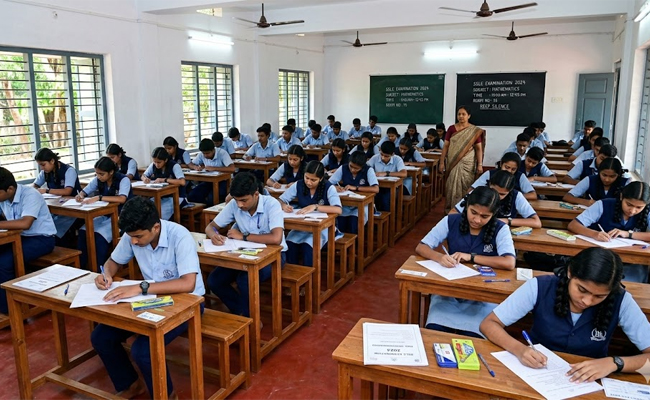
Bengaluru (PTI): The Karnataka School Education Department has issued a circular strictly prohibiting children from being made to dance to obscene songs in educational and cultural programmes.
It stated that such dances would negatively impact students' mental health and moral values. It will create indiscipline and harm the sanctity of education.
"All the Deputy Directors (Administration) of the state's School Education Department have been asked to take strict measures to prevent children or students from dancing to obscene songs in all government, aided and unaided schools in the state," the office of the commissioner of the School Education Department said in a recent circular.
"If it is found that children are being made to dance to obscene songs, appropriate action will be taken against the headmaster or management of such school," it added.
The department also listed certain measures in this regard, which include: strictly prohibiting children from being made to dance to obscene songs during educational and cultural programmes; selecting songs that are inspiring, positive, instilling national pride in children and reflecting the greatness, dignity, values, culture, and morality of the state.
Stating that the school headmaster and management are responsible for selecting songs and dances for cultural programmes, it said, they should also ensure that students wear decent clothes in dance or cultural programmes.