Bopanna wins maiden men's doubles Grand Slam title at Australian Open
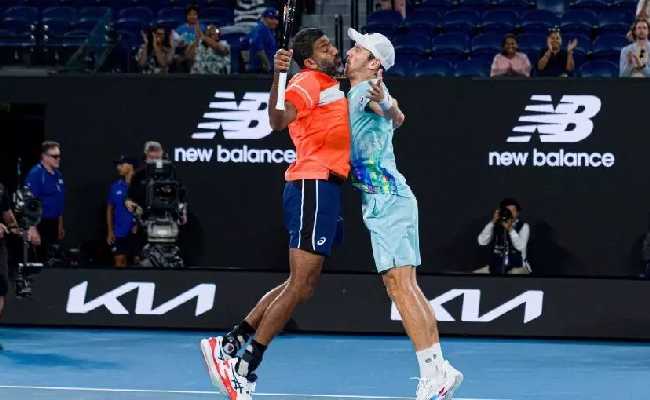
Melbourne (PTI): Rohan Bopanna became only the third Indian to win a men's doubles Grand Slam title, taking the Australian Open crown with partner Matthew Ebden following a commanding win over Simone Bolelli and Andrea Vavassori, here on Saturday.
In a high-quality game of tennis, second seeded Bopanna and Ebden won 7-6(0) 7-5 in the final that lasted one hour and 39 minutes.
Only the iconic Leander Paes and Mahesh Bhupathi have won Major titles for India in men's tennis while trailblazer Sania Mirza did it in women's tennis.
For Bopanna it is his second Grand Slam title, having won the French Open mixed doubles with Canada's Gabriela Dabrowski in 2017.
At 43, Bopanna also became the oldest Grand Slam champion in men's tennis. He bettered the record of Jean-Julien Rojer who, at age of 40, had lifted the French Open men's doubles trophy in 2022 with Marcelo Arevola.
It was such hard-fought battle at the Rod Laver arena that the contest featured only one break of serve when Vavassori dropped his serve at love in game 11 of the second set. There were not many break points on offer either.
The second seeds had breakpoints in successive games in the beginning of the contest. However, the Italians saved both to stay on even terms.
In game two, off Bolelli's serve, Vavassori hit a volley at 30-30 but Bopanna hit a return long.
In game four, the Italians were again down a break point when at 30-30, a return from Bopanna jumped off the net chord to give the second seeds a free point. However, Vavassori served well to save that point as well.
Serving 4-5, and 30-all, Bolelli was under pressure again but pulled off a powerful cross court forehand which was away from Bopanna's reach and then served huge to make it 5-all.
Ebden's serve came under pressure in game 11 in which he faced a breakpoint, but, after playing deuce points, the Australian closed the game with an ace.
In the tie-breaker, Bolelli's serve was broken twice as the second seeds zoomed to a 5-0 lead without losing a point on their serve.
Vavassori too lost his serve to hand their rivals six set points. They converted the first, Ebden finding a forehand winner down the line.
Bopanna will be crowned the new number one on Monday when the ATP rankings will be updated. At 43, he will be the oldest player to be perched on top of the ranking pile.
Bolelli had won the Australian Open men's doubles in 2015 with partner Fabio Fognini.
Let the Truth be known. If you read VB and like VB, please be a VB Supporter and Help us deliver the Truth to one and all.
Allahabad HC orders probe into 'reinstatement' of teacher in UP's Barabanki
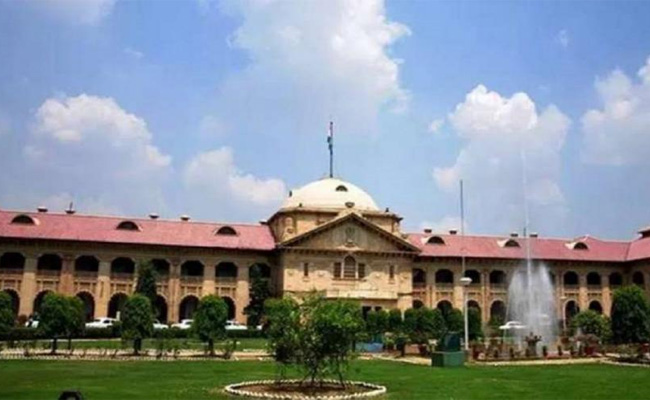
Lucknow (PTI): The Lucknow Bench of the Allahabad High Court on Friday ordered a probe by the special task force (STF) into alleged irregularities in the rejoining of a teacher at City Intermediate College in Barabanki, observing that the reinstatement appeared to be prima facie illegal.
The court also directed the recovery of the salary paid to the teacher during the disputed period.
A bench of Justice Rajeev Singh passed the order on a petition filed by the college management committee. The court expressed doubts over the roles of the District Inspector of Schools (DIOS), Barabanki, the college principal and the teacher concerned and hence, directed a detailed inquiry into the matter.
Taking note of alleged manipulation of records and misleading submissions, the court ordered the immediate transfer of the Barabanki DIOS to ensure a fair probe. It also directed the initiation of disciplinary proceedings against the then joint director of education of the Ayodhya division.
In its order, the court found that the teacher, Abhay Kumar, was initially appointed as an assistant teacher in 2018 but joined an Eklavya Model Residential School in Chhattisgarh as a lecturer in June 2024 without obtaining permission from the management. His subsequent request to retain the lien was rejected.
Despite this, he was allowed to rejoin the Barabanki College in September 2025 on the directions of the joint director of education and the DIOS, and was even paid the salary for October 2025. The court termed the rejoining "wholly illegal" and lacking any legal basis.
The bench also expressed concern over lapses in communication within the education department and directed the Uttar Pradesh chief secretary to ensure that official orders are communicated through email and WhatsApp as well, to prevent disputes.
The matter is next listed for hearing on May 28 when a compliance report is sought.