Buttler, Shreyas Gopal guide Rajasthan Royals to 4-wicket victory
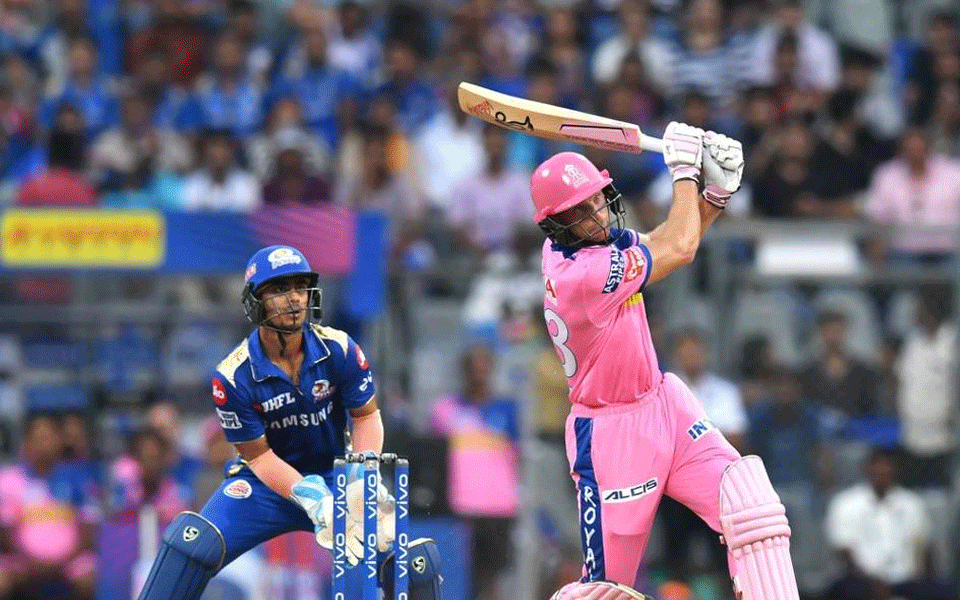
Mumbai, Apr 13: Englishman Jos Buttler laid the platform with a rampaging 89 while Shreyas Gopal held his nerve at the death to power Rajasthan Royals to a four-wicket victory over Mumbai Indians in an Indian Premier League encounter here Saturday.
This was Royals' second victory of the season in seven games after losing a last ball thriller to CSK less than 48 hours back.
Put into bat, Mumbai Indians rode on an aggressive 81 by South African Quinton De Kock to post an imposing 187/5, but Buttler's 43-ball knock studded with eight fours and seven sixes set the tone before Royals survived a scare to finish the game in 19.3 overs.
The match was a forgettable one for young West Indies pacer Alzarri Joseph (0/53 in 3 overs), who was hammered for eight fours and three sixes and then was injured trying to save a boundary.
The 13th over changed the game's complexion as Buttler smashed two sixes and four fours off Joseph to bring down the equation to a manageable run-a-ball.
Buttler first conjured a 60-run opening stand with skipper Ajinkya Rahane (37 off 21 balls, 6x 4; 1x6) to lay the foundation and then added 87 runs for the second wicket with Sanju Samson (31 off 26 balls; 2x4, 1x6).
Buttler initially played second fiddle to Rahane but then upped his ante once skipper was gone. The Englishman in the eighth over, hit Rahul Chahar for a six, and then in the next over, smashed two sixes off Krunal Pandya as he raced to 50 off 29 balls.
When Buttler departed in the 14th over, Rajasthan needed 41 runs. But then came the twist in the tale when Mumbai did make a comeback of sorts sending four batsman -- Samson, Rahul Tripathi (1), Steve Smith (12 ) and Liam Livingstone (1) back to the pavilion as Rajasthan slumped to 174.6 from 147/2.
However, Shreyas Gopal (13 not out) and K Gowtham (0 not out) held their nerves to take the side home in a tense situation. Gopal hit the winning boundary off Hardik Pandya as celebrations erupted in the Rajasthan camp.
Joseph was the costliest bowler having conceded 53 runs in three overs.
Earlier, Quinton de Kock hit a belligerent 81 as he powered Mumbai Indians to an imposing 187 for 5 against Rajasthan Royals in their Indian Premier League game here Saturday.
South African De Kock was the wrecker-in-chief as he hammered six fours and four sixes in his 52-ball knock and got able support from skipper Rohit Sharma (47 off 32 balls), who made a comeback after missing out the last Mumbai game due to a leg injury.
A late cameo from Hardik Pandya (28 off 11 balls), in which smashed three sixes and one fours ensured Mumbai neared the 190-run mark.
Earlier, Rohit and De Kock took the opposition attack to the cleaners as the two added 96 for the first wicket. They started the onslaught in the third over amassing 18 runs with the South African hitting a six and four off Krishnappa Gowtham.
Then Rohit ripped apart pacer Dhawal Kulkarni, striking three fours, including a splendid cover drive, as Mumbai gathered 14 runs from it.
De Kock kept playing shots at will even as Mumbai reached 57/0 after Powerplay period. Then De Kock dispatched spinner Liam Livingstone for two sixes over deep mid-wicket as runs came thick and fast. He raced to his fifty in 34 balls.
Rohit, who struck six fours and a lone six, threw his wicket away giving a sitter to Jos Buttler off Jofra Archer.
And then Rajasthan made a good comeback removing Surya Kumar Yadav (16) and Kieron Pollard (6) to reduce the hosts to 136/3.
Rajasthan bowlers made a splendid comeback as they removed De Kock and Ishan Kishan before the Hardik show.
Meanwhile, it was Rohit's 100th match as captain for Mumbai Indians (including the now defunct Champions League T20 games) and it was Mumbai's overall 200th match.
Let the Truth be known. If you read VB and like VB, please be a VB Supporter and Help us deliver the Truth to one and all.
Centre spent Rs 76.13 lakh on print media ads for RSS centenary, reveals RTI
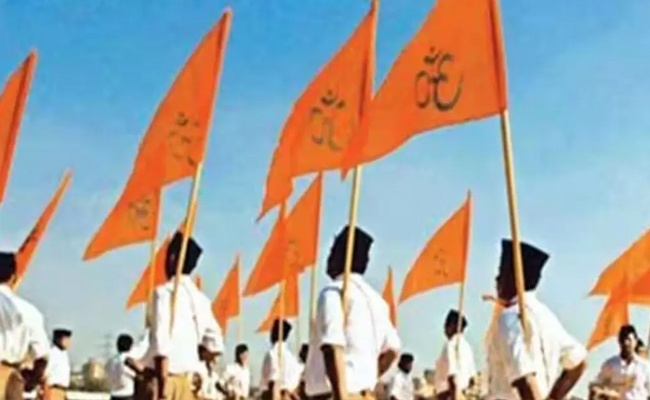
New Delhi: The Union Ministry of Culture allegedly spent Rs 76.13 lakh on print advertisements marking the 100-year celebrations of the Rashtriya Swayamsevak Sangh (RSS), according to a Right to Information (RTI) reply.
The information was sought by RTI activist Ajay Basudev Bose, who filed an application seeking details on expenditure incurred by the ministry for advertisements commemorating the RSS centenary.
Bose shared a picture of the reply from the ministry on his official ‘X’ handle.
“It is informed that an amount of Rs 76,13,129 has been spent on advertisement given in various print media by the Ministry of Culture on the occasion of the completion of 100 years of RSS,” the government’s reply stated.
RTI reply shows Min of Culture Govt of India spent a Whopping Rs 76L,13K,129 on Advertisement in Print Media on occasion of 100 yrs of #RSS
— AJAY Basudev Bose (@AjayBos93388306) April 16, 2026
When Everyone knows RSS is Not Registered & Does not Pay any Tax is it justified to spend Tax Payers Money on such Private event??@RSSorg… pic.twitter.com/dW4IUtdNCg
Bose questioned the expenditure in the post X, “when Everyone knows RSS is Not Registered & Does not Pay any Tax is it justified to spend Tax Payers Money on such Private event??”
Reacting to the development, Karnataka’s IT-BT and Panchayat Raj Minister Priyank Kharge also criticised the spending.
In a post on X, he asked why public money was being used for what he described as a “private ideological project” and questioned the government’s decision to fund advertisements related to the organisation’s centenary.
According to reports, the RSS, founded in 1925, describes itself as a volunteer-based organisation and has stated that it functions as a body of individuals rather than a registered entity.