Byju's wants to terminate jersey sponsorship deal with BCCI, kit sponsor MPL also wants to exit
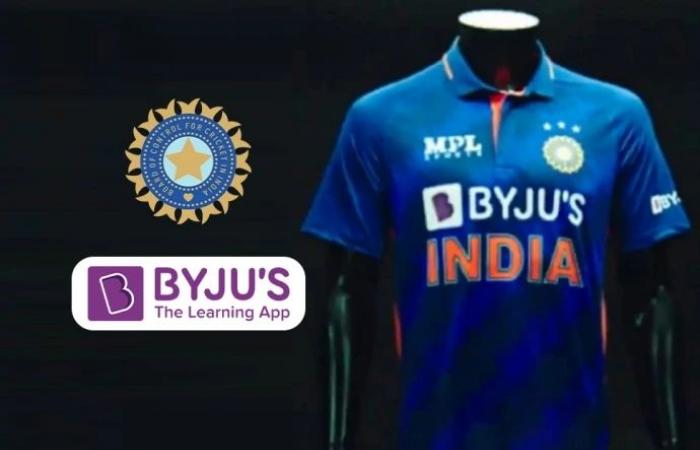
New Delhi, Dec 21: Two of Indian cricket team's main sponsors, edtech major Byju's and MPL sports, want to exit from their sponsorship agreements with the BCCI.
In June, Byju's had extended its jersey sponsorship agreement with the Board until November 2023 for an estimated USD 35 million. Byju's now wants to terminate its agreement with the BCCI which has asked the company to continue at least until March 2023.
"BCCI received an email from Byju's on 4.11.2022 requesting terminating the association post the recently concluded T20 World Cup. As per our discussions with Byju's, we have asked them to continue the current arrangement and continue the partnership at least until 31.3.2023," read a BCCI note on the matter.
The matter was discussed at the BCCI Apex Council meeting on Wednesday.
The brand had replaced Oppo back in 2019. Byju's was also one of the sponsors of the 2022 FIFA World Cup in Qatar.
The edtech company had recently announced plans to lay off not more than five per cent of its total strength of 50000.
MPL wants to assign kit and merchandise rights to KKCL
Team kit and merchandise sponsor had conveyed the BCCI for the complete assignment of its rights to Kewal Kiran Clothing Limit (KKCL). The existing contract is valid until December 31, 2023. MPL had replaced Nike back in November 2020.
"BCCI received an email communication from MPL sports on 2.12.2022 seeking a complete assignment (team + merchandising) at full value to Kewal Kiran Clothing Limited, a fashion wear brand, for the period from 1.12.2023 to 31.12.2023.
"With the upcoming back to back home series and the women's away calendar, it was suggested that the current arrangement should not be hampered as it involves performance gear for the national teams.
"We have asked MPL sports to continue the association at least until 31.3.2023 or look for a partial assignment that would involve only the right chest logo but not the kit manufacturing agreement," the note read.
Earlier this year, Paytm had transferred its title sponsorship rights for Indian cricket's home season to Mastercard.
Central contracts to be decided after formation of selection panel
The Apex Council was expected to decide on the players' central contracts but it would only be done after the formation of the new selection committee. The BCCI had sacked the Chetan Sharma-led panel after the T20 World Cup in Australia.
Let the Truth be known. If you read VB and like VB, please be a VB Supporter and Help us deliver the Truth to one and all.
Explosive device kills 13, injures 38 on bus in southwestern Colombia as violence persists
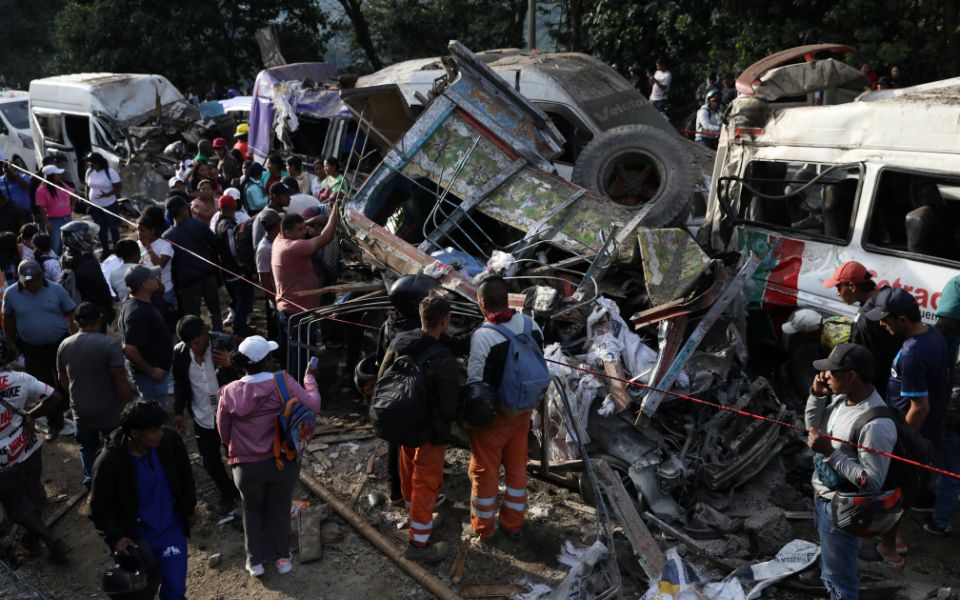
Bogota (Colombia) (PTI): An explosive device killed 13 people travelling on a bus in southwestern Colombia on Saturday, an attack the country's army chief described as a “terrorist act" that also left at least 38 injured as violence linked to drug trafficking in the region escalates.
Octavio Guzman, the governor of the region of Cauca, said on X that the device was set off while the bus was travelling along the Panamerican Highway in the municipality of Cajibio. Five children were among the injured, Cauca Health Secretary Carolina Camargo told Noticias Caracol, a TV news program.
Gen. Hugo Lopez, commander of Colombia's Armed Forces, told a news conference that it was a “terrorist act" and blamed the network of a man known as “Ivan Mordisco” — one of Colombia's most wanted figures — and the Jaime Martínez faction. Both are dissidents of the now-defunct Revolutionary Armed Forces of Colombia that operate in the region.
Neither Ivan Mordisco nor the Jaime Martínez faction abide by the peace agreement signed with the state in 2016.
Colombian President Gustavo Petro condemned the attack on X.
“Those who carried out the attack and killed seven civilians — and wounded 17 others — in Cajibío — many of them Indigenous people — are terrorists, fascists, and drug traffickers,” he wrote.
The attack is the latest in a spate of explosions that have attempted to target public infrastructure. At least 26 incidents have taken place in the past two days in southwestern Colombia, which Lopez said have only affected civilians.
They included a shooting at a police station in the rural area of Jamundi, and an attack on a Civil Aviation radar facility in El Tambo, where authorities took down three explosives-laden drones earlier on Saturday. No one was hurt.
On Friday, two vehicles rigged with explosives were detonated near military units in Cali and Palmira, causing material damage.
The escalation of violence in that region — a territory contested by illegal armed groups linked to drug trafficking — prompted the mobilisation of high-ranking officials on Saturday. Led by Defence Minister Pedro Sanchez, the delegation that includes regional governors and local authorities, was meeting in Palmira when the deadly explosion occurred.
“These criminals seek to instil fear, but we will respond with firmness,” Sanchez said on X.
Meanwhile, Francisca Toro, governor of Valle del Cauca, has called upon the national government to provide “immediate support.” In a message on X, Toro called for a reinforcement of public security forces, enhanced intelligence operations and “decisive actions” against crime in the face of a “terrorist-level escalation.”
According to authorities, Cauca and Valle del Cauca serve as a critical hub for illicit activities of illegal armed groups vying for control over sea and river access routes leading to the port of Buenaventura — a key transit point used to traffic drugs to Central America and Europe.
The government has also offered a reward of more than 1 million dollars for information leading to the capture of “Marlon,” who is identified as the leader of the region's dissident group. On Friday, local authorities offered more than USD 14,000 for information leading to the identification and location of those behind the attacks in Cali and Palmira.