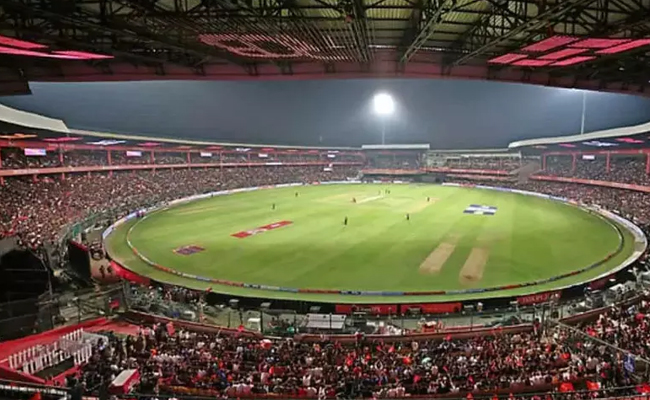
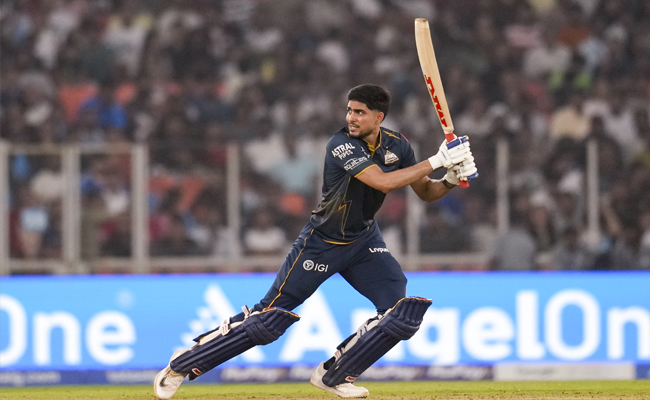
Champions Trophy schedule: India, Pakistan in same group; to clash on Feb 23 in Dubai
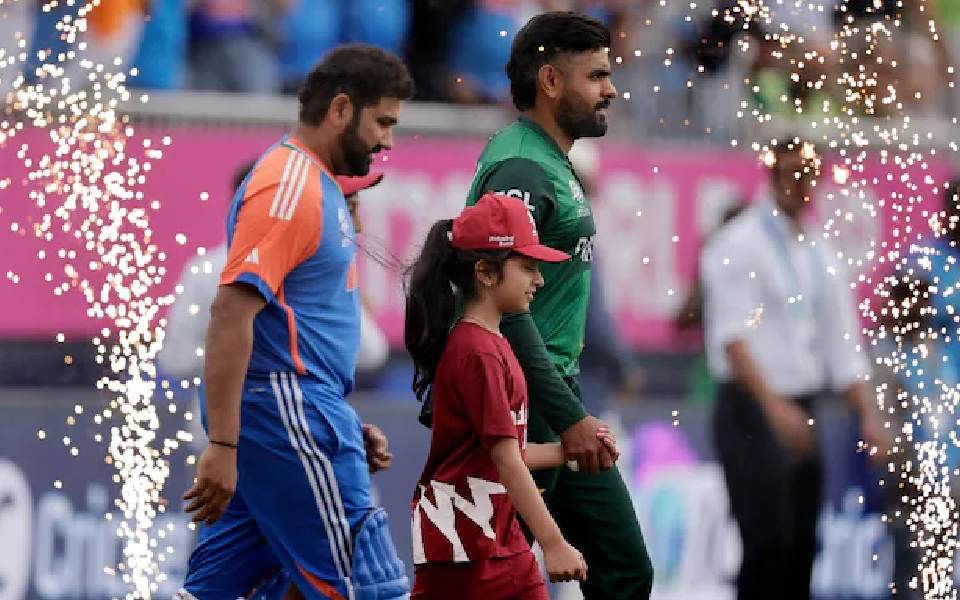
Dubai, Dec 24: India will play all their matches of the Champions Trophy in Dubai with the marquee clash against arch-rivals Pakistan scheduled on February 23, the International Cricket Council (ICC) announced on Tuesday.
PTI had reported last week that India will play all their matches in Dubai including the semifinal and final if they qualify.
As has been the case with ICC events, India and Pakistan have been clubbed in the same group which also have New Zealand and Bangladesh.
Group B comprises South Africa, Australia, Afghanistan and England.
The tournament opener will be played in Karachi on February 19 when hosts Pakistan face New Zealand and the final is scheduled for March 9. The premier 50-over event, last played in 2017, will have 15 matches with at least 10 games scheduled in Pakistan.
Rawalpindi, Lahore, and Karachi will be the three hosting venues in Pakistan with the second semifinal to be staged at the refurbished Gaddafi Stadium in Lahore.
"Lahore will also host the final on 9 March, unless India qualify, in which case it will be played in Dubai. Both the semi-finals and the final will have reserve days," said the ICC in a statement.
India will open their campaign against Bangladesh on February 20 before taking on Pakistan three days later. Their final league fixture will be against New Zealand on March 2.
Group B action begins on February 21 when Afghanistan square up against South Africa in Karachi.
A big weekend then kicks off with rivals England and Australia clashing in Lahore on February 22.
The eight sides in the Champions Trophy are the teams that finished in the top eight in the points table at ODI World Cup in India last year.
The ICC has kept reserve days for both the semifinals and the final.
The schedule was announced after a deadlock over the hosting of the tournament ended with the ICC keeping India's games at a neutral venue as desired while having a similar arrangement for Pakistan for ICC events in India till 2027.
The hybrid arrangement will also apply to the 2025 women's ODI World Cup in India and the T20 World Cup in 2026 in India and Sri Lanka.
India had refused to travel to Pakistan for the event due to security concerns. The Indians have not played in Pakistan since the 2008 Mumbai terror attacks in which 150 people were killed.
The two countries' last bilateral engagement was back in 2012. Travelling to Pakistan also requires Indian government's clearance, which has remained firm on the status quo.
While the BCCI's stance was always clear, the matter got stretched because of the PCB's refusal to allow a "one-sided" arrangement of neutral venues.
PCB, which had sent its team to India for the ODI World Cup last year, had categorically opposed the hybrid model but eventually agreed to it on reciprocal grounds.
Check out the full fixtures for the ICC Champions Trophy 2025. pic.twitter.com/oecuikydca
— ICC (@ICC) December 24, 2024
Let the Truth be known. If you read VB and like VB, please be a VB Supporter and Help us deliver the Truth to one and all.
Power tariffs under BESCOM to rise from May 1
Bengaluru (PTI): Power bills for consumers under the Bangalore Electricity Supply Company Limited (BESCOM) will go up from May 1, following an order issued by the Karnataka Electricity Regulatory Commission (KERC) on Friday.
The hike comes after KERC allowed the BESCOM to recover a revenue deficit of Rs 2,068 crore incurred in 2024-25, from the consumers.
As a result, for every unit of electricity consumed in 2024-25, the customers will be charged an additional 56 paise, it said.
"BESCOM shall calculate, for each of the active consumers of FY2024-25 the amount to be recovered based on their actual energy consumption during FY2024-25. Such amount shall be recovered during FY 2026-27 in equal monthly instalments, to be called as 'FY25 True up Charges', commencing from the first meter reading date falling on or after 1 May 2026 and concluding with the reading date ending on 30 April 2027," the order said.
"It is further ordered that BESCOM shall maintain a separate head of account, allocated for the purpose, to record the adjustment of the said amount to ensure full recovery of the deficit," it added.
Similarly Chamundeshwari Electricity Supply Corporation Limited (CESC) has also recorded a revenue deficit of Rs 121.71 crore and can collect an additional 15 paisa per unit for consumption in 2024-25, official sources said.