Chhetri, Chhangte power India to Intercontinental Cup title triumph

Bhubaneswar, Jun 18: Captain Sunil Chhetri, as is his wont, rose to the occasion with his 87th international goal as India won the Intercontinental Cup with a 2-0 victory over Lebanon in the final here on Sunday.
The other star of the summit showdown, Lallianzuala Chhangte, struck the evening's second goal to cap an impressive display as India enjoyed another clean sheet.
This is India's second title triumph in the tournament, following their win in the inaugural edition in 2018. North Korea won in 2019.
In the last leg of his career, the 38-year-old Chhetri found the back of the net in the 46th minute of the title clash, breaking the deadlock right after play resumed following a goalless first half.
Buoyed by the lead and backed by a near-capacity crowd at the Kalinga Stadium, India consolidated their position when Lallianzuala Chhangte, the provider of the first goal, found the target in the 66th minute, leaving the fans delighted and their 99-ranked opponents stunned.
In hot and humid conditions, both the teams had their fair share of chances in the first half but could not make use of them, just like the goalless stalemate they played out in an inconsequential match two days ago.
And while India had more possession of the ball -- nearly 58 percent -- the Lebanese had seven shots at goal as compared to three by the home team which again seemed to be lacking in ideas in the opponent's final third.
However, all that changed after the half-time break.
First a charging Chhangte surged into the box and cut it back for Chhetri, who calmly tapped the ball in past the Lebanese goalkeeper Ali Sabeh from close for the opener.
The goal was a result of an excellent build-up as Nikhil Poojary managed to slip in the ball through little space to Chhangte who then laid it for his inspirational skipper.
Their tails up after the opener, the Indians looked to press home the advantage and were rewarded with a second goal through Chhangte.
Having received a ball from Chhetri, substitute Naorem Mahesh Singh attempted to put it past the Lebanese custodian, who saved it but could not keep the ball with him. Off the rebound, Chhangte converted to double India's lead.
Not impressed with the effort of his wards, India head coach Igor Stimac gave a dressing-down to the players at the break.
"We were good in the first 10 minutes but then we seemed to have disappeared. I was angry and spoke to the players at the half-time break. We were very good in the second half but still lots of work need to be done to prepare up ourselves for teams like Australia (in AFC Asian Cup)," Stimac said after the win.
Earlier, the Blue Tigers started on a positive note and were on the lookout for goals but could not convert the few chances that came their way.
On the sixth minute, Ashique Kuruniyan was brought down inside the Lebanese box and the home team instantly appealed for a penalty but the referee was not interested, leaving even Stimac furious.
India found themselves in a spot when Lebanon tried to hit on the counter, but Ashique committed a foul, took a yellow card for the team's sake, and prevented the visitors from charging towards the India goal.
In hot and humid conditions, the teams needed two cooling breaks.
Meanwhile, with 87 goals to his name in 137 appearances, Chhetri continued to be the third highest goal-scorer among active players in international football, only behind Portuguese ace Cristiano Ronaldo and Lionel Messi of Argentina.
Let the Truth be known. If you read VB and like VB, please be a VB Supporter and Help us deliver the Truth to one and all.
No unannounced load shedding in Kerala, outages due to overload, says Minister
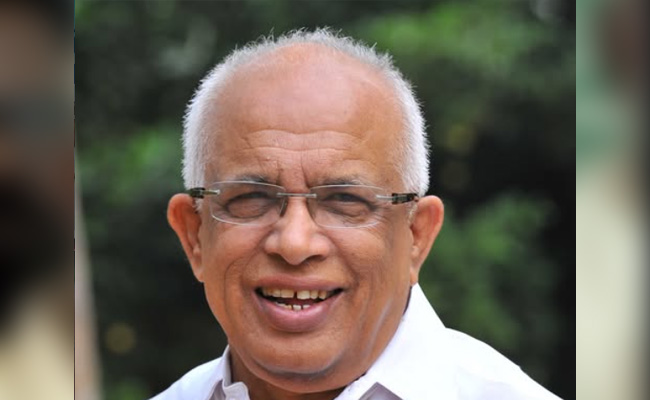
Palakkad (PTI): Kerala Electricity Minister K Krishnankutty on Saturday said there was no unannounced load shedding in the state, attributing recent power interruptions to temporary overload caused by high consumption.
Clarifying concerns raised from various parts of the state, the minister said the disruptions are not deliberate but occur when demand peaks, particularly between 10 pm and 11 pm.
"It is not being done intentionally. Power consumption has risen sharply, and when there is excessive and indiscriminate usage, the system experiences overload, leading to natural supply interruptions," he told reporters here.
His remarks come amid complaints that several areas have been witnessing frequent power cuts, often lasting around 15 minutes and occurring multiple times during the night.
Krishnankutty said the state's power demand has crossed 6,195 MW, putting pressure on the supply system. He added that around 70 per cent of Kerala's electricity is procured from outside, and existing power banking arrangements have been exhausted.
"We have approached the Regulatory Commission seeking permission to purchase more power. However, this will come at a higher cost," he said.
The minister said the government is trying to avoid increasing electricity tariffs and urged consumers to exercise restraint in usage to help manage the situation.
Responding to opposition criticism over the ruling LDF's earlier claims of a decade without power cuts, he said the current situation is not unique to Kerala.
A power crisis is emerging across the country, he said, and sarcastically asked the Opposition to take note of the role of natural factors in this.
Krishnankutty expressed confidence that the situation would improve within two days, while cautioning that long-term energy security would depend on enhancing in-state power generation.
He also warned that future generations could face serious challenges if adequate electricity production capacity is not developed within Kerala.