Chhetri named 2017 AIFF Player of the Year
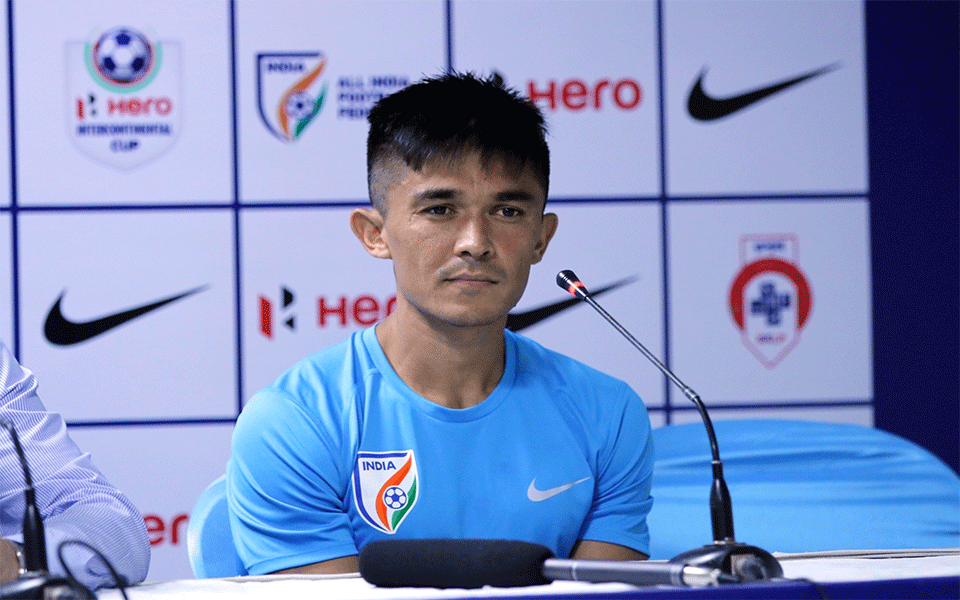
Mumbai, July 22 : Indian football team captain Sunil Chhetri was named the 2017 All India Football Federation (AIFF) Player of the Year here on Sunday.
Kamala Devi was adjudged the 2017 AIFF woman Player of the Year.
Besides recently becoming the second Indian to play 100 international games after former star striker Baichung Bhutia, Chhetri is also the skipper of former I-League champions and current Super Cup holders Bengaluru FC.
Meanwhile, Anirudh Thapa was declared the 2017 Emerging Player of the Year.
E.Panthoi is the 2017 woman Emerging Player of the Year, the AIFF said in a statement.
The award for best grassroots development programme went to the state association of Kerala.
Hero Motocorp which sponsors the I-League, Indian Super League and the newly launched Super Cup, took home the AIFF Award for long-time contribution to Indian football.
Sumanta Datta of Assam was named the best assistant referee while the award for best referee went to C.R. Srikrishna.
Let the Truth be known. If you read VB and like VB, please be a VB Supporter and Help us deliver the Truth to one and all.
Rickelton's ton in vain as SRH beat MI by 6 wickets
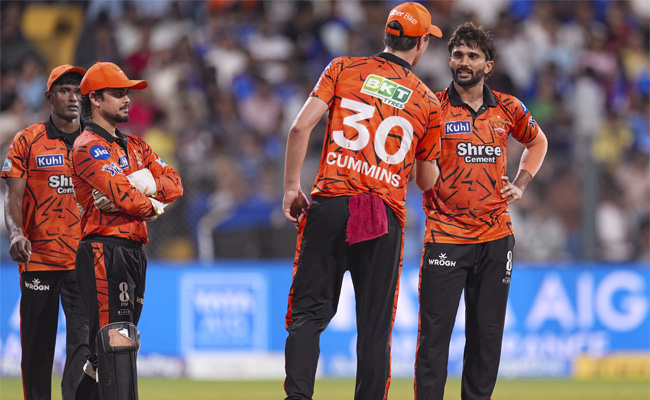
Mumbai (PTI): Ryan Rickelton's whirlwind unbeaten ton was overshadowed by Heinrich Klaasen's unbeaten 65 as Sunrisers Hyderabad defeated Mumbai Indians by six wickets in an IPL match here on Wednesday.
Chasing an imposing 244-run target, Travis Head (76 off 30) and Abhishek Sharma (45 off 24) shared 129 runs for the opening wicket to set the platform for SRH.
Klaasen (65 not out off 30 balls) then displayed his all-round hitting abilities to guide SRH home with the help of Nitish Kumar Reddy (21) and Salil Arora (30 not out off 10) in 18.4 overs.
Earlier, Rickelton's knock powered MI to 243 for five.
MI rode on a 93-run stand between Rickelton (123 not out off 55 balls) and Will Jacks (46 off 22) in 7.1 overs for the opening stand to power the side.
MI skipper Hardik Pandya scored a valuable 31 off 15 balls before being dismissed.
Praful Hinge (2/54), Eshan Malinga (1/29), Sakib Hasan (1/39) and Nitish Kumar Reddy (1/31) were the wicket-takers for SRH.
Brief Scores:
Mumbai Indian: 243 for 5 in 20 overs (Ryan Rickelton 123 not out; Praful Hinge 2/54).
Sunrisers Hyderabad: 249 for 4 in 18.4 overs (Travis Head 76, Heinrich Klaasen 65 not out; AM Ghazanfar 2/51).