Chidambaram Stadium ready to welcome T20WC with new outfield, drainage system
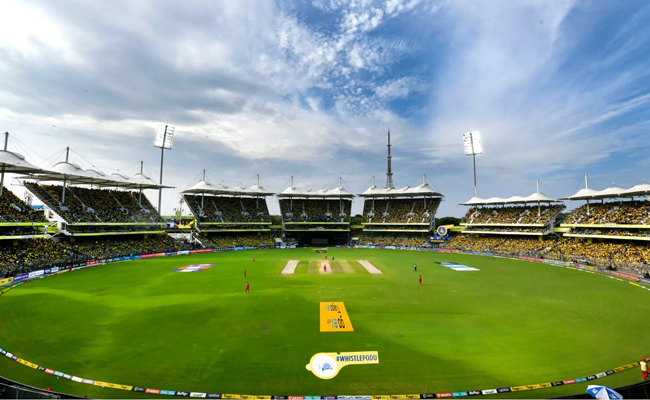
Chennai (PTI): The loud whirrs of JCBs, lifters and loaders reverberated inside the fabled MA Chidambaram Stadium for eight months instead of the sweet sound of a ball meeting the meat of a cricket bat.
But the whole exercise resulted in a wonderful outfield and drainage system just in time for the ICC T20 World Cup.
So, why did the Tamil Nadu Cricket Association (TNCA) decide to undertake such a time consuming venture with the World Cup approaching?
"See, the last time we did this outfield was I think in 2011, so it has been quite some time. So, this whole exercise has taken us some 8 months starting from June (2025)," TNCA secretary U Bhagwandas Rao told PTI.
“We excavated all the soil, removed all the old pipes. So, it is filled with gravel, river sand, and then the actual grass that you see," he added.
Along with relaying the outfield and carrying out the regular maintenance works, Rao said, the upgradation of the draining system held an important place.
“In between all that, we have changed and completely upgraded the entire drainage system for the stadium, including the motors, the sprinkler systems, the drainage flow out of the stadium…all that has been changed.
"So, that has taken us around seven months and then we finished it off with the synthetic running track. So, that is more or less completed, but the wickets have not changed, all old 9 pitches apart from the routine yearly maintenance," he detailed.
Rao said the rains late last year also helped in gaining some momentum to the repair work.
"The drainage is exceptional. We did not expect it to be so good. The November rains also helped us a lot. You know, nothing like natural testing of all these facilities. It actually kind of accelerated the growth of the grass after planting. I think that helped a lot — the two weeks of heavy rains that we had,” he noted.
Rao said the International Cricket Council (ICC) too inspected the outfield and drainage system thoroughly before giving a thumbs up.
“See, the ICC, when they came, they said it was exceptional. They did not have a problem. All of them liked the stadium and the facility.
“The infrastructure like pavilion, gates, the exits, other common areas…yeah..all that has been completely redeveloped in the last 4-5 years. Of course, Hari (Harihara, the TNCA spokesperson), has been efficient in his coordination, making our job that much easier,” he said.
Rao also said works at Chepauk helped TNCA to give more attention to district grounds, where the association now regularly hosts the Tamil Nadu Premier League (TNPL) matches.
“This work actually started three years back when the previous administration took over. I think one of the primary goals or the vision was to develop infrastructure in districts. They should not keep coming back to Chennai because the bulk of the talent is originating from the districts.
“So, the plan was to have these satellite centers which have practice facilities, nets and full residential quarters. So, we have one in Tirupur, in Salem, in Coimbatore and in Theni. We have chambers in Natham (Dindigul).
“They all have come out exceptionally well. So, all our state teams whenever they play board games, we stay at our own facilities. It has also helped the women's cricketers. You know this residential thing is much better for them, as it’s safer for them. Now, many parents too have told us that they feel mentally very comfortable,” he added.
Rao said the TNCA is open to extending these facilities to cricketers from around the country or even outside of it.
“So much care has been given to all these facilities, the outside state associations now have come and seen these facilities, including MCA. Mumbai wants to use the facility whenever they have the monsoons for two months there.
“I am told that some of the foreign boards also want to come and play here. So, the idea is that these are not only for ours, but we want to provide these facilities for as many talents as possible. But the (TNCA) Center of Excellence will be very much in Chennai and all report into the TNCA Academy,” he detailed.
Let the Truth be known. If you read VB and like VB, please be a VB Supporter and Help us deliver the Truth to one and all.
Car catches fire on Delhi-Mumbai Expressway in Rajasthan, five of family burnt alive

Jaipur (PTI): Five members of a family were burnt alive while the driver was seriously injured after a car caught fire on the Delhi-Mumbai Expressway in Rajasthan's Alwar district, police said on Thursday.
The incident took place near Maujpur on Wednesday night when the victims were returning from a pilgrimage to Vaishno Devi in Jammu and Kashmir.
Additional Superintendent of Police Priyanka Raghuvanshi said fire tenders were rushed to the spot and the blaze was brought under control in 15 minutes, but by then the car was completely gutted.
The deceased have been identified as Santosh, his wife Shashi, mother Parvati and daughters Raghani and Sakshi, all residents of Chainpura in Sheopur district of Madhya Pradesh.
Deputy Superintendent of Police Kailash Jindal said a short circuit is suspected to have triggered the blaze. As it was a CNG vehicle, the fire spread fast, leaving the occupants with no time to escape.
"Only skeletal remains were recovered from the vehicle, which have been preserved separately. DNA tests will be conducted to establish their identity," he said.
The car driver, identified as Vinod Kumar Mehar, managed to jump out of the vehicle but sustained around 80 per cent burn injuries. He was initially taken to a nearby health centre and later referred to Jaipur for advanced treatment, officials said.
Further investigation is underway.