Clinical KKR outplay RCB, win by nine wickets
Abu Dhabi(PTI): An authoritative Kolkata Knight Riders bossed Royal Challengers Bangalore from the beginning to the end to record a convincing nine-wicket win in their Indian Premier League match here on Monday.
Showing serious intent after their mediocre outing in the first phase of the league earlier this year, the Knight Riders bowlers fired in unison to bundle out Royal Challengers Bangalore for a paltry 92.
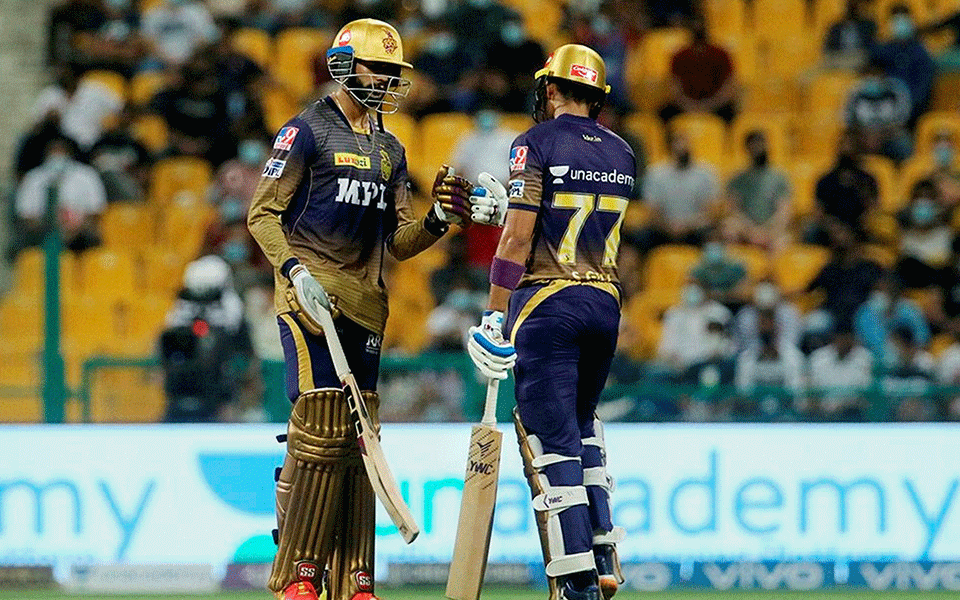
Then, the opening duo of Shubman Gill and debutant Venkatesh Iyer played some breathtaking shots and made light work of the chase of 93, completing the formality with as many as 10 overs to spare.
The supremely-talented Gill got out for a 48 off 34 deliveries while Iyer, who could have been a successful management professional after finishing his MBA in finance and giving up a placement as a tax consultant, was looking good on a 27-ball 41 not out when the winning run was hit.
The result will not just boost their morale immensely but also improve KKR's net run rate going ahead.
Opening the bowling, architect-turned-mystery spinner Varun Chakravarthy (3/13) did the star turn with three wickets in an excellent four-over spell. Star all-rounder Andre Russell (3/9 in three overs) also bagged three wickets, including AB de Villiers' golden duck, while there were two for Lockie Ferguson.
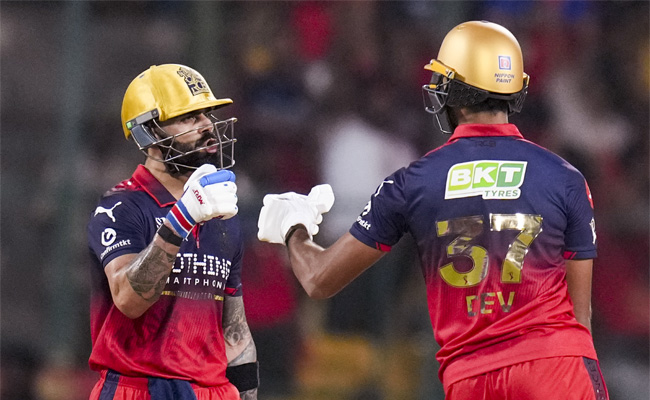
Devdutt Padikkal was the highest scorer with 22 runs in a forgettable outing in skipper Virat Kohli's 200th game for RCB.
Bowling the day's second over, right-arm medium pacer Prasidh Krishna dealt RCB a big blow when he had Virat Kohli trapped in front of wicket with his fourth delivery that jagged in and hit him above the knee-roll.
Having completed a double century of matches for RCB, Kohli went for a review but the ball-tracking technology confirmed that it was going on to hit the stumps. This was immediately after Kohli sent a Krishna delivery in front of square on the off-side for a lovely four.
New Zealand fast bowler Lockie Ferguson replaced Chakravarthy and the gifted Devdutt Padikkal smashed the pacer straight over his head to get things moving for RCB.
Krishna bowled back-to-back no balls (one front foot and one beamer) in the next over and while debutant Srikar Bharat failed to break the shackles, Padikkal capitalised on the extra delivery with a boundary.
KKR skipper Eoin Morgan made another bowling change by bringing in Sunil Narine and while the Trinidadian spinner could not get a breakthrough in his first over, Ferguson succeeded in his second when he had Padikkal caught behind when the batsman tried to play the ball fine past the keeper despite hardly getting any room to execute the ramp shot.
Russell ended Bharat's stay in the middle as the pressure mounted on the batsman.
And then came the biggest blow for RCB when Russell bowled AB de Villiers for a first-ball duck with a top-notch yorker targeting the leg-stump.
RCB were in all sorts of trouble at 52 for four in the ninth over and it became only worse for them with the departure of Glenn Maxwell, who brought his own downfall with a needless heave against Chakravarthy's tossed-up delivery, and Wanindu Hasaranga, the team's another debutant, getting out cheaply.
Both the batsmen were dismissed off successive balls on a surface that was on the slower side, something that Kohli talked about after opting to bat at the toss.
Let the Truth be known. If you read VB and like VB, please be a VB Supporter and Help us deliver the Truth to one and all.
Allahabad HC orders probe into 'reinstatement' of teacher in UP's Barabanki
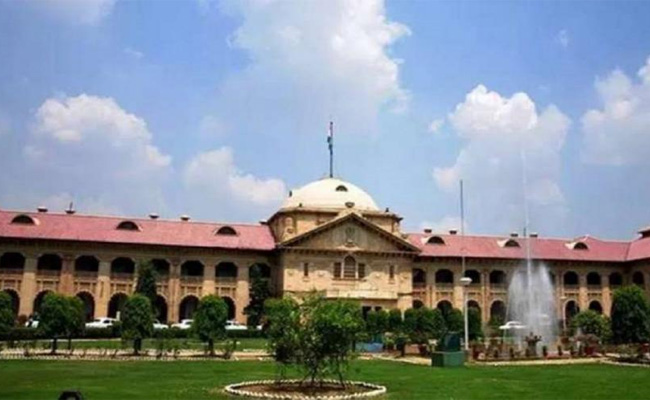
Lucknow (PTI): The Lucknow Bench of the Allahabad High Court on Friday ordered a probe by the special task force (STF) into alleged irregularities in the rejoining of a teacher at City Intermediate College in Barabanki, observing that the reinstatement appeared to be prima facie illegal.
The court also directed the recovery of the salary paid to the teacher during the disputed period.
A bench of Justice Rajeev Singh passed the order on a petition filed by the college management committee. The court expressed doubts over the roles of the District Inspector of Schools (DIOS), Barabanki, the college principal and the teacher concerned and hence, directed a detailed inquiry into the matter.
Taking note of alleged manipulation of records and misleading submissions, the court ordered the immediate transfer of the Barabanki DIOS to ensure a fair probe. It also directed the initiation of disciplinary proceedings against the then joint director of education of the Ayodhya division.
In its order, the court found that the teacher, Abhay Kumar, was initially appointed as an assistant teacher in 2018 but joined an Eklavya Model Residential School in Chhattisgarh as a lecturer in June 2024 without obtaining permission from the management. His subsequent request to retain the lien was rejected.
Despite this, he was allowed to rejoin the Barabanki College in September 2025 on the directions of the joint director of education and the DIOS, and was even paid the salary for October 2025. The court termed the rejoining "wholly illegal" and lacking any legal basis.
The bench also expressed concern over lapses in communication within the education department and directed the Uttar Pradesh chief secretary to ensure that official orders are communicated through email and WhatsApp as well, to prevent disputes.
The matter is next listed for hearing on May 28 when a compliance report is sought.