Cricketer Graham Thorpe took his own life after battling with depression and anxiety, reveals wife

London, Aug 12: Former England cricketer Graham Thorpe took his own life after a struggle with depression and anxiety fuelled by his failing health in the last two years, his wife Amanda has revealed.
The 55-year-old passed away on August 5. Thorpe's demise was announced by the England and Wales Cricket Board and now his wife has revealed in an interview to former England captain Michael Atherton that he had a long mental and physical battle with himself before he took his own life.
"Despite having a wife and two daughters whom he loved and who loved him, he did not get better," Thorpe's wife was quoted as saying by 'The Times'.
"He was so unwell in recent times and he really did believe that we would be better off without him and we are devastated that he acted on that and took his own life."
A ceremony was held before the start of a match between the Farnham Cricket Club and the Chipstead Cricket Club last Saturday in memory of Thorpe, which was attended by his wife and their daughters Kitty (22) and Emma (19).
"For the past couple of years, Graham had been suffering from major depression and anxiety. This led him to make a serious attempt on his life in May 2022, which resulted in a prolonged stay in an intensive care unit," she said.
His wife revealed that despite his work assignments, Thorpe continued to suffer.
"Despite glimpses of hope and of the old Graham, he continued to suffer from depression and anxiety, which at times got very severe. We supported him as a family and he tried many, many treatments but unfortunately none of them really seemed to work,” she said.
The report added that the family is now considering starting a foundation in his name.
Thorpe's daughter Kitty said he was "not the same person" after a point and that he "could not see a way out".
"He had loved life and he loved us but he just couldn't see a way out. It was heartbreaking to see how withdrawn he had become," she said.
"It was strange to see this person trapped in the body of Dad. That's why we've been so happy that the many reflections have been about his life before this illness took over.
"I am glad that's how everyone does remember him, rightly so, as the complete character he was," Kitty added.
Let the Truth be known. If you read VB and like VB, please be a VB Supporter and Help us deliver the Truth to one and all.
Rahul Gandhi to go on two-day Raebareli visit from May 19
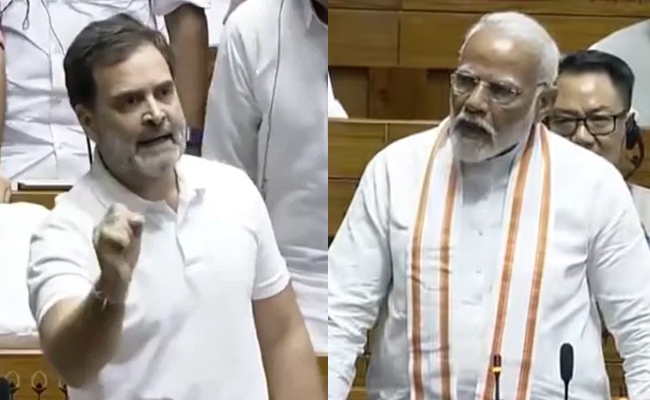
Raebareli (UP) (PTI): Leader of the Opposition in the Lok Sabha and Congress MP from Raebareli Rahul Gandhi will arrive here on May 19 on a two-day visit, a Congress office-bearer said on Monday.
Congress district president of Raebareli Pankaj Tiwari said that on the first day, Gandhi will inaugurate a marriage hall at Thakurain Kheda in Bachhrawan. Subsequently, he will address a public meeting in Khiron. In Lalganj, he will participate in a 'mahila samvaad' programme.
He further said that on May 20, he will meet the public during a 'Janata Darshan' programme at the Bhuyemau Guest House. Following this, he will participate in the unveiling of a statue of Veera Pasi and attend a public meeting in Lodhwari.
He will then depart for Amethi.
In Amethi, Gandhi will hold meetings with party functionaries, workers and senior leaders at the party's district headquarters, Congress district unit chief Pradeep Singhal said on Sunday.
According to political observers, this meeting would form a part of the strategic preparations for the 2027 Uttar Pradesh Assembly elections, alongside an organisational review.
Discussions during the meeting are likely to focus on strengthening the party organisation down to the booth level, increasing participation of youth and women workers, and accelerating public outreach campaigns across villages.
According to sources, a large number of party workers -- from Gram Sabha to the district level -- have been invited to attend the meeting.
Gandhi is expected to interact directly with workers.
During the one-day visit, the Congress leader will also travel to Poore Ramdeen Pandit -- the native village of late Congress district president Yogendra Mishra -- to meet his family members.
Mishra, considered a close associate of the Gandhi family, passed away on March 1 following a prolonged illness.
Political activities in the district have intensified ahead of Gandhi's visit, and party workers have already started making arrangements for his reception.
Kishori Lal Sharma, the Congress MP from Amethi, is also holding regular meetings with local leaders and functionaries to review the preparations.