CWG: Sharath-Sathiyan clinch silver in men's doubles TT
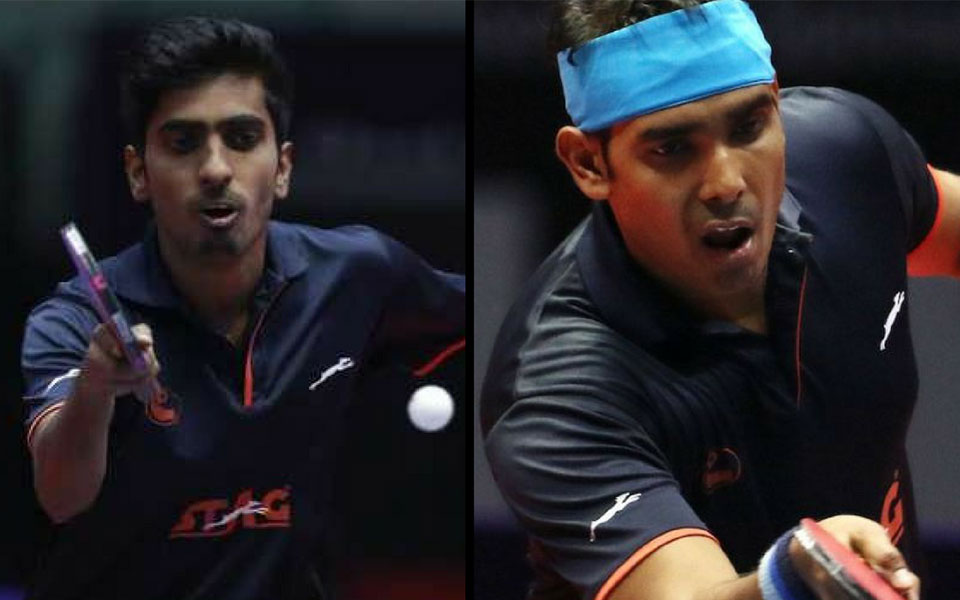
Gold Coast, April 14: India paddlers Achanta Sharath and Gnanasekaran Sathiyan lost their men's doubles gold medal match at the 21st Commonwealth Games here on Saturday.
The Indian duo lost to England's Paul Drinkhall and Liam Pitchford 2-3 (5-11, 12-10, 11-9, 6-11, 8-11).
The Indian pair committed several errors on length of serve and shots which resulted in their loss.
Right from the start, Sharath and Sathiyan struggled with their service and return shots. But soon, the Indian duo corrected the mistakes and won the next two games. The Indians won the third game 11-9 coming back from 6-9 down to make it 2-1.
But Sharath missed a few regulation shots in the next two games and his partner also made few mistakes and the England players took full advantage of it. The Indian duo, however, tried to match the pace but failed and lost the issue.
Let the Truth be known. If you read VB and like VB, please be a VB Supporter and Help us deliver the Truth to one and all.
Thumbay University Hospital inaugurates Institute of Neurosciences in Ajman
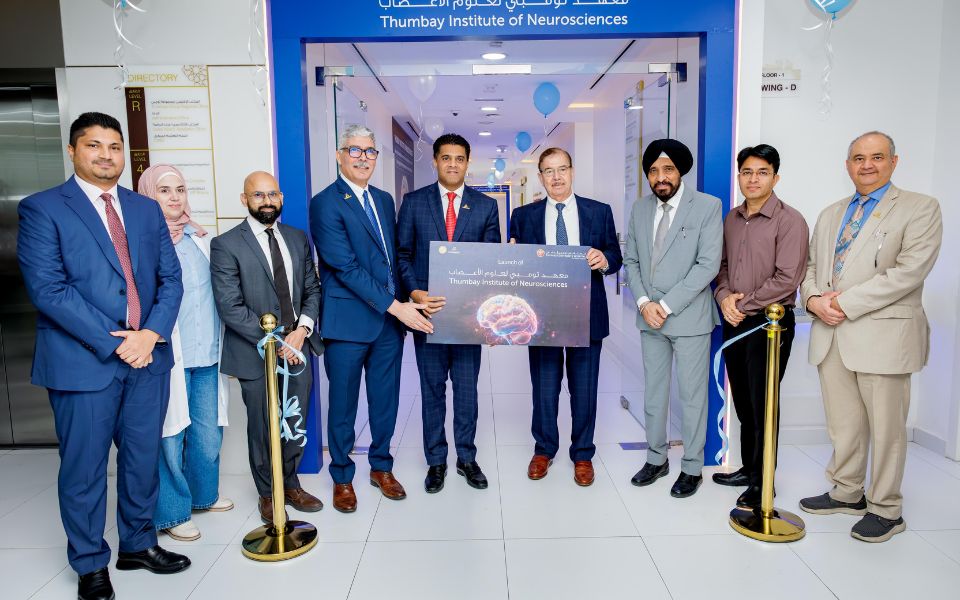
Ajman: Thumbay University Hospital has inaugurated the Thumbay Institute of Neurosciences, a specialised centre for the diagnosis, treatment, and management of disorders related to the brain, spine, and nervous system.
The inauguration was presided over by Dr. Thumbay Moideen, Founder and President of Thumbay Group, in the presence of senior healthcare officials and representatives from the group. Dr. Abdul Karim Msaddi, Consultant Chief Neurosurgeon and Chairman of the ArabSpine Course Diploma and Dubai International Spine Conference, attended the event as the chief guest.
According to the hospital administration, the institute will function with a multidisciplinary team comprising neurosurgeons, neurologists, interventional radiologists, neurotechnicians, and rehabilitation specialists. Neurology services will address conditions such as stroke, epilepsy, Parkinson’s disease, multiple sclerosis, Alzheimer’s disease, migraines, neuropathy, vertigo, and sleep disorders. Diagnostic support includes electroencephalography (EEG), electromyography (EMG), nerve conduction studies, and neuroimaging.
The institute will also provide surgical interventions for brain, spine, and nerve-related conditions, including brain tumours, vascular abnormalities, traumatic brain injuries, spinal disorders, and paediatric neurological cases. Procedures such as cranioplasty, hydrocephalus management, and spinal fixation will be carried out using microsurgical and minimally invasive techniques, supported by neuronavigation systems and intraoperative neuro-monitoring.
Rehabilitation services at the institute include technology-assisted therapies such as robotic rehabilitation, transcranial magnetic stimulation, hyperbaric oxygen therapy, gait and motion analysis, EMG-based functional assessments, and exoskeleton-assisted rehabilitation.
Hospital authorities stated that the institute will follow a structured care model in which neurologists manage non-surgical cases and neurosurgeons undertake surgical interventions when required.
.jpeg)