Deepti's all-round show gives India winning start in Women's World Cup
_vb_97.jpeg)
Guwahati (PTI): The experience of Deepti Sharma was on full display as she struck a composed half-century alongside debutant Amanjot Kaur before taking a decisive three-wicket haul to help India overcome early hiccups and seal a 59-run win over Sri Lanka via DLS method in their Women's World Cup opener here on Tuesday.
For Sri Lanka, it was a case of missed opportunities. Having put India into bat, they had the game in their grasp when Harmanpreet Kaur and Co slipped to 124/6 with four wickets falling in the space of two overs.
But sloppy fielding let them down as the Indian middle and lower order capitalised to post a challenging 270-run target in 47 overs, after rain interruptions spanning nearly 90 minutes reduced the contest to a curtailed affair.
In reply, Lankan skipper Chamari Athapaththu looked ominous, striking the ball cleanly in her 43 off 47 but after her dismissal the innings lost the momentum and eventually ended at 211 in 45.4 overs.
Playing without senior pacer Renuka Singh, India's bowling unit showed promise with Deepti leading from the front.
The new-ball duo of youngster Kranti Goud and Amanjot Kaur struck with a wicket apiece. Ably marshalled by Deepti, the three-pronged spin attack extracted sharp turn from a dry surface that had stayed under covers for over an hour due to rain interruptions.
Sneh Rana returned figures of 2/32, while rookie left-arm spinner Shree Charani impressed with 2/37 from her eight overs.
For Sri Lanka, Chamari was the standout batter. She repeatedly found the middle of the bat, punishing Deepti with two sixes and as many fours across successive overs.
But the Indian all-rounder had the last laugh. Coming around the wicket with a plan, she bowled full, flat, and quick and Chamari, looking to whip through the on-side, played all around it and missed, her stumps rattled.
That dismissal proved to be the turning point, as Sri Lanka's run-rate dipped and their innings was derailed.
By the time Deepti wrapped up her spell, conceding little and breaking Sri Lanka's backbone, India’s bowlers had sensed urgency, kept the squeeze on, and ensured the contest swung firmly in their favour.
Earlier, Amanjot displayed character and grit under pressure in her maiden Women's World Cup match and she teamed up with veteran Deepti to lift
India from a precarious position and post a challenging 269 for eight.
Put into bat, India were in deep trouble at 124/6 when the 24-year-old from Mohali, Amanjot, walked into the middle.
Alongside senior partner Deepti (53 off 53), Amanjot (57 off 56) rebuilt the innings with a 103-run partnership off 99 balls.
From the start, Amanjot showed remarkable composure, rotating the strike and punishing loose deliveries. She also survived three reprieves -- dropped on 18, 37, and 50 -- as the inexperienced Sri Lankan fielders struggled to hold onto chances and let it slip in the back-end.
She brought up her half-century off just 45 balls, featuring five fours and a towering six, blending aggression with control to keep India afloat.
Senior batter Deepti anchored the other end and completed her 16th WODI fifty in the process.
Sneh Rana also put on a fine cameo of 28 not out from 15 balls with with two fours and two sixes to prop up the total.
Title favourites and playing at home, India had a terrible start to their tournament campaign, as Sri Lanka caught them by surprise, reducing them to 124/6 with a devastating spell from left-arm spinner Inoka Ranaweera.
The 39-year-old Inoka ripped through the Indian middle order, snaring three wickets in five balls -- a well-set Harleen Deol (48), Jemimah Rodrigues (0) and skipper Harmanpreet Kaur (21) -- to leave India reeling.
Let the Truth be known. If you read VB and like VB, please be a VB Supporter and Help us deliver the Truth to one and all.
SC notice to Centre on PIL against Muslim personal law sections being 'discriminatory' against women
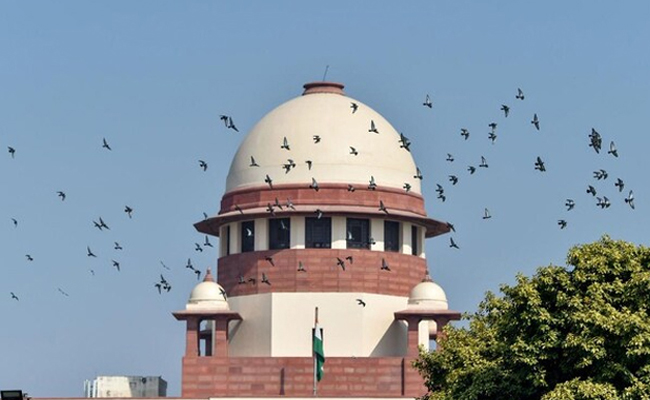
New Delhi (PTI): The Supreme Court on Thursday sought the Centre's response on a PIL challenging the constitutional validity of certain provisions of the Muslim Personal Law (Shariat) Application Act, 1937, on the ground that those are allegedly discriminatory against women.
A bench of Chief Justice Surya Kant and Justices Joymalya Bagchi and Vipul M Panchol took note of the submissions made by lawyer Prashant Bhushan, who appeared in the matter for petitioners Poulomi Pavini Shukla and the Nyaya Naari Foundation, and issued a notice to the Union Ministry of Minority Affairs.
The plea says the current Shariat inheritance rules are "manifestly discriminatory" against women, often granting them only half or less of the share allocated to their male counterparts.
Bhushan said the 1937 Act violates Article 14 (right to equality) of the Constitution.
He said matters of succession are civil in nature and do not constitute an "essential religious practice" protected under Article 25.
"Saying women will get half or even less than half compared to male counterparts is discriminatory," the lawyer said.