Dhawan strikes 97, Delhi Capitals beat KKR by 7 wickets
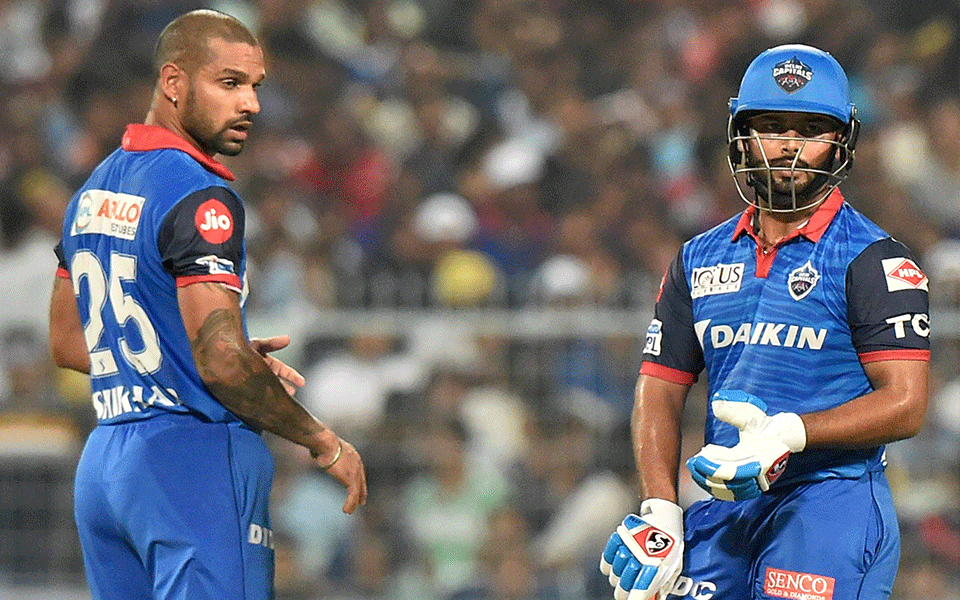
Kolkata, Apr 12: Shikhar Dhawan found form with a 63-ball 97 and powered Delhi Capitals to a seven-wicket win over Kolkata Knight Riders in the IPL here Friday, leaving two legends at the visiting dugout beaming.
Chasing 179, Colin Ingram launched one down the ground to finish the game in style and deny Dhawan what would have been his maiden hundred in this format.
Coach Ricky Ponting was the first to stand up and applaud the big six from Ingram, and advisor Sourav Ganguly had a smile on his face.
Two days ahead of the Indian team selection for the World Cup, Dhawan, who survived a review on 11, decorated his knock with 11 boundaries and two sixes, as Delhi registered only their second IPL win at the Eden Gardens.
Delhi climbed to fourth spot with eight points from seven matches, while this was KKR's second straight defeat after losing to Chennai Super Kings in their last match. They now have eight points from seven games.
Rishabh Pant (46 off 31 balls) played a perfect second fiddle to Dhawan, curbing his rash shots and showed immense maturity in a 105-run partnership from 69 balls, which virtually killed the contest.
Pant, however, fell short of his half-century as he failed to clear the rope against Nitish Rana.
Going through a lean patch since his sedate 47-ball 51 against Chennai Super Kings on March 26, Dhawan was seen going through an extensive drill under Ganguly, who gave him useful tips.
Prithvi Shaw (14) gave Delhi an explosive start, hammering two sixes off New Zealand pacer Lockie Ferguson, but he could not make it big while skipper Shreyas Iyer departed inside the powerplay.
There was a mountain to climb with 122 required from 14.2 overs when Pant joined Dhawan in the middle. But the duo got the job done with consummate ease.
Earlier, Andre Russell blazed away to a 21-ball 45 after Shubman Gill's brisk half-century, powering Kolkata Knight Riders to a challenging total.
This was Russell's sixth successive 40-plus score, his four sixes and three boundaries coming after youngster Gill stroked 65 off 39 balls, helping the hosts recover from Ishant Sharma's wicket-maiden first over.
The Jamaican, who was cleaned up by Kagiso Rabada with a toe-crushing yorker in their Super Over defeat in the first leg, also exacted a sweet revenge smashing the South African for two sixes in an over that yielded 16 runs.
Chris Morris removed Russell in the penultimate over when he was caught in the deep by Rabada.
Sent into bat, from batting at No. 6 in their last match against Chennai Super Kings, Gill was promoted to open the innings and the 19-year-old responded with a fine knock, his second IPL fifty, and first this season.
Gill smashed seven fours and two sixes, both against spinner Axar Patel, and along with Robin Uthappa (28), added 63 runs after a horror start.
Ishant knocked out the off-stump of Joe Denly with a fantastic inswinger, the Englishman lasting just one ball on his IPL debut.
Delhi could not have asked for a better start with Ishant starting the proceedings with a wicket-maiden.
But KKR did well to bring themselves out of the rut with Uthappa and Gill counter-attacking with a flurry of boundaries.
Let the Truth be known. If you read VB and like VB, please be a VB Supporter and Help us deliver the Truth to one and all.
Rickelton's ton in vain as SRH beat MI by 6 wickets
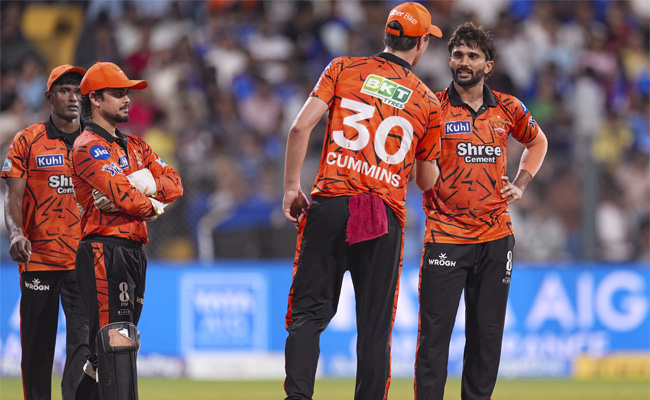
Mumbai (PTI): Ryan Rickelton's whirlwind unbeaten ton was overshadowed by Heinrich Klaasen's unbeaten 65 as Sunrisers Hyderabad defeated Mumbai Indians by six wickets in an IPL match here on Wednesday.
Chasing an imposing 244-run target, Travis Head (76 off 30) and Abhishek Sharma (45 off 24) shared 129 runs for the opening wicket to set the platform for SRH.
Klaasen (65 not out off 30 balls) then displayed his all-round hitting abilities to guide SRH home with the help of Nitish Kumar Reddy (21) and Salil Arora (30 not out off 10) in 18.4 overs.
Earlier, Rickelton's knock powered MI to 243 for five.
MI rode on a 93-run stand between Rickelton (123 not out off 55 balls) and Will Jacks (46 off 22) in 7.1 overs for the opening stand to power the side.
MI skipper Hardik Pandya scored a valuable 31 off 15 balls before being dismissed.
Praful Hinge (2/54), Eshan Malinga (1/29), Sakib Hasan (1/39) and Nitish Kumar Reddy (1/31) were the wicket-takers for SRH.
Brief Scores:
Mumbai Indian: 243 for 5 in 20 overs (Ryan Rickelton 123 not out; Praful Hinge 2/54).
Sunrisers Hyderabad: 249 for 4 in 18.4 overs (Travis Head 76, Heinrich Klaasen 65 not out; AM Ghazanfar 2/51).