Dhoni follows ICC's regulation, removes 'Balidaan Badge'
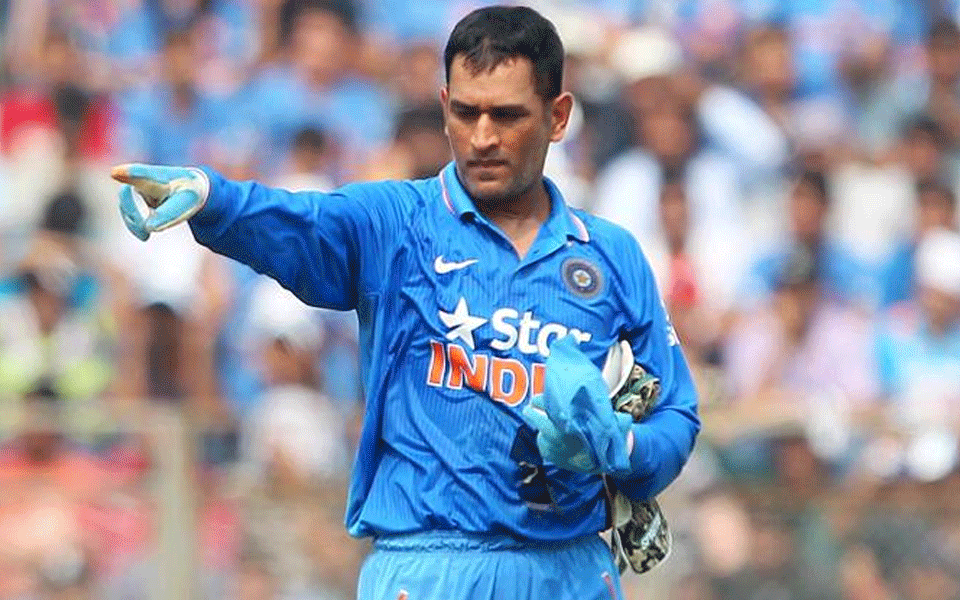
London: Abiding by the ICC's diktat, Mahendra Singh Dhoni was seen without the Army insignia on his wicketkeeping gloves as he took the field after India posted a mammoth 352/5 against Australia in a marquee World Cup clash at the Kennington Oval here on Sunday.
The whole issue started during India's opening game against South Africa on June 5 when Dhoni once again professed his love for the country's security forces by sporting the regimental dagger insignia of the Indian Para Special Forces on his wicketkeeping gloves.
Social media went into a tizzy in support of India's World Cup winning captain and urged he be allowed to wear the same in all of the remaining matches.
The Board of Control for Cricket in India (BCCI) then requested the ICC to allow Dhoni to keep sporting the 'Balidaan Badge' but to no avail, as the game's global governing body stuck to its guns, saying it was a breach of the ICC regulations.
As per the regulations, Dhoni would have been reprimanded if he sported the Army insignia on his keeping gloves on Sunday. The second offence would attract a fine of 25 per cent of the match fee. A third offence would mean 50 per cent fine of the fee and a fourth offence would see the player losing 75 per cent of his match fee. All of this within a span of 12 months.
The BCCI, under the supervision of the Committee of Administrators (CoA), failed to back Dhoni in the Army insignia controversy with CoA chief Vinod Rai stating that they will have to abide by ICC's ruling.
Let the Truth be known. If you read VB and like VB, please be a VB Supporter and Help us deliver the Truth to one and all.
CJI's advice to aspirant: Join the bar, become a lawyer, don't hanker for judicial services post
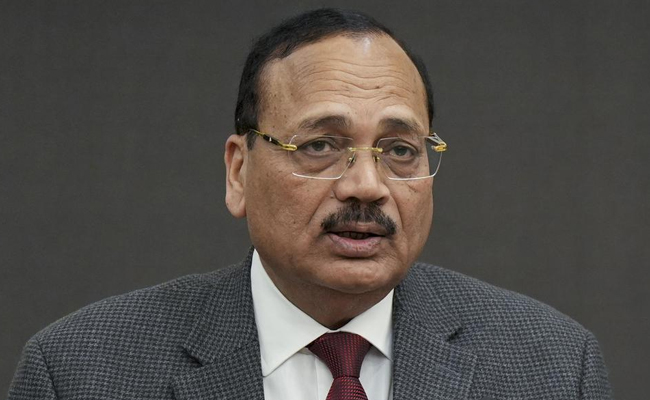
New Delhi (PTI): She came to the Supreme Court seeking a re-evaluation of her paper in the examination for joining judicial services as a magistrate. What she got instead was a rejection — and a candid confession by the Chief Justice that he too had wanted to join the judicial services in his youth but was advised by a senior judge to become a lawyer instead.
A bench comprising Chief Justice Surya Kant and Justice Joymalya Bagchi on Friday dismissed a plea filed by Prerna Gupta, the judicial services aspirant.
As Gupta pressed her case, the CJI intervened and said, "Let me share my personal story and I hope you will go happily as we cannot allow your petition."
He recounted his time as a final-year law student in 1984 when he wanted to become a judicial officer. As per requirement, he cleared the written test and was set to appear for an interview.
Judicial services is one of the two routes to become a judge after initially joining as a magistrate in lower court and thereafter rising through the ranks to become judge in a high court and possibly the Supreme Court.
The other route is to join the Bar, which means becoming a lawyer, and after building a reputation be picked from the Bar to become a judge at a senior level.
By the time the CJI's exam results came out, he had started practising at the Punjab and Haryana High Court when he was called for the interview.
The senior-most judge on the interview panel happened to be a judge before whom he had recently argued two significant matters.
"One of the matters was Sunita Rani vs Baldev Raj, where he had allowed my appeal in a matrimonial case and set aside the decree of divorce granted by the District Judge on the ground of schizophrenia," he noted.
Before the interview could take place, the judge called the young Surya Kant to his chamber and asked, 'Do you want to become a judicial officer?'
"I said 'yes.' He immediately said, 'Get out from (my) the chamber.'"
The courtroom fell silent as the CJI Justice described his initial heartbreak.
“I came out trembling. All my dreams were shattered. I thought he had snubbed me and that my career was over,” the CJI said.
However, the story took another turn the following day and the judge summoned him again, this time offering a piece of advice that would change the trajectory of his life.
“He said, ‘If you want to become (a judge), you are welcome. But my advice is, don’t become a judicial officer. The Bar is waiting for you,’” Justice Surya Kant recalled.
The CJI said he decided to skip his interview and didn't even tell his parents at first, fearing their disappointment, and instead chose to dedicate himself to his practice as an advocate.
“Now tell me did I make a bad right or bad decision,” the CJI asked and the litigant lawyer left the court with a smile on her face despite her case being dismissed.
Encouraging the petitioner to look toward the future rather than dwelling on the re-evaluation of a single paper, Justice Surya Kant said, "The Bar has much to offer."