Dinesh Karthik, Hardik Pandya help India put a fighting 169/6 against SA
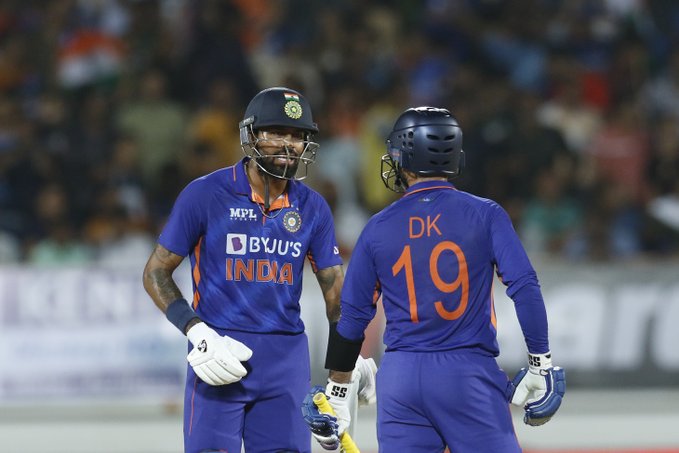
Rajkot, Jun 17: Dinesh Karthik scored his maiden fifty close to 16 years after his T20 debut and alongside vice-captain Hardik Pandya, took India to a fighting 169 for six in the fourth game against South Africa here on Friday.
The Indians were struggling at 81 for four before a 65-run stand between Hardik (46 off 31) and Karthik (55 off 27) brought the home team back into the game.
Thanks to Hardik and Karthik, India were able to amass 73 runs in the last five overs.
South Africa put the Indians on the back-foot in the powerplay despite the absence of their lead bowler Kagiso Rabada due to an injury.
The other pacer, who missed due to an injury was Wayne Parnell while star opener Quinton de Kock made a welcome return at the expense of Reeza Hendricks.
The first ball after the powerplay made matters worse for India as the hosts struggled to 40 for three in 6.1 overs.
Ishan Kishan, who played some fine strokes en route to his 27 off 26, was dismissed on the very ball of Anrich Nortje's opening spell.
The southpaw tried to guide a short ball to third man but got himself in an awkward position to top edge it to de Kock.
India's top three has not looked comfortable against high quality pace in the series and it was evident here once again.
Ruturaj Gaikwad, who had found form in the previous game, was the first one to depart after the extra bounce from Lungi Ngidi induced the outside edge.
Iyer, who has been troubled by the short ball in this series, missed a good length ball from Marco Jansen that pitched on middle and seamed back a little.
The Proteas had to take a DRS review for a LBW to send Iyer back in the hut, giving Jansen his first wicket on his T20 debut.
Post the powerplay, skipper Rishabh Pant and Hardik, gave the innings a move on with a 41-run stand.
Indian batters have targeted South Africa's weak link, the spinners, throughout the series and that trend continued on Friday.
Hardik hammered Tabraiz Shamsi was successive sixes for much needed runs while Pant was trying to find his range at the other end.
However, the India skipper once again went for the big one against a wide ball and that led to his downfall. On this occasion, Maharaj purposely bowled wide and Pant took the bait only to edge it back to short third man.
It was the fourth time in the series Pant perished to a ball wide of off stump.
The momentum changing stand came via Hardik and Karthik who swept his way to a memorable knock.
Having made his T20 debut back in December 2006 when India played their maiden game in the shortest format, the man of comebacks finally completed his first half century.
Standing deep in the crease, Karthik relied on the sweeps -- conventional towards square-leg, slogs over cow corner and reverse over '45' both against spinners and pacers, to get the bulk of his boundaries.
The most attractive stroke of his innings was the slog sweep off pacer Dwaine Pretorius that sailed over deep square leg.
Let the Truth be known. If you read VB and like VB, please be a VB Supporter and Help us deliver the Truth to one and all.
Delhi schools suspend outdoor activities, plan early steps to shield students from heat
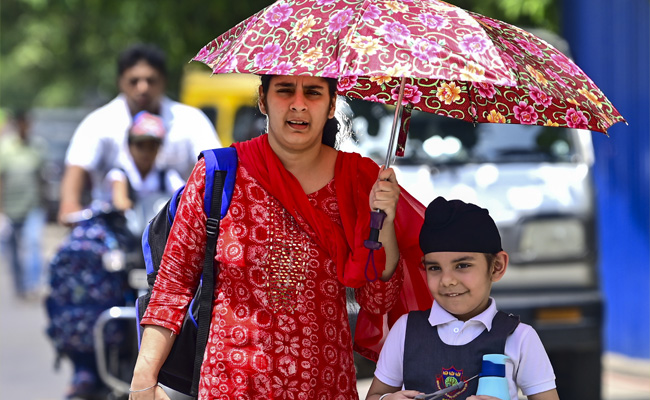
New Delhi (PTI): To shield students from heat-related ailments amid soaring temperatures and harsh afternoon sun, schools across Delhi have begun taking precautionary measures by suspending outdoor activities, shifting assemblies indoors, with some even considering early closure for junior classes.
From indoor games and hydration breaks to ORS consumption and modified dispersal timings, schools are tightening measures as the city braces for prolonged heatwave conditions.
Sudha Acharya, principal at ITL Public School in Dwarka, said all outdoor activities, including morning assembly and games, have been shifted to the school's multipurpose hall.
“We have issued an advisory to all parents to take precautionary measures before sending their children to school. We are also planning to close the school from classes 1 to 8 from May 14 onward if the weather conditions worsen," she said.
Mallika Preman, principal at Tagore International School in East of Kailash, said students have been advised to remain indoors during peak afternoon hours and keep themselves hydrated.
“We have suspended all outdoor activities, and students now play indoor games like carrom and chess. We have also modified the dispersal system so that students are not brought out until their parents arrive at their designated collection areas,” Preman said.
“This reduces their exposure to heat in the afternoon. Students have also been advised to wear caps or use umbrellas during dispersal,” she added.
Ritu Sharma, principal at Sovereign Public School in Rohini, said that teachers have been asked to closely monitor students for signs of heat exhaustion.
“Our priority is to ensure that children remain safe and comfortable during school hours. We are encouraging them to carry water bottles, avoid direct sun exposure and immediately report any discomfort. We have also arranged shaded rest areas and indoor engagement activities to reduce heat exposure,” she said.
The Directorate of Education (DoE) has launched a ‘Beat the Heat’ initiative for government, government-aided and private unaided recognised schools in Delhi in view of the heatwave conditions forecast by the India Meteorological Department (IMD).
The initiative follows the Heat Wave Action Plan issued by the Delhi Disaster Management Authority (DDMA) and aims to protect students from heat-related illnesses while promoting hydration, environmental awareness and care for animals and birds.
Under the initiative, schools have been directed to ring a 'hydration bell' daily in the penultimate period, during which every student will consume oral rehydration solution (ORS). Teachers will also briefly explain the importance of staying hydrated.
Schools have also been encouraged to create 'cool corners' with earthen water pots, promote a ‘one child-one plant’ green mission and appoint student volunteers as 'Jal Mitras' to place and refill water bowls for birds and stray animals, the advisory said.
According to the DoE, the other measures include ensuring safe drinking water stations, spreading awareness on heat stroke prevention, training teachers to identify symptoms of heat stress, and prominently displaying emergency helpline numbers across campuses.
The heads of schools have been asked to submit an action taken report on the implementation of the measures to their respective district offices by April 28, it said.