England considering Ben Stokes for white ball captaincy
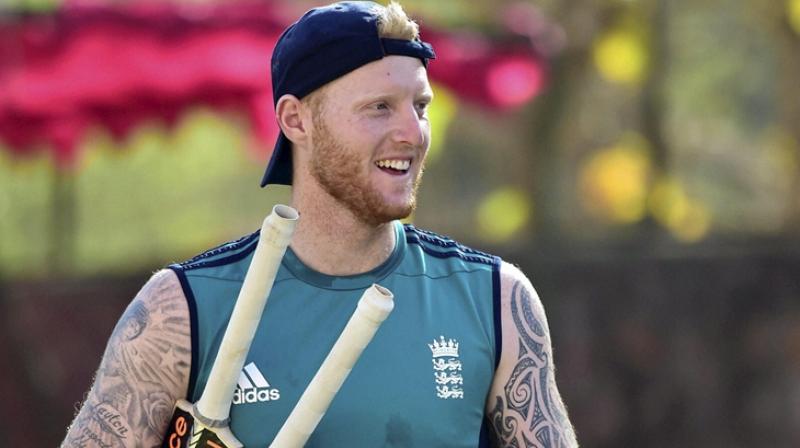
London (PTI): England's Test captain Ben Stokes is being considered as a potential replacement for Jos Buttler as the limited-overs skipper with ECB’s director of men’s cricket, Rob Key emphasising that it would be "stupid" not to explore the option, given his leadership qualities and the need to revive England’s struggling white-ball setup.
Stokes, 33, has not played ODIs since the 2023 World Cup, where he reversed his initial decision to retire from the format.
His Champions Trophy return was marred by a second hamstring tear in six months, sustained during the third Test against New Zealand.
"I think nothing's off the table really," Key was quoted saying in ESPNCricinfo. "You look at every single option and you think, right, what is the best thing to do? How is that going to impact on other things?
"Ben Stokes is one of the best captains I've ever seen. So it would be stupid not to look at him. It's just the knock-on effect of what that means.
"He's an unbelievably good tactician, which we've seen in Test cricket, but he's a leader of men. He's someone who gets the best out of people. He's someone that, when the pressure is really on, he's able to throw a blanket around the players and actually say, 'no, no, this is the way forward. Keep going with it'."
Stokes is currently in Abu Dhabi recovering with an England Lions training group and is expected to be fully fit for the summer with Durham.
Key, who was also in the UAE, believes Stokes has the ability to rejuvenate the ODI team, just as he did with the Test side.
"They're the qualities that you need in leadership. Ben's, as we know, an outstanding player, an outstanding leader. It's more about, what would that then mean to him? What would that then mean to his workload?
"We don't want to risk other things as well. But there's always a way in England, I think, where you start looking at, 'what if it goes wrong?' You've also got to think, 'what if it goes right?'. They're the decisions that I have to make."
Stokes’ rapport with Brendon McCullum, now overseeing England’s entire setup, may add weight to the idea.
Citing example of Team India model, Key believes Tests and ODIs share a strategic similarity that would work for Stokes.
"When you start looking at it, I believe that Test cricket and 50-over cricket are probably closer than T20s, which is the outlier now. So then that makes different things. We look at India and the way they play T20 cricket, and they've got all these young players coming through, but it's their Test players that are making the difference in 50-over cricket."
But it remains to be seen how injury-prone Stokes manages the demanding schedule.
England face India and Australia in crucial Test series this year, and would play ODI series against West Indies (May into June), South Africa, Ireland (both in September) and New Zealand (ahead of the Ashes).
Let the Truth be known. If you read VB and like VB, please be a VB Supporter and Help us deliver the Truth to one and all.
Telangana survey flags 89,000 child labourers, highlights caste disparities in employment
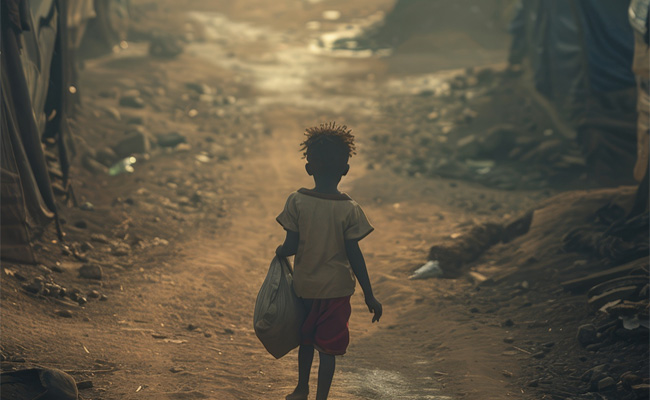
Hyderabad: A caste-based survey conducted by the Telangana government for 2024–25 has identified around 89,000 children engaged in labour across the state, with a large share belonging to Scheduled Caste (SC) and Scheduled Tribe (ST) communities.
The findings are part of the Socio, Economic, Educational, Employment, Political and Caste (SEEEPC) Survey, which covered about 3.5 crore people across 242 caste groups. According to the report, nearly one per cent of individuals below 18 years are involved in daily wage work. While the percentage appears small, officials noted that the absolute number reflects a serious concern.
The survey found that 11 per cent of identified child labourers belong to the ST Lambadi community, while 14 per cent are from the SC Madiga community. The highest incidence was reported among the ST Kolam group, where 7.2 per cent of minors are engaged in daily wage labour.
The data also revealed wider socio-economic disparities. Nearly half of the Scheduled Caste population is dependent on daily wage work, while only around 5 per cent are employed in the private sector, compared to about 30 per cent among General Castes.
State Welfare Minister Ponnam Prabhakar said the findings show that SC and ST communities remain three times more backward than General Castes, while Backward Classes are about 2.7 times more disadvantaged.
The report further noted that, on average, 31.3 per cent of people in the 25–65 age group depend on daily wage work. Among communities, the BC-A Odde group recorded the highest share at 55 per cent. In contrast, only 2.6 per cent of OC Brahmins rely on such work.
Several SC and ST communities, including Kolam, Beda, Madiga, Koya, Gond, Yerukulas and Mala Sale, were found to have among the highest proportions of daily wage earners. On the other hand, most General Caste communities and some Backward Class groups such as Goldsmiths and BC-C Christians showed lower dependence on daily wage employment.
The survey also pointed to inequalities in access to formal employment. Communities such as OC Rajus, OC Brahmins and Kapus were found to have a higher presence in private sector jobs, with up to 27 per cent of their population employed in such roles.