England opener Dawid Malan hints WC match vs Pakistan could be his "last" ODI
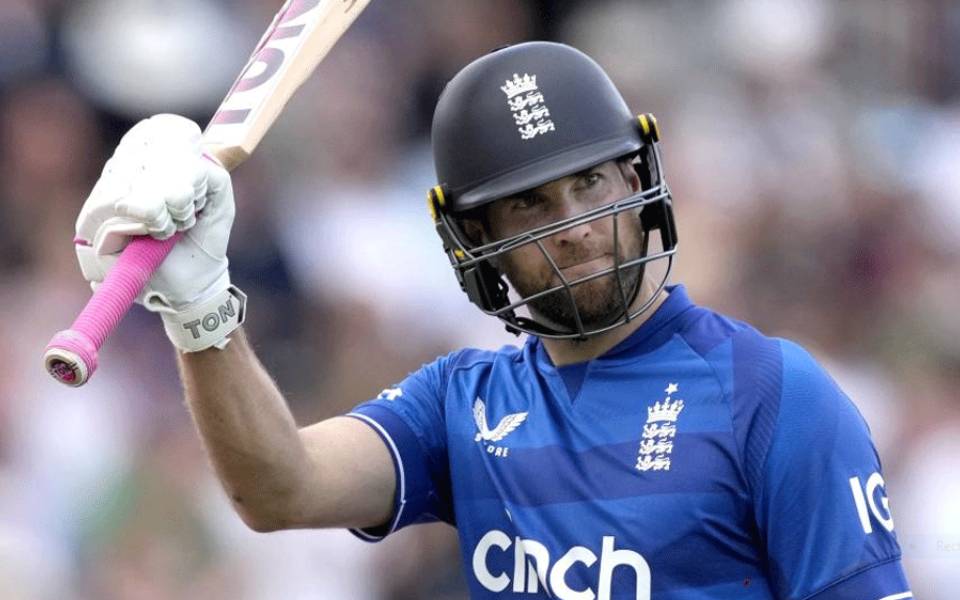
Kolkata, Nov 10: England opener Dawid Malan may have been their lone soldier in a disastrous World Cup campaign, but at 36, the second oldest member of the side feels their match against Pakistan on Saturday could be his "last" ODI.
Out of the semifinal race, the defending champions will be playing their farewell match of the World Cup at Eden Gardens as their ageing side may set for an overhaul ahead of a packed white-ball calendar.
"Yeah, I guess I'm in a unique situation being the second oldest in this team. I don't know what my future holds, whether that be my choice or the team's choice," Malan said in their pre-match media conference.
With one century and two fifties, the left-handed opener has been the top run-getter (373) for England in this World Cup.
"After this tournament probably, I have a bit of reflection time and see where I'm at and see what the future holds for me.
"Tomorrow could be the last game of cricket for England for me and it could still be the start of another journey. Who knows? We'll only find out when the dust settles," he said.
A late bloomer having made his international debut at an age of 29, Malan has been the standout white-ball cricketer for England and held the No. 1 T20 ranking.
The veteran is also the only batter to feature in England's record T20I and ODI totals -- 241/3 vs New Zealand and 498/4 against the Netherlands respectively, having scored century each.
Notwithstanding his prime numbers, Malan is well aware that his England days could be numbered and may well set for his last global tournament when they fight for another title defence in the T20I World Cup in the Caribbean and USA in June next year.
But given a choice, Malan said he would have liked to go on.
"Yeah, definitely. Playing for England means everything for me. I've made no secret of that, I've always wanted to be part of this team and play for England for as long as I can," he said.
"But ultimately you get to a stage where you have to look a little bit further ahead and what's best for maybe the team and what's best for everything else so you know I guess there are decisions to be made over the next couple of days when the dust has settled and yeah, we'll see where we end up," he added.
England head to the West Indies for a white-ball series beginning with first of the three ODIs on December 3. It follows a five-match T20I series.
England have suffered six defeats from eight matches which included a five-match losing streak to be knocked out of semifinal race.
"I guess from a physical side -- the body's quite sore. I've got to admit it's been quite long. When you're winning games of cricket it doesn't feel as sore when you're losing it, you know it starts to feel a bit heavy," he said.
"But from a batting point of view I feel like I'm playing as well as I've ever played. I feel like I'm still as good as I've ever been, and I guess that desire to keep scoring as many runs as I can is always there," he added.
From being the title holders to have been eliminated quite early, it has been a roller coaster journey for England.
"The sport changes quickly. It has a way of biting you in the backside. It creeps up on you quite quickly. We're so disappointed in the fact that we are here playing against Pakistan at Eden Gardens and we're not in the race for it," Malan said.
"It's disappointing. But we still have a lot to play for, we still have the Champions' Trophy. I don't know if we have actually qualified for that or not yet, but we still need to put in a good performance and leave with a bit of pride, because it's hurting," he signed off.
Let the Truth be known. If you read VB and like VB, please be a VB Supporter and Help us deliver the Truth to one and all.
Allahabad HC orders probe into 'reinstatement' of teacher in UP's Barabanki
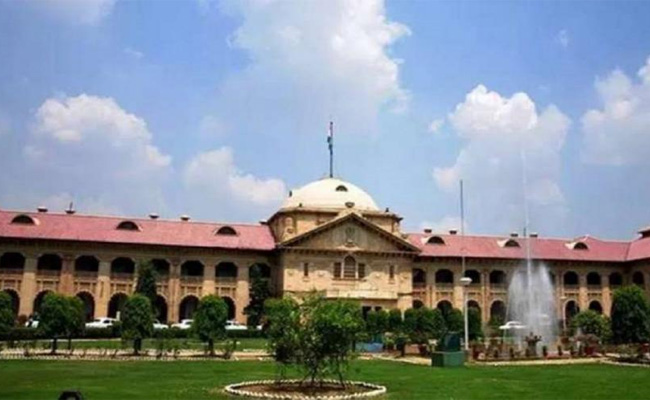
Lucknow (PTI): The Lucknow Bench of the Allahabad High Court on Friday ordered a probe by the special task force (STF) into alleged irregularities in the rejoining of a teacher at City Intermediate College in Barabanki, observing that the reinstatement appeared to be prima facie illegal.
The court also directed the recovery of the salary paid to the teacher during the disputed period.
A bench of Justice Rajeev Singh passed the order on a petition filed by the college management committee. The court expressed doubts over the roles of the District Inspector of Schools (DIOS), Barabanki, the college principal and the teacher concerned and hence, directed a detailed inquiry into the matter.
Taking note of alleged manipulation of records and misleading submissions, the court ordered the immediate transfer of the Barabanki DIOS to ensure a fair probe. It also directed the initiation of disciplinary proceedings against the then joint director of education of the Ayodhya division.
In its order, the court found that the teacher, Abhay Kumar, was initially appointed as an assistant teacher in 2018 but joined an Eklavya Model Residential School in Chhattisgarh as a lecturer in June 2024 without obtaining permission from the management. His subsequent request to retain the lien was rejected.
Despite this, he was allowed to rejoin the Barabanki College in September 2025 on the directions of the joint director of education and the DIOS, and was even paid the salary for October 2025. The court termed the rejoining "wholly illegal" and lacking any legal basis.
The bench also expressed concern over lapses in communication within the education department and directed the Uttar Pradesh chief secretary to ensure that official orders are communicated through email and WhatsApp as well, to prevent disputes.
The matter is next listed for hearing on May 28 when a compliance report is sought.