Exclusion of major sports disappointing but reduced cost of 2026 CWG is good for future: PT Usha
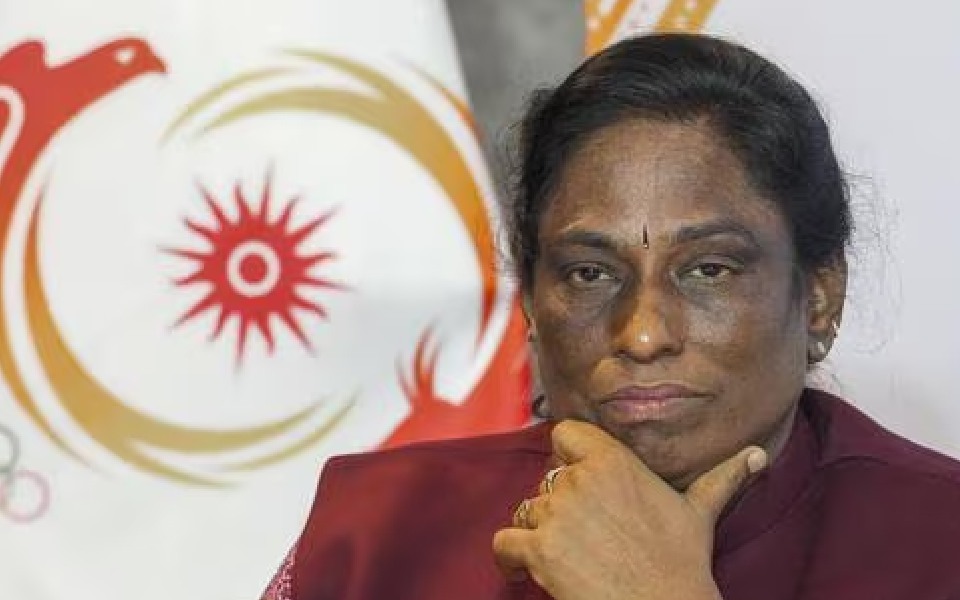
New Delhi, Oct 23: Indian Olympic Association president PT Usha feels the axing of medal-yielding sports such as wrestling, hockey and badminton from the 2026 Glasgow Commonwealth Games programme is "disappointing" for the country but the approach to reduce cost would ensure that the event continues to find hosts in future.
The 23rd edition of the Games is scheduled to take place from July 23 to August 2, marking the Scottish capital's return as host after 12 years.
Most of the National Sports Federations have been critical of Glasgow's decision to exclude hockey, badminton, wrestling, cricket, shooting, TT, and squash from the roster and have even questioned the relevance of the Games after this move.
But Usha said the reasons can't be completely ignored.
"The reduction in the sports programme for the 2026 Commonwealth Games is disappointing, but I am sure that you will understand that 2026 games serve as a bridge to the future of the CWG," Usha read out a written statement to PTI Videos on Wednesday.
Glasgow stepped in to save the Games after original host Victoria (Australia) backed out citing ballooning cost. It has less than two years to complete preparations and the organisers said they have tried to ensure that financial and operational risks are reduced by their conservative approach.
While India would lose out on a lot of medals, Usha backed the idea of reduced cost and lower environmental impact due to a pruned schedule of 10 events to be conducted at four venues within an eight-mile radius.
"The approach aims to reduce costs, lower environmental impact, and increase social benefits, such progressive and sustainable model is very exciting as it will enable more countries to host the Games in future," she explained.
"Given the limited time-frame and financial constraints, focus of CGF has been to deliver a high-quality Games in a financially responsible way, with emphasis on minimising risks and prioritising athletes and sports," said one of India's greatest athlete.
Usha said CWG grew from being a 10-sport event up until 1998 and can go back to expanding itself in future once a stable model of hosting the event is figured going forward.
"Historically, CWG featured around 10 sports and since 1998, programme has expanded to include 15 to 20 sports, and flexibility in future will be crucial for hosts," she added.
"I have had discussion with CGF president and he has assured me that exclusion of certain sports from the 2026 programme doesn't set a precedent for future games, and all CWG sports remain important to CGF, with opportunity to return in future editions," she said.
The sports programme will include Athletics and Para Athletics (Track & Field), Swimming and Para Swimming, Artistic Gymnastics, Track Cycling and Para Track Cycling, Netball, Weightlifting and Para Powerlifting, Boxing, Judo, Bowls and Para Bowls, and 3x3 Basketball and 3x3 Wheelchair Basketball.
Let the Truth be known. If you read VB and like VB, please be a VB Supporter and Help us deliver the Truth to one and all.
Allahabad HC orders FIR against Rahul Gandhi in dual citizenship case
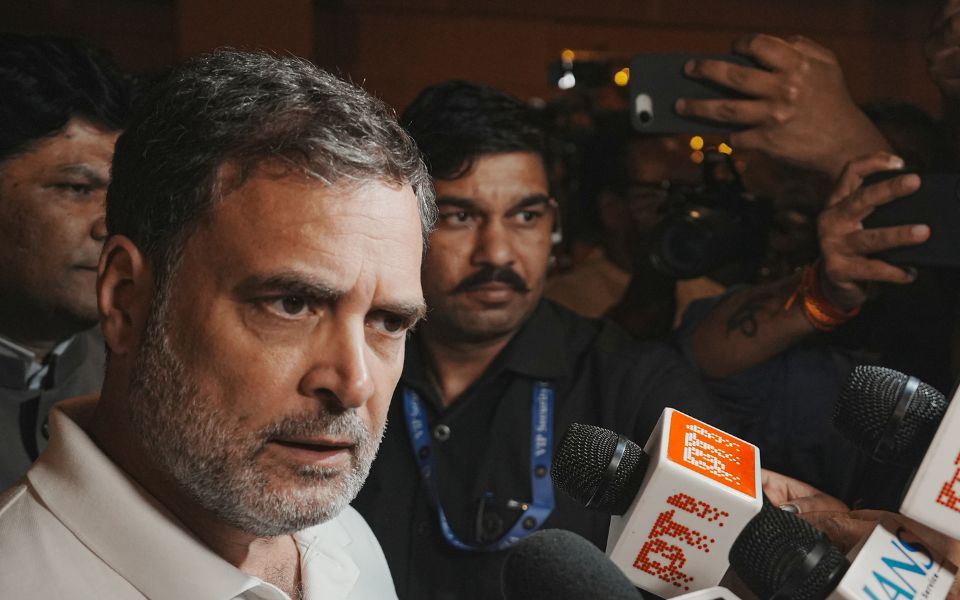
Lucknow (PTI): The Lucknow bench of the Allahabad High Court on Friday ordered an FIR be filed against Congress MP Rahul Gandhi in connection with an alleged dual citizenship controversy.
The bench permitted the state government to hand over the probe to any central probe agency after registration of the FIR.
The order was passed by a bench of Justice Subhash Vidyarthi on a petition filed by S Vignesh Shishir, who had challenged a January 28 order of a special MP/MLA court rejecting his plea for an FIR against Gandhi, the leader of the Opposition in the Lok Sabha.
The special court had earlier held that it was not competent to adjudicate on issues related to citizenship.
The petitioner, a BJP worker from Karnataka, had sought registration of an FIR and a detailed probe into the matter, levelling allegations against Gandhi under provisions of the Bharatiya Nyaya Sanhita (BNS), the Official Secrets Act, the Foreigners Act and the Passport Act.
The complaint was initially filed before the special MP/MLA court in Rae Bareli. However, on the petitioner's request, the high court transferred the case to Lucknow on December 17, 2025.
The MP/MLA court in Lucknow subsequently dismissed the plea on January 28, 2026, prompting the petitioner to approach the high court, which has now ordered registration of an FIR.
In its order, the bench said that from a bare perusal of the allegations, prima facie cognizable offences were made out against Gandhi and hence the allegations required to be investigated.
The bench said that the special court should have looked into whether the allegations prima facie made out any cognizable offences or not, but it failed to consider it.
Earlier, Deputy Solicitor General of India SB Pandey produced the central government's records in the court relating to the citizenship controversy surrounding Gandhi.
Government counsel VK Singh also consented on behalf of the UP government that the allegations prima facie made out cognizable offences.
After having a detailed hearing, the bench found that the material on records showed that Gandhi had committed "cognizable offences" in having dual citizenship, and these allegations required to be probed.
The petitioner has alleged that Rahul is a UK Citizen and incorporated a company named M/S Backops Ltd in August 2003.
It was further submitted that Gandhi categorically admitted and voluntarily declared his nationality as British, having a Director Identification ID and London and Hampshire addresses.
In his petition, Shishir claimed that Rahul submitted the company's annual returns in October 2005 and October 2006, listing his nationality as British.
Thereafter, the company was dissolved through a dissolution application in February 2009.
According to the petitioner, the material placed before the court includes records suggesting that Rahul Gandhi may have been listed as a voter in the United Kingdom and participated in electoral processes there.
During the course of the hearing, the high court earlier directed the Ministry of Home Affairs to place all relevant records, including classified documents, before the court.