Exclusion of Rinku Singh was the toughest call, he has done nothing wrong: Ajit Agarkar
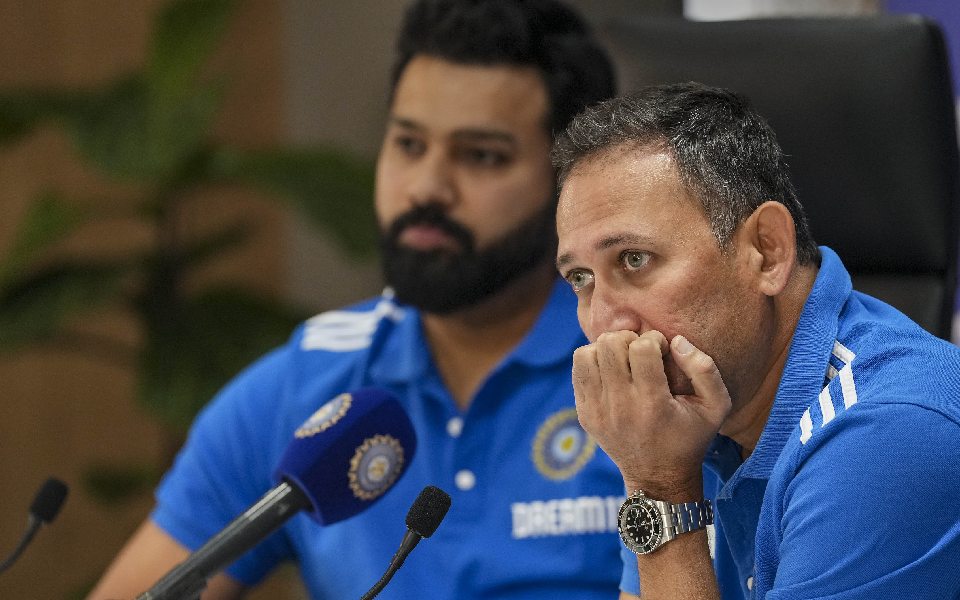
Mumbai, May 2: Chairman of selectors Ajit Agarkar on Thursday described the omission of Rinku Singh from India's T20 World Cup squad as the "toughest" call, saying the in-from swashbuckler has "done nothing wrong" and it all came down to combinations.
Rinku, Kolkata Knight Riders' big-hitting finisher from Aligarh, could not find a place in the 15-member squad as the think-tank preferred Chennai Super Kings' Shivam Dube over him.
The exclusion of Rinku, who has scored 356 runs at an average of 89 and strike rate of 176.24 in T20Is for India, became a major talking point since the Indian team's announcement two days ago and has caused a massive furore on social media.
"It (not picking Rinku) is probably the toughest thing we have had to discuss. He has done nothing wrong, not even Shubman Gill for that matter. It is not his fault that he missed out. It's about combinations," Agarkar said during a press conference here.
"A couple of wrist spinners were included to give Rohit (Sharma) more options. There are two keepers, we needed an extra bowler. It's just unfortunate. He's in the reserves, so that tells you how close he came into being in the 15. But at the end of the day, you can only pick 15 players in the squad," Agarkar added.
Rinku, who is not having a great IPL season as he is not getting to face enough balls, though made it to the list of reserves.
Rinku had been fast-tracked into the Indian T20I team after a fantastic run in the IPL last year but this season, he has managed just 123 runs in nine matches with a strike rate of 150.00, whereas Gill, captaining Gujarat Titans this time, has aggregated 320 runs from 10 matches at a strike rate of 140.97.
The left-handed Yashasvi Jaiswal has been preferred over Gill.
Meanwhile Abhishek Nayar, the head of KKR Academy and assistant coach of the franchise, did not feel Rinku was out of form and whatever runs he has scored this IPL season for KKR have been crucial for the team.
Nayar played a key role in shaping Rinku's career, especially when the batter was suffering from ACL (anterior cruciate ligament injury), and the former Mumbai cricketer also worked on his hitting skills.
"I would not agree (that it is about) IPL form. I think he has not played enough balls barring one-odd game wherein he has not got runs. He has got runs in every game which have been critical runs for us. The form has never been in question," Nayar backed his ward.
"When you look at any cricketer in world cricket or even in T20 cricket, sometimes the role you play doesn't justify what numbers you have at the end of the day.
"Just in terms of the role he plays for us and for any team, which is a finisher's role, you tend to play 8-10 balls and you look at how well he does in 8-10 balls and not how many runs he scored."
Over the last few years, Nayar has established himself as a prominent coach in domestic and franchise cricket.
"If you go back and look at his stats and his strike rate in comparison to the balls he has played, I think you will get your answer right there. It's not a form problem at all," Nayar said of Rinku.
Later on, after his press conference, India captain Rohit joined the Mumbai Indians squad for their pre-match training ahead of the clash against Kolkata Knight Riders.
Rohit was involved in a group discussion which included Tilak Varma, Suryakumar Yadav, Shreyas Iyer, KS Bharat and even Gautam Gambhir when he spotted Rinku coming towards him.
Rohit moved away from the group and spoke with Rinku for a while.
Let the Truth be known. If you read VB and like VB, please be a VB Supporter and Help us deliver the Truth to one and all.
Bantwal: SSLC student dies after electrocution
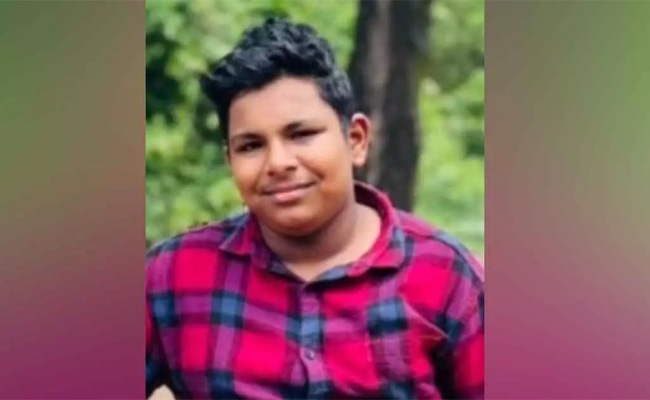
Bantwal: A 15-year-old boy died after coming into contact with an electric wire in Gadiara village on Saturday morning.
The deceased has been identified as Shaheer, son of Sharif, a resident of Neralakatte.
Shaheer, an SSLC student at Mountain View English Medium School, Puttur, had gone to his grandfather’s house in nearby Gadiara village during the school holidays. He came into contact with an electric wire and died at the scene.
He is survived by his parents, a brother, two sisters, and family members.