Former India captain Sardar Singh Announces Retirement From International Hockey
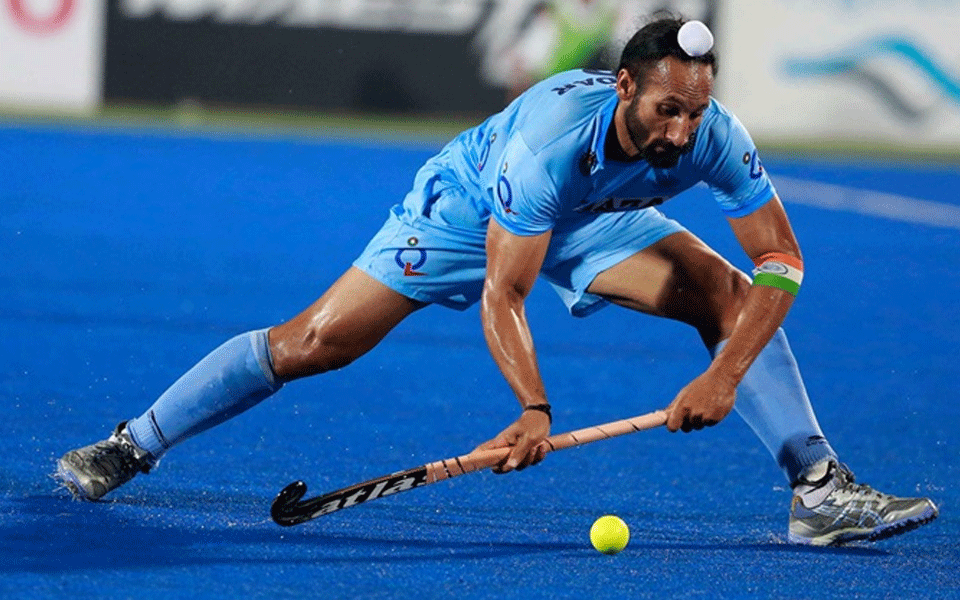
New Delhi, Sept 12: Former India hockey captain Sardar Singh decided to call time on his illustrious career, saying he had played enough in the last 12 years and now it's time for the youngsters to take over.
Sardar said he made the decision after a disappointing Asian Games where India failed to defend its title and returned with a bronze medal.
With age and speed not on his side, Sardar's performance in the Games came under the scanner.
"Yes, I have decided to retire from international hockey. I have played enough hockey in my career. 12 years is a long time. Now it's time for the future generation to take over," Sardar said.
"I took the decision after consultation with my family in Chandigarh, Hockey India and my friends. I think it's the right time to think about life beyond hockey," he added.
Interestingly, during the Asian Games in Jakarta, Sardar said he still has hockey left in him and desires to play one last Olympics in 2020 Tokyo.
However, he had a change of heart amid speculation that he was forced to retire after his name was dropped from the 25-strong core group of national campers announced by the Hockey India on Wednesday.
Asked about the dropping from the camp, Sardar evaded the question and said he would formally announce his retirement during a press conference in the national capital on Friday. Sardar made his senior debut for India against Pakistan in 2006 and since then he has been a vital cog in the Indian team's midfield.
The 32-year-old made over 350 international appearances for India and captained the national team for eight long years from 2008 to 2016 before handing the responsibility to PR Sreejesh.
Sardar was also the youngest player to captain the Indian team when he led the side at the 2008 Sultan Azlan Shah Cup. He received the Arjuna award in 2012 and Padma Shri in 2015. Sardar has represented India in two Olympics.
Sardar will leave behind a rich legacy in the sport. A fighter to the core, he came back strongly after being dropped from the Gold Coast Commonwealth Games squad. He worked hard on his fitness to roar back into the national team for the Champions Trophy, where India won a silver medal.
With age, he slowed down a bit but Sardar still is considered as one of the fittest players in the Indian team.
"Fitness is not the reason behind my decision. I am fit enough to play hockey for some more years. But there is always a time for everything and I feel it's time for me to move on in life," he said.
Sardar said he has conveyed his decision to chief coach Harendra Singh, adding he will continue to play hockey in the domestic circuit.
Hailing from Sirsa in Haryana, Sardar's career was not devoid of controversy either. Sardar was accused of rape by an Indian-origin British woman, a charge which he vehemently denied and was also given a clean chit by the special investigation team of Ludhiana Police.
Let the Truth be known. If you read VB and like VB, please be a VB Supporter and Help us deliver the Truth to one and all.
BJP has history of ‘contradictory alliances’, says BK Hariprasad
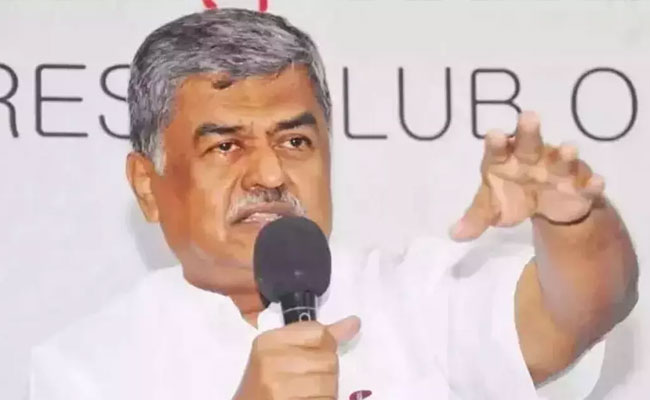
Bengaluru: Congress MLC B. K. Hariprasad has launched a sharp attack on the BJP, accusing the party of hypocrisy over its criticism of alliance politics in Tamil Nadu.
In a post on X on Friday, Hariprasad said BJP leader B. L. Santhosh criticising the Congress party’s alliance politics in Tamil Nadu was “not just laughable, but the height of political contradiction.”
He said the Congress has always joined hands with like-minded parties to protect secular and democratic values in the country.
Hariprasad questioned the BJP over several of its past and present alliances across the country. Referring to Jammu and Kashmir, Punjab, Tripura, Bihar and Maharashtra, he accused the BJP of sharing power with parties it had earlier criticised.
He alleged that the BJP had aligned with separatist and corruption-linked political forces in different states for political gains.
“The BJP, which speaks against alliances today, should first look at its own political history,” he said, adding that the party’s record was full of “contradictions and changing stands.”
Hariprasad also accused the BJP of using central agencies such as the Enforcement Directorate, Income Tax Department and CBI as political tools to target opposition leaders, topple governments and influence electoral mandates.
He further claimed that the people of Tamil Nadu had strongly rejected the BJP and its ideology in the recent election.
“Congress forms alliances to protect the Constitution, secularism and national unity, while the BJP enters into alliances only for power,” he said.