Former Tennis star Boris Becker gets two-and-a-half years in prison for bankruptcy offenses
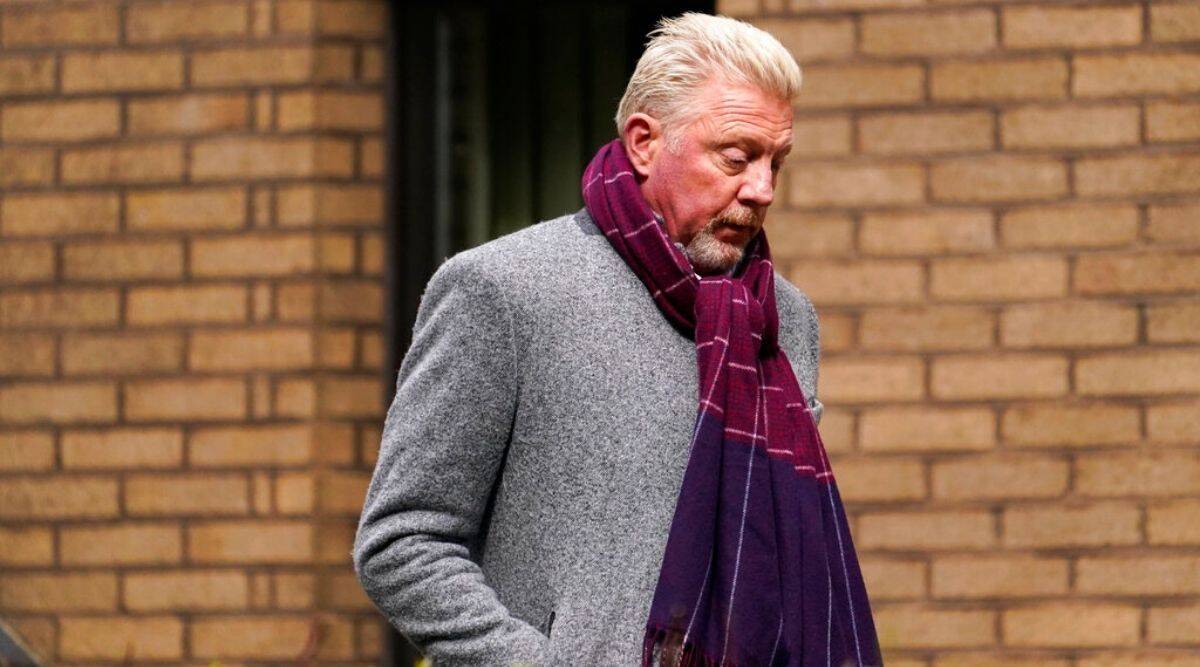
London, Apr 29: Tennis great Boris Becker was sentenced to two-and-a-half years in prison on Friday for illicitly transferring large amounts of money and hiding assets after he was declared bankrupt.
The three-time Wimbledon champion was convicted earlier this month on four charges under the Insolvency Act and had faced a maximum sentence of seven years in prison.
Judge Deborah Taylor announced the sentence after hearing arguments from both the prosecutor and Becker's attorney.
The 54-year-old German was found to have transferred hundreds of thousands of pounds (dollars) after his June 2017 bankruptcy from his business account to other accounts, including those of his ex-wife Barbara and estranged wife Sharlely Lilly Becker.
Becker was also convicted of failing to declare a property in Germany and hiding an 825,000 euro (USD 871,000) bank loan and shares in a tech firm.
The jury at Southwark Crown Court in London acquitted him on 20 other counts, including charges that he failed to hand over his many awards, including two Wimbledon trophies and an Olympic gold medal.
Becker, wearing a striped tie in Wimbledon's purple and green colors, walked into the courthouse hand in hand with girlfriend Lilian de Carvalho Monteiro.
The six-time Grand Slam champion has denied all the charges, saying he had cooperated with trustees tasked with securing his assets even offering up his wedding ring and had acted on expert advice.
At Friday's sentencing hearing, prosecutor Rebecca Chalkley said Becker had acted "deliberately and dishonestly" and that he was "still seeking to blame others."
Defense attorney Jonathan Laidlaw argued for leniency, saying his client hadn't spent money on a "lavish lifestyle" but rather on child support, rent and legal and business expenses. Becker, he told the court, has experienced "public humiliation" and has no future earnings potential.
Becker's bankruptcy stemmed from a 4.6 million euro (USD 5 million) loan from a private bank in 2013, as well as about USD 1.6 million borrowed from a British businessman the year after, according to testimony at the trial.
During the trial Becker, said his USD 50 million career earnings had been swallowed up by payments for an "expensive divorce" and debts when he lost large chunks of his income after retirement.
Becker rose to stardom in 1985 at the age of 17 when he became the first unseeded player to win the Wimbledon singles title and later rose to the No. 1 ranking. He has lived in Britain since 2012.
Let the Truth be known. If you read VB and like VB, please be a VB Supporter and Help us deliver the Truth to one and all.
It's govt's responsibility to support youth who dare to dream: Omar Abdullah
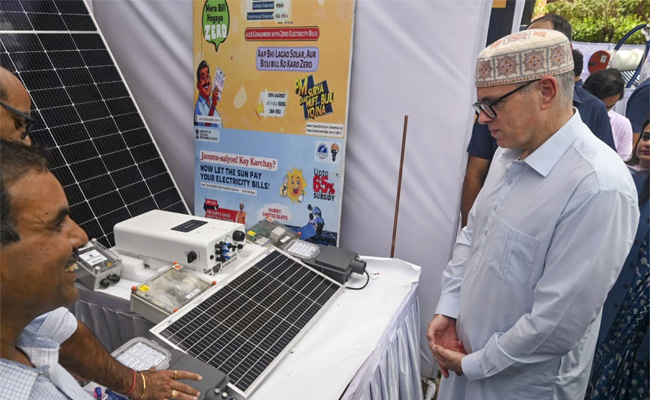
Jammu (PTI): Jammu and Kashmir Chief Minister Omar Abdullah on Monday said the government may not be able to provide jobs to everyone, but it can create an ecosystem for youngsters to become entrepreneurs and innovators.
It is the responsibility of the government to support youth who dare to dream, he said.
After inaugurating the 11th National Conference and Exhibition on Emerging and Innovative Trends in Engineering Technology (NCEEITET) at the Government College of Engineering and Technology (GCET) in Jammu, Abdullah said, “We may not be able to provide jobs to everyone, but we can certainly create an environment where our youngsters become entrepreneurs and innovators.”
The two-day conference is being organised by the GCET in collaboration with the Indian Institute of Technology-Kharagpur and the World University Consortium (WUC).
Addressing the gathering, Abdullah assured that all necessary steps would be taken to strengthen infrastructure and support systems at the GCET, ensuring that it continues to evolve as a premier institution.
The chief minister also inaugurated a new building for the School of Architecture in the college, built at Rs 19.71 crore.
Stressing the need to balance modernity with the region’s cultural and historical identity, Abdullah said, “Not every building needs to be made of glass and steel. Our structures must reflect our heritage and preserve our cultural ethos.”
Highlighting the role of emerging technologies such as artificial intelligence and machine learning, Abdullah said they could significantly improve tourism management, visitor experience and service delivery in Jammu and Kashmir.
However, he cautioned that technological advancement should complement human effort rather than replace jobs, especially in a region where unemployment remains a concern.
The chief minister said that attracting tourists to Jammu and Kashmir was not difficult, but ensuring repeat visits required consistently enriching experiences and better infrastructure across tourism segments, including pilgrimage, border and leisure tourism.
To address the infrastructure gaps in the college, Abdullah announced that funds would be provided this year for the construction of an auditorium.
He also assured support for setting up an incubation centre in GCET.
During the event, Abdullah also released the e-proceedings of the conference, comprising 28 shortlisted research papers.