Gambhir leads Delhi to Vijay Hazare semifinals
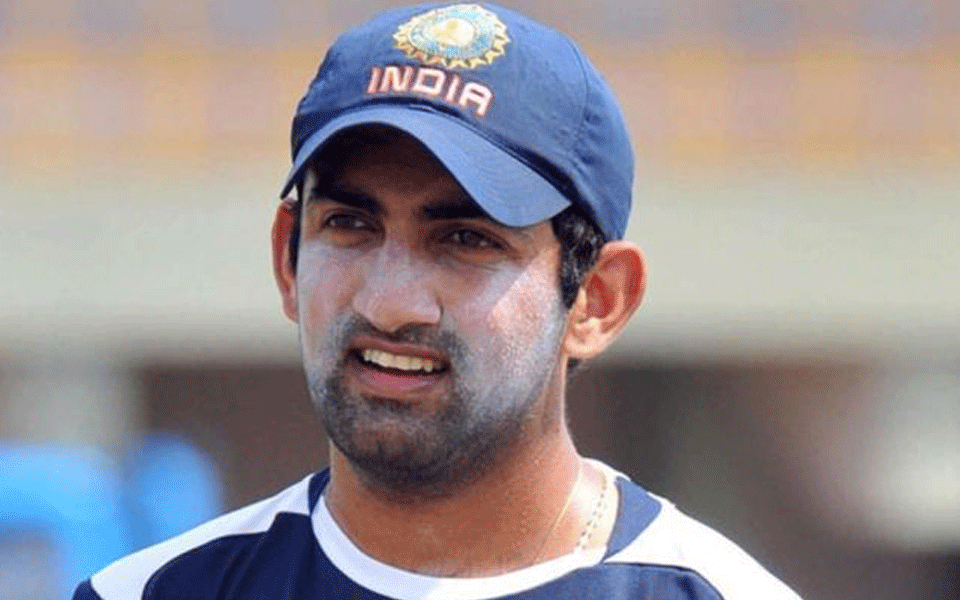
Bengaluru, Oct 14: Captain Gautam Gambhir smashed 104 off 72 balls after left-arm pacer Kulwant Khejroliya broke the backbone of Haryana batting to set-up a five-wicket win, sending Delhi into the semifinals of the Vijay Hazare Trophy here Sunday.
Batting first, Haryana were all out for 229 with Khejroliya collecting six wickets for 31 runs in 10 overs, his career-best performance in List A cricket. Navdeep Saini, with figures of three for 39, was a good foil for Khejroliya.
Birthday boy Gambhir then ensured his team cantered with a whirlwind knock comprising 16 fours. In the end, Delhi got home with 64 balls to spare and five wickets in hand. The other major contribution from the bat came from Dhruv Shorey (50 off 85).
Chasing 230, Umukt Chand (15) and Gambhir gave a good start, putting on 54 runs for first wicket before the former was caught by C N Saini off Arun Chaprana.
The skipper was at his furious best against Yuzuvendra Chahal, smashing him for three consecutive boundaries in the 16th over.
Gambhir and Shorey then put together a 118-run partnership as Delhi cruised towards the target.
After Gambhir was caught by Nitin Saini off Rahul Tewatia, Nitish Rana (37 off 28) nearly ferried the team to victory post, before getting out.
Earlier, Chaitnaya Bishnoi top-scored for Haryana with 85 off 117 balls with six boundaries and two sixes, while Pramod Chandila struck 59 off 88 balls with three boundaries and a six.
In the other quarterfinal, Mumbai sailed into the semifinals after comprehensively beating Bihar by nine wickets.
Bihar were skittled out for 69 runs in 28.2 overs with Mumbai riding high on the back of Tushar Deshpande's five-wicket haul.
He finished with figures of five for 23 in nine overs. Deshpande was ably supported by Shams Mulani who bagged three wickets after conceding 18 runs in 8.2 overs.
Opting to bat, Deshpande wreaked havoc by removing the top three batsmen - Vikram Ranjan, Vijay Bharati and Babul Kumar - leaving Bihar struggling at 29 for three.
No Bihar batsmen reached double figures, except M D Rahmatullah (18) and Babul Kumar (16).
Mumbai chased down a paltry 70-run target in 12.3 overs as openers Akhil Herwadkar (24) and star India player Rohit Sharma (33 not out) shared a 53-run stand.
Let the Truth be known. If you read VB and like VB, please be a VB Supporter and Help us deliver the Truth to one and all.
Confident we are going to win Kerala: Shashi Tharoor
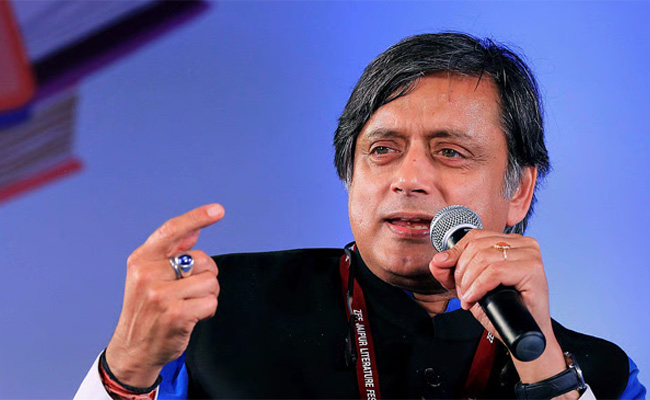
New Delhi (PTI): Congress leader Shashi Tharoor on Thursday expressed confidence in the victory of the United Democratic Front (UDF) in Kerala, saying the Congress-led alliance will win more than 75 seats out of the total 140 in the state.
Tharoor, who hails from Kerala, said he was not surprised to see the results of the exit polls, most of which predicted a victory for the UDF that has been out of power for 10 years in the state.
"We have been on the ground. I have campaigned in 59 constituencies across 12 districts out of 14. I was very confident we are going to win.
"Everything that I have picked up from not just my party colleagues and workers but also from other observers, media and others have always convinced me that we were going to score a comfortable win of above 75 seats. And all the (exit) polls have confirmed the same thing," he told reporters here.
The Thiruvananthapuram MP said he was not surprised to see the results of the exit polls but in general he was not a big fan of exit polls in India.
"Because ours is not purely a homogenous society. We have to take into account gender issue, caste issue, class issue, regional disparities. You never get a convincingly large enough sample to give an accurate poll and now there is the additional complication that we have heard about in West Bengal this year that many people are unwilling to answer the questions of the pollsters," he said.
The Congress leader said normally, it used to be below 10 per cent that people said that they would not answer.
"Even if you are a reputable exit pollster, in Bengal, one polling company has said 60 per cent of people refused to answer. So, what is the worth of a poll where 60 per cent of your respondents have not answered," he said.
Several exit polls on Wednesday predicted a comeback by the Congress-led UDF in Kerala after 10 years, dethroning the CPI(M)-led Left Democratic Front (LDF).
Polling for the 140-member Kerala assembly was held on April 9. Results of assembly elections in West Bengal, Tamil Nadu, Assam, Puducherry, besides Kerala, will be announced on May 4.