
Gifts galore for kids who abstained from toffees to buy football
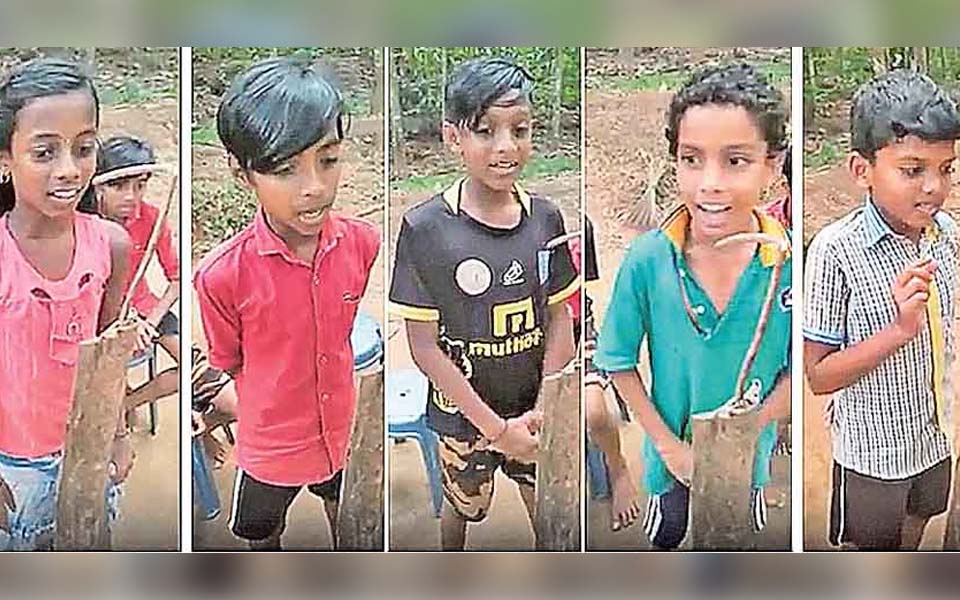
Malappuram: The 13 kids from Nilambur who held a formal meeting to discuss ways to purchase a football and jerseys have won many hearts. Moved by their act, many kindhearted persons have come forward sponsoring footballs and jerseys for the kids.
Social worker Sushanth Nilambur posted the video of the kids holding a meeting on social media on Wednesday and it went viral. So far, it has been viewed by 2.5 million people and 54,000 viewers have shared it on Facebook. In the video, the kids are seen huddled in a meeting under the auspices of president Athin and secretary Arjun to buy a football costing Rs 400 and adequate number of jerseys by saving Rs 2 everyday.
The meeting was held in the village ground and Athin and Arjun are seen seated on plastic chairs on stage. They made a makeshift microphone using the stem of a coconut leaf and a stick. In the speech, Arjun urged the kids to contribute `10 every week to purchase the football and jerseys. “From now on, stop eating chocolates. Anyway, the habit causes tooth decay. Better save that money and contribute it to the cause,” he said.
The meeting was held in a democratic way. After announcing the decision, the president asked the other members if they had any objection and gave everyone a chance to convey their opinion. All of them, including the lone girl in the team, Ananya, agreed with the decision.
“The football which we bought from the funds collected previously was damaged and that is why we need a new one. I will contribute `10 every week and we should purchase a football immediately,” she said. After the video went viral, the kids did not have to wait for months to realise their goal. First, a team from Wake Up Football Academy with their Spanish coach Prieto De Prada Celestino came there to donate two footballs.
“The effort of the kids to purchase a football really touched us. So we decided to donate footballs to encourage them. We are also ready to give them coaching,” said Nasar Kappur, managing director of the academy. Actor Unni Mukundan also made the children happy by donating jerseys. Kerala Blasters management, inspired by the kids, invited them to their camp in Kochi and offered to give them what they deserved.

Kids with coach Prieto De Prada Celestino and members of WAKE UP Football Academy | Express“An official from Kerala Blasters management contacted them after seeing the video and offered passes for the match,” said Sushanth Nilambur, who posted the video on Facebook. Though the children were really happy by the offers they received after the video went viral, this one made them really excited, said Sushanth.
“This is the first time they are watching a football match live. They had the chance to watch the match from Kerala Blasters’ box, which doubled the excitement,” he added.
Courtesy: www.newindianexpress.com
Let the Truth be known. If you read VB and like VB, please be a VB Supporter and Help us deliver the Truth to one and all.
Noida DM warns outsourcing agencies, workers against unruly conduct
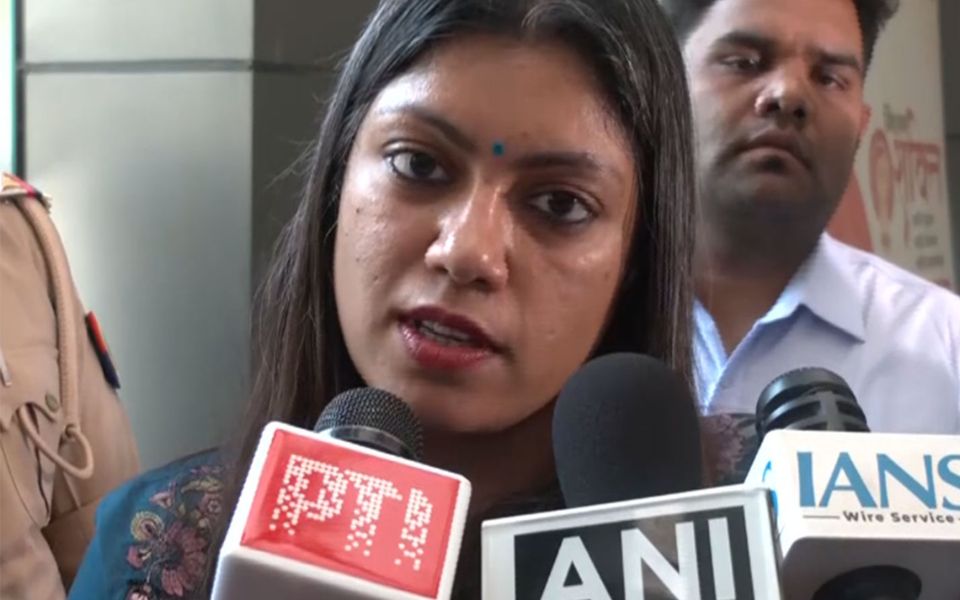
Noida (PTI): Gautam Buddh Nagar District Magistrate Medha Roopam has warned outsourcing agencies and contractors of strict action, including blacklisting and licence cancellation, in case of any unruly behaviour by them or their workers.
The warning comes in the wake of a large-scale protest by thousands of factory workers, including women, in Noida that turned violent on Monday.
Chairing a meeting with outsourcing agencies and contractors of various industrial units on Tuesday, Roopam stressed the need for 100 per cent compliance with government guidelines to maintain industrial peace in the district.
"All contractors must ensure 100 per cent adherence to government guidelines. If any unruly behaviour is exhibited by an agency, or by any of its employees or workers, the agency itself shall be held jointly responsible and in such instances, the agency may be blacklisted, and proceedings for the cancellation of its licence may be initiated," the DM said.
Referring to the revised minimum wage rates prescribed by the state government, the district magistrate said unskilled workers will receive Rs 13,690 per month, semi-skilled workers Rs 15,059, and skilled workers Rs 16,868.
She directed contractors to ensure full compliance with these wage standards and to transfer wages directly into workers' bank accounts.
Emphasising the interdependence of stakeholders, Roopam said industry, workers and employers are mutually complementary.
"The smooth operation of industries safeguards employment opportunities, while the stability of employers simultaneously ensures the future of the workforce," she said.
She cautioned that any disruption in industrial activity would adversely impact all stakeholders as well as the overall development of the state.
The district magistrate also appealed to the public not to pay heed to rumours or misleading information and urged all stakeholders to work with mutual cooperation and trust.
She assured that the state government remains committed to protecting the interests of both workers and employers, and that the administration stands ready to act promptly to resolve any issues.
_vb_76.jpeg)
_vb_00.jpeg)
_vb_80.jpeg)