Gill rested, Pandya, Shami, Thakur returned home, says Rohit ahead of 3rd ODI against Australia
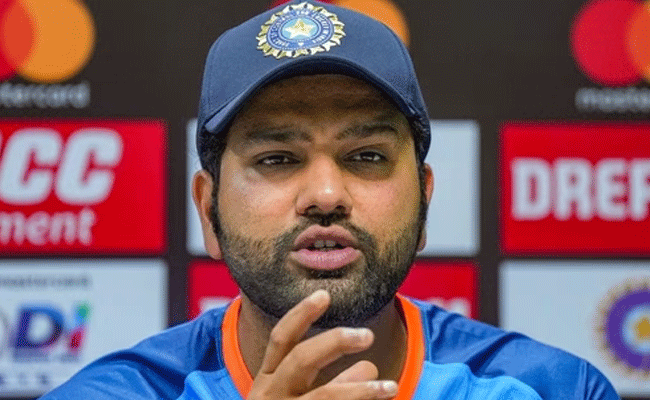
Rajkot (PTI) Indian captain Rohit Sharma on Tuesday said five players, including in-form Shubman Gill, will not be available for selection for the third ODI against Australia, as the squad has been hit by a viral sickness and some players have opted to return home.
India, who are leading the three-match series 2-0, will have only 13 players to choose from for the final ODI.
While Gill is rested, Axar Patel is recuperating at NCA from the left quadricep injury that he suffered during the Asia Cup.
Pacers Mohammed Shami and Shardul Thakur, who played the first two ODIs against the Aussies, and Hardik Pandya, who is yet to play in this series, have opted to go back to their respective homes.
"We have got a lot of players who are sick and not available, a lot of players have personal problems so they have gone home and a few of the guys have been rested as well.
"We have got 13 players at this point in time," said Rohit during the pre-match press meet.
"Obviously, Gill has been rested, Shami, Hardik and Shardul have all gone home again, personal things. Axar, obviously, is not available for this game," Rohit said.
Rohit said the viral sickness going around the group too has added to the uncertainty.
"There is a bit of viral going around in the team as well. So, there is a lot of uncertainty in the team at this point in time which we cannot help," he added.
Rohit, who enjoyed a short break as he missed the first two ODIs against Australia at Mohali and Indore, hoped that the trip back home will rejuvenate the players.
"Looking at the next few weeks it is quite important for us to look after the players and their well-being.
"So, it is okay for them to be at home at this point the reason being we want everybody to be fresh during the World Cup and hopefully they can come back fresh," he said.
Let the Truth be known. If you read VB and like VB, please be a VB Supporter and Help us deliver the Truth to one and all.
Allahabad HC orders probe into 'reinstatement' of teacher in UP's Barabanki
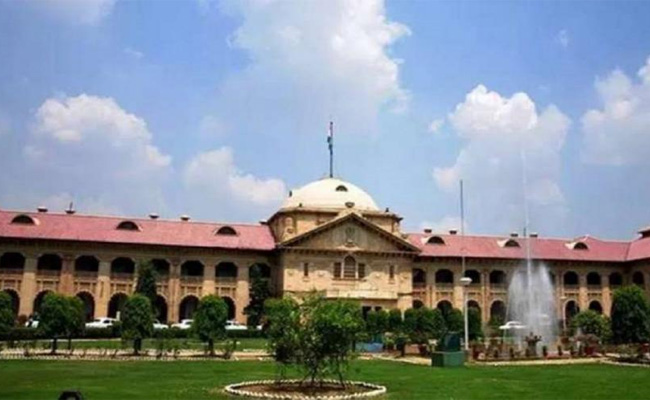
Lucknow (PTI): The Lucknow Bench of the Allahabad High Court on Friday ordered a probe by the special task force (STF) into alleged irregularities in the rejoining of a teacher at City Intermediate College in Barabanki, observing that the reinstatement appeared to be prima facie illegal.
The court also directed the recovery of the salary paid to the teacher during the disputed period.
A bench of Justice Rajeev Singh passed the order on a petition filed by the college management committee. The court expressed doubts over the roles of the District Inspector of Schools (DIOS), Barabanki, the college principal and the teacher concerned and hence, directed a detailed inquiry into the matter.
Taking note of alleged manipulation of records and misleading submissions, the court ordered the immediate transfer of the Barabanki DIOS to ensure a fair probe. It also directed the initiation of disciplinary proceedings against the then joint director of education of the Ayodhya division.
In its order, the court found that the teacher, Abhay Kumar, was initially appointed as an assistant teacher in 2018 but joined an Eklavya Model Residential School in Chhattisgarh as a lecturer in June 2024 without obtaining permission from the management. His subsequent request to retain the lien was rejected.
Despite this, he was allowed to rejoin the Barabanki College in September 2025 on the directions of the joint director of education and the DIOS, and was even paid the salary for October 2025. The court termed the rejoining "wholly illegal" and lacking any legal basis.
The bench also expressed concern over lapses in communication within the education department and directed the Uttar Pradesh chief secretary to ensure that official orders are communicated through email and WhatsApp as well, to prevent disputes.
The matter is next listed for hearing on May 28 when a compliance report is sought.