Gill, Shikhar Dhawan take India to 308/7 in first ODI against WI
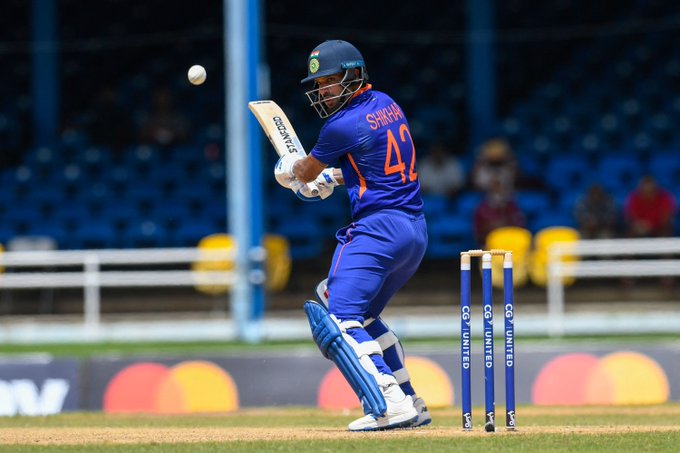
Port of Spain, Jul 22: Shubmam Gill made a classy 64 in his ODI comeback while skipper Shikhar Dhawan missed out on a hundred by three runs before the West Indies restricted India to 308 for seven in the series opener here on Friday.
Gill, playing his first ODI since December 2020, played some sublime strokes in his 52-ball knock while Dhawan (97 of 99 balls) took his time before changing gears.
Shreyas Iyer, who has had his troubles of late with the short ball, was back amongst the runs with a fluent 54 off 57 balls.
The opening duo of Gill and Dhawan shared an 119-run stand off 106 balls before the former was run out in the 18th over against the run of play. Gill, one of the most watchable batters when in full flow, was very comfortable against the fast bowlers.
Gill hooked Alzarri Joseph for a six before he delighted the crowd with a perfectly placed punch off the back foot for a boundary. He was equally attractive playing the cover drives when the ball was pitched up.
His innings comprised six fours and couple of sixes. It took a brilliant direct hit from West Indies captain Nicholas Pooran to dismiss him. It was Gill's maiden ODI fifty in what was his fourth game.
Dhawan, who only plays one format and had a lean run in England, paced his innings well with Gill going strong at the other end. The southpaw collected 10 fours and three sixes. His go-to-shot was the slog sweep off left-arm spinner Gudakesh Motie.
The other left-arm spinner Akeal Hosein impressed by getting the ball to turn sharply.
India were set for a 350-plus score but Dhawan's dismissal for the seventh time in the 90s led to a middle-order collapse with the visitors reduced to 252 for five from 213 for one.
Sanju Samson (12) squandered a good opportunity to make an impact while Suryakumar Yadav (13) fell to a loose shot.
Deepak Hooda (27) and Axar Patel (21) took India past 300 with a 42-run stand for the sixth wicket.
Let the Truth be known. If you read VB and like VB, please be a VB Supporter and Help us deliver the Truth to one and all.
Nashik court sends ‘godman’ Kharat to 3-day police custody in 7th sexual exploitation case
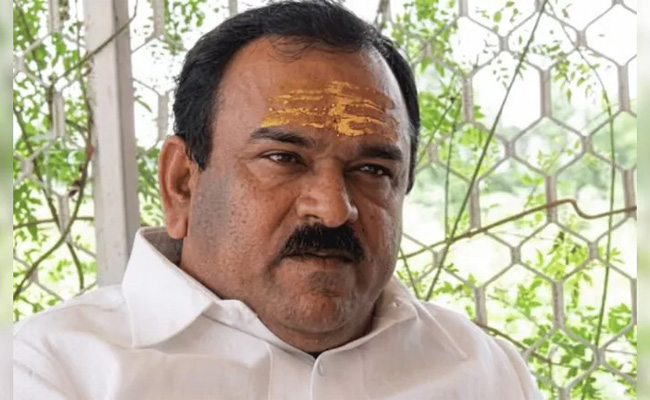
Nashik (PTI): A court in Maharashtra's Nashik has remanded self-styled astrologer-cum-godman Ashok Kharat to police custody till April 29 in the seventh case of sexual exploitation registered against him.
Kharat, a former Merchant Navy officer arrested on March 18, is accused of sexually exploiting several women and indulging in large-scale financial fraud by claiming to have divine powers and knowledge of black magic.
In the seventh case, Kharat sexually exploited a married woman who had approached him in search of solutions to her family problems.
ALSO READ: ED cracks down on suspected interstate liquor racket, raids 9 sites in Arunachal
The accused allegedly gave the woman something to drink, sexually assaulted her while her husband sat outside his office and threatened to kill her if she told anyone about it.
The Special Investigation Team (SIT), which is probing into 12 cases of sexual exploitation and financial fraud registered against Kharat in Nashik and Ahilyanagar districts, on Sunday filed a request application in the court demanding his custody in the seventh case.
Kharat was produced in court for a virtual hearing in the seventh case on Monday.
The prosecution demanded six-day police custody for Kharat, citing the discovery of a locker in Kharat's house during the investigation, from which the police recovered two blank cheques and other documents, all of which have to be probed.
The court agreed to the prosecution's demand and remanded Kharat to three-day police custody till April 29 in the case.
Kharat has been at the centre of a political firestorm, as he was well-connected, and photographs of him with political leaders and other important members of society have been surfacing in mainstream and social media since his arrest.