Golden double for Jaismine and Minakshi at World Boxing C'ships; India sign off with 4 medals
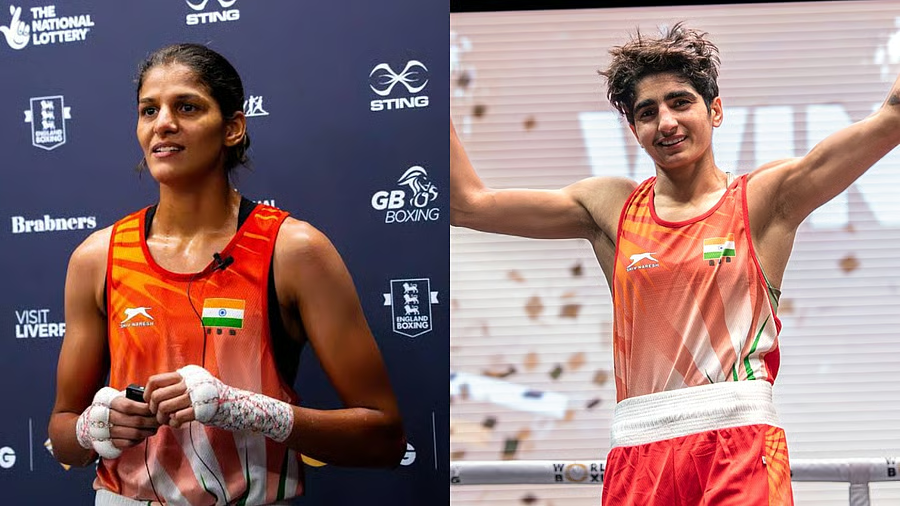
Liverpool, Sep 14 (PTI): Jaismine Lamboria and Minakshi Hooda cemented their place in Indian boxing history here, clinching World Championship titles with gritty wins as the country capped off its best-ever campaign in the women's section on foreign soil.
Jaismine outclassed Paris Olympics silver medallist Julia Szeremeta of Poland in the 57kg summit clash late on Saturday night, prevailing 4-1 on the judges' scorecards (30-27, 29-28, 30-27, 28-29, 29-28) to end her stupendous campaign with a golden flourish.
"I have no words to describe how I am feeling," Jaismine told PTI.
"I had got out in the quarterfinals in the previous two Worlds, but I got the boost from the World Cup win and I decided I want to win one-sided matches. I just concentrated on my strategy and game."
Debutant Minakshi followed suit a day later on Sunday, out-punching Paris Olympics bronze medallist Nazym Kyzaibay of Kazakhstan by the same margin in the 48kg final to exact revenge for her World Cup loss in July.
Adding to the glory were Nupur Sheoran (80+kg) and the seasoned Pooja Rani (80kg), who signed off with silver and bronze medals respectively, in non-Olympic weight categories.
India thus ended with a haul of four medals, the best-ever in an overseas edition.
With their victories, Jaismine and Minakshi joined an illustrious list of Indian world champions featuring six-time winner Mary Kom, two-time champion Nikhat Zareen, Sarita Devi, Jenny RL, Lekha KC, Nitu Ghanghas, Lovlina Borgohain and Saweety Boora.
Jaismine shines bright
Competing in her third World Championships, the 24-year-old Jaismine grew steadily into the bout. After a relatively sedate start where both pugilists sized each other up, it was Szeremeta who drew first blood, prodded into action by the referee.
The much shorter Pole, who had lost the Olympic final to gender-row boxer Lin Yu-ting, was fast and precise, using defensive manoeuvres to dart in and out. She negotiated Jaismine's long reach to win the opening round 3-2.
But the Indian came roaring back in the second. Adjusting her rhythm, she began controlling the distance, evading Szeremeta's advances, and unleashing crisp combinations that swayed all the judges in her favour.
Jaismine employed the jab with authority while defending stoutly.
When the final verdict was announced, the usually serene Jaismine let out a brief yell, raising her hand before graciously embracing her crestfallen opponent. At the medal ceremony, her eyes glistened as the Indian national anthem reverberated through the arena.
Her's is the only medal that came in Olympic weight category.
Minakshi packs a punch
In her final bout, Minakshi made the most of her physical advantage, using her long reach to pepper Nazym Kyzaibay with sharp shots and keep the multiple World Championships medallist at bay.
The 24-year-old from Rurki looked composed on the back foot, landing clean straight punches, even as the more experienced 31-year-old Kazakh pressed forward with aggression.
After dropping the opening round, Kyzaibay came out firing in the second, resorting to body blows and even pinning Minakshi to the ropes to edge the round 3-2.
But Minakshi was quick to respond. Sensing the shift, she raised her aggression in the third, lunging forward with authority and taking the fight to her seasoned opponent.
Nupur walks away with silver
Nupur walked away with silver after a narrow 2-3 defeat to Poland's technically astute Agata Kaczmarska.
Despite enjoying a substantial height advantage, Nupur could not impose herself on the contest. She started brightly but Kaczmarska countered with relentless aggression, weaving through her reach and landing body blows that wore the Indian down.
As the bout progressed, Nupur grew hesitant to throw punches. The defining moment of the bout came in the final round when the Pole unleashed a stunning uppercut, enough to tip the verdict 3-2 in her favour.
Pooja signs off with bronze
Pooja signed off with a bronze medal after going down to local favourite Emily Asquith by a 1-4 split verdict in the 80kg semifinals.
Pooja began on the front foot, leading after the first round with her measured combinations. But Asquith adapted swiftly, changing her game plan to negate the 34-year-old's rhythm.
The local star pressed forward with sharper counters and cleaner execution, reversing the tide of the contest.
Let the Truth be known. If you read VB and like VB, please be a VB Supporter and Help us deliver the Truth to one and all.
Real Madrid fines Valverde and Tchouaméni half a million euros each for altercation
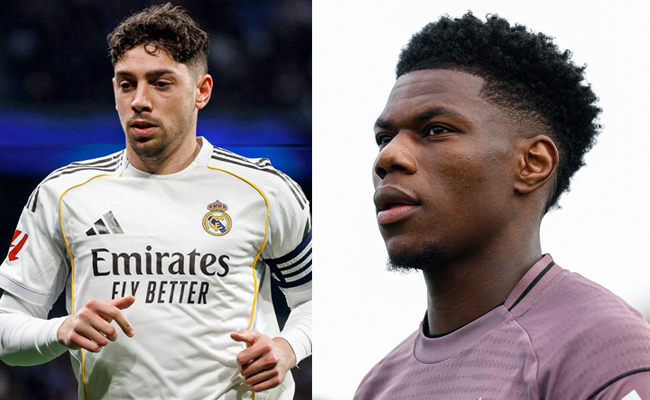
Barcelona (AP): Real Madrid slapped players Federico Valverde and Aurélien Tchouaméni with half-a-million-euro ($588,000) fines on Friday for their altercation during practice.
The massive fines came a day after the midfielders tussled when the team trained. Valverde said in a post on social media on Thursday that no punches were thrown. But Valverde knocked his head on a table and he suffered a small cut that required a brief hospital visit.
On social media, Valverde initially called it a “meaningless fight” with a teammate and said “everything has been blown out of proportion."
His employers, however, considered it a significant enough breach of team discipline to nail both Valverde and Tchouaméni with fines that bite even the bank account of a top soccer player. The half-a-million euro penalties reflect the reputational damage the club was enduring in a chaotic end to a disappointing season.
In a statement, the 15-time European champion said its disciplinary action was concluded after both players expressed to the club “their complete remorse for what happened and apologized to one another.”
Madrid added they also apologized to their teammates, the coaching staff and club supporters, as well as showing their willingness to accept whatever disciplinary action the club deemed “opportune.”
Tchouaméni was back training with Madrid on Friday, two days before they play at Barcelona in a clasico. Madrid has to win otherwise Barcelona will be crowned La Liga champion.
After being notified of the fine, he posted a public apology to the club and its fans on social media.
“What happened this week in training is unacceptable,” Tchouaméni wrote. "I say this while thinking about the example we are expected to set for young people, whether in football or at school.
“Above all, I am sorry for the image we projected of the club.”
Valverde was not at practice due to the head knock.
Both players are set to play in the World Cup next month, with Tchouaméni playing for France and Valverde for Uruguay.
Chaotic end to a poor season
===================
The run-in between the players, who for seasons have played side by side in Madrid's midfield, came after they argued this week in previous training sessions. But tempers boiled over on Thursday. Spanish media was rife with reports that the players previously disagreed over the club's decision to let coach Xabi Alonso go after just months on the job.
It was not the only altercation involving Madrid players during training this week. Álvaro Carreras confirmed he was in a “minor” incident with a teammate. Spanish media said he and fellow defender Antonio Rüdiger got into a scuffle.
Álvaro Arbeloa, the coach who was promoted from Madrid's reserve team when Alonso was fired in January, will face tough questions on what went wrong inside the changing room when he gives a press conference on Saturday ahead of the clasico at Camp Nou.
Madrid is facing a second consecutive campaign without a major trophy amid rumors in the Spanish media that club president Florentino Pérez is considering bringing back Jose Mourinho to straighten out his underperforming team.