Hangzhou Asian Games opens with futuristic ceremony
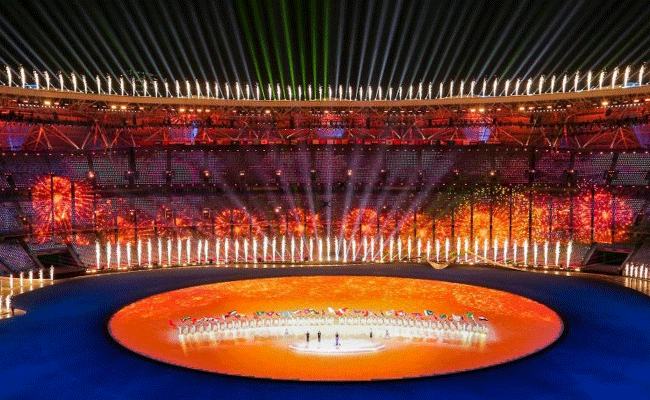
Hangzhou (PTI): Blending elements of artificial intelligence and eco-friendly technology, the Hangzhou Asian Games began here on Saturday with a one-of-a-kind opening ceremony, headlined by a futuristic light show and a digital torch relay.
The dazzling programme, held amid a diplomatic row over the denial of entry to three Indian athletes from Arunachal Pradesh, was a melange of technology, cultural history of China, and the spirit of the continent's unity.
In keeping with the main theme of 'Tides Surging in Asia', the ceremony was about the intermingling of China, Asia and the world in the new era, as well as the unity, love and friendship of the Asian people.
The water element through the surging tide of Qiantang river -- which flows through Hangzhou -- was the underlying theme of the grand evening which lasted more than two hours.
The ceremony sought to portray a distinctly Chinese and an uniquely Asian flair, capturing the country's cultural heritage and romantic imagery through the blending of its thousands of years old civilization and modern technology, through stunning visuals.
It portrayed the efforts of China's path to modernisation in a presentation that combined Eastern aesthetics and a viewpoint that connects with a global audience.
The technological might of China was written all over with the lighting of the cauldron -- the Games' Flame -- being done in a unique way.
Digital technology was utilised as torchbearers in the virtual and physical worlds jointly lighted the cauldron.
3-D dual aerial performance technology was also used for the first time in a major stadium while depicting the tidal bore of the Qiantang river. Two performers, one male and one female, danced in the air and closely interacted with the tidal bores which appeared on the LED ground display.
A variety of tidal bores, including a scissor-shaped bore, a lineal bore, a back-flowing bore, and a bore resembling the scales of a fish, rose and fell on the LED ground display.
Chinese President Xi Jinping declared the Games open as more than 12,000 athletes from 45 countries gear up to fight for top honours till October 8.
The Olympic Council of Asia's (OCA) acting president Randhir Singh, International Olympic Committee (IOC) head Thomas Bach, heads of several countries, officials of National Olympic Committees and host of other dignitary were present on the occasion.
Singh urged the athletes to respect fellow athletes and the judges, and take part in the Games in the spirit of friendship and fair competitions.
The Games are being held belatedly due to a surge in Covid cases in China last year.
In keeping with the concept of 'Green Asian Games' or carbon-neutral Games, the opening ceremony used digital fireworks instead of real ones. It, nevertheless, created a thrilling atmosphere.
The nearly-packed 80,000 capacity 'Big Lotus' stadium was decked up elegantly for the occasion and welcomed the athletes from the participating countries, including India, with loud cheers.
After three wushu players from Arunachal Pradesh were denied visa by the Chinese government, India had cancelled the visit of its sports minister Anurag Thakur. Indian Olympic Association President PT Usha was not present as she is currently in Paraguay as part of a Parliamentary delegation, though other officials attended the ceremony.
Loud cheers greeted the nearly 100 Indian athletes and officials as they marched into the stadium, led by flag-bearers Harmanpreet Singh and Lovlina Borgohain. The Indian contingent walked out for the athletes' parade in eighth position.
From the tennis team, only Ramkumar Ramanathan participated in the parade since the other players have matches on Sunday
The male athletes were clad in bandhgala jacket and khaki kurta while their female counterparts donned high-necked blouse and khaki-textured saree made from recycled fabrics.
India is fielding 655 athletes in the Games.
To begin with, the theme 'Water in Autumn Glow' depicted water as the heart and soul of Hangzhou, where water comes in many forms -- West Lake, Qiantang Tidal Bores, the thousand-year-old Beijing-Hangzhou Grand Canal, and the water conservation system of the Archeological Ruin of Liangzhu City.
In a bid to use culture as a medium of blending the power of technology and the beauty of art inspired by traditional Chinese culture, the opening ceremony combined the flavour of Hangzhou, Zhejiang province imagery and elements unique to the country.
Through innovative modern technologies, the ceremony also showcased the attractiveness, appeal and unique nature of Eastern aesthetics, as well as the profound impact culture has, the power of science, and the encompassing reach of art.
After around an hour-long protocol part of the ceremony, a cultural programme of 30 minutes and a laser show enthralled the crowd. That was followed by the lighting of the Cauldron and playing of the official song.
As September 23 falls on Autumn Equinox, or the Qiufen, one of China's 24 solar terms, it's the country's time to celebrate the harvest and welcome guests from around the world.
The Ruins of Ancient Liangzhu City, a sacred site in China's civilization and also a UNESCO Heritage site, from where the torch relay began, was also highlighted and 19 pieces of jade cong were used to represent the number of editions of the Asian Games.
The cultural programme part had sections on the natural beauty and 'timeless grace' of Hangzhou and other cities of southern China, including Ningbo, Shaoxing, Suzhou and Wenzhou where a few events of the Games are also being held.
Instead of the traditional single torchbearer lighting the Cauldron, digital torchbearers were involved for the first time in a moment when the virtual and the real worlds meet.
Many individuals were selected as digital torchbearers to carry the hopes and dreams of hundreds of millions of people in Asia, join in as torchbearers in the final leg at the venue and light the Cauldron together.
By hosting the continent's biggest multi-sporting event, China has heralded its opening from the pandemic with a giant competition, the largest ever in its history.
No doubt, the Olympics is the pinnacle multi-sporting event in the world but more athletes compete in the Asian Games, with over 12,000 taking part in Hangzhou.
About 11,000 participated in the Tokyo Olympics two years ago and about 10,500 will do so in the next year's Paris Games.
The 2018 Asian Games had seen a little over 11,000 athletes taking part, which will be surpassed in Hangzhou.
Besides Hangzhou, the 19th edition of the continental showpiece will be held in five other cities -- Huzhou, Ningbo, Shaoxing, Jinhua and Wenzhou.
Forty-five nations and territories in Asia will compete for 481 gold medals from 40 sports and 61 disciplines, including Esports which is making its debut in the Games.
Competitions in football, volleyball, cricket, rowing, sailing and modern pentathlon began even before Saturday's opening ceremony.
Let the Truth be known. If you read VB and like VB, please be a VB Supporter and Help us deliver the Truth to one and all.
Allahabad HC orders probe into 'reinstatement' of teacher in UP's Barabanki
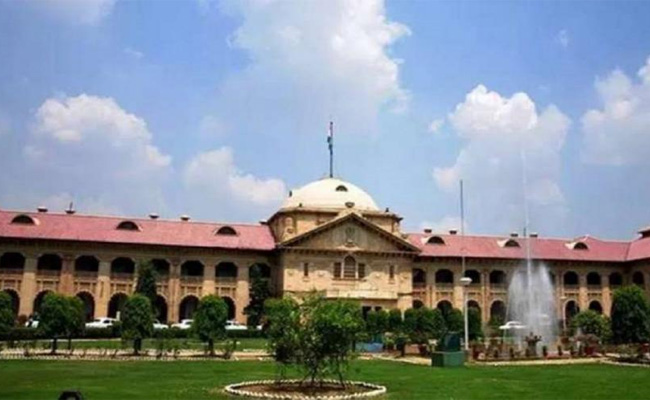
Lucknow (PTI): The Lucknow Bench of the Allahabad High Court on Friday ordered a probe by the special task force (STF) into alleged irregularities in the rejoining of a teacher at City Intermediate College in Barabanki, observing that the reinstatement appeared to be prima facie illegal.
The court also directed the recovery of the salary paid to the teacher during the disputed period.
A bench of Justice Rajeev Singh passed the order on a petition filed by the college management committee. The court expressed doubts over the roles of the District Inspector of Schools (DIOS), Barabanki, the college principal and the teacher concerned and hence, directed a detailed inquiry into the matter.
Taking note of alleged manipulation of records and misleading submissions, the court ordered the immediate transfer of the Barabanki DIOS to ensure a fair probe. It also directed the initiation of disciplinary proceedings against the then joint director of education of the Ayodhya division.
In its order, the court found that the teacher, Abhay Kumar, was initially appointed as an assistant teacher in 2018 but joined an Eklavya Model Residential School in Chhattisgarh as a lecturer in June 2024 without obtaining permission from the management. His subsequent request to retain the lien was rejected.
Despite this, he was allowed to rejoin the Barabanki College in September 2025 on the directions of the joint director of education and the DIOS, and was even paid the salary for October 2025. The court termed the rejoining "wholly illegal" and lacking any legal basis.
The bench also expressed concern over lapses in communication within the education department and directed the Uttar Pradesh chief secretary to ensure that official orders are communicated through email and WhatsApp as well, to prevent disputes.
The matter is next listed for hearing on May 28 when a compliance report is sought.