Hardik Pandya and wife Natasa Stankovic officially part ways
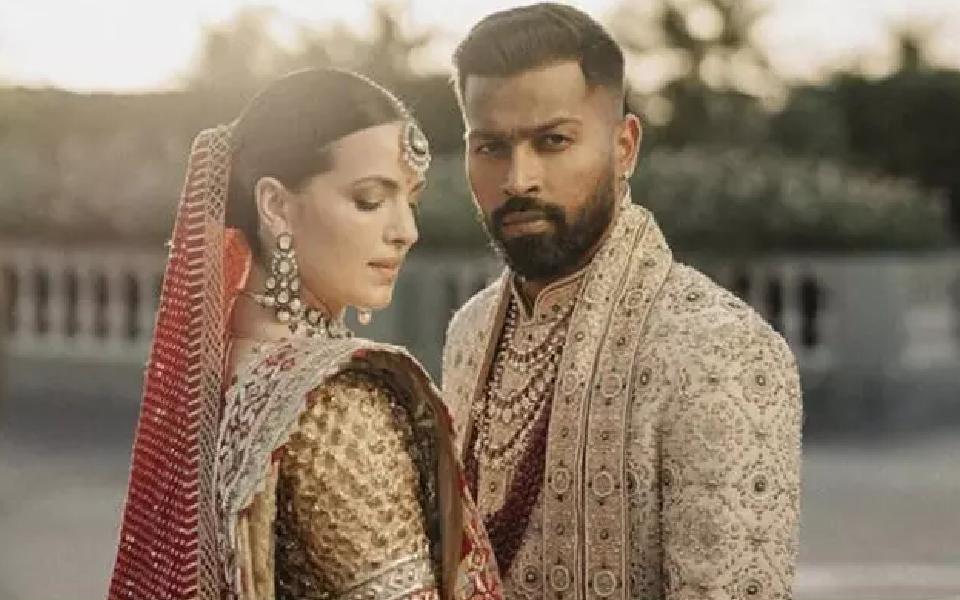
New Delhi, Jul 18: Star India all-rounder Hardik Pandya, on Thursday, announced his separation with wife Natasa Stankovic after a relationship of four years.
The couple disclosed the decision in a joint statement on their official Instagram accounts.
Pandya and Stankovic got married on May 31, 2020, and welcomed their first child, son Agastya on July 30 of the same year.
They renewed their wedding vows in the presence of close friends and family on February 14, 2023 in Udaipur in a grand celebration.
"After 4 years of being together, Natasa and I have decided to mutually part ways. We tried our best together and gave it our all, and we believe this is in the best interest for both of us. This was a tough decision for us to make, given the joy, mutual respect and companionship we enjoyed together and as we grew a family," the couple said in the joint statement.
"We are blessed with Agastya, who will continue to be at the centre of both of our lives and we will co-parent to ensure that we give him everything that we can for his happiness."
The couple has asked for privacy during this difficult time.
"We sincerely request your support and understanding to give us the privacy during this difficult and sensitive time," the statement read.
Stankovic, who is Serbian origin, is a model and actress based out of Mumbai. She made her debut in Bollywood films with the political drama Satyagraha, directed by Prakash Jha.
View this post on Instagram
View this post on Instagram
Let the Truth be known. If you read VB and like VB, please be a VB Supporter and Help us deliver the Truth to one and all.
Allen, Raghuvanshi, Green power KKR to 29-run win over GT
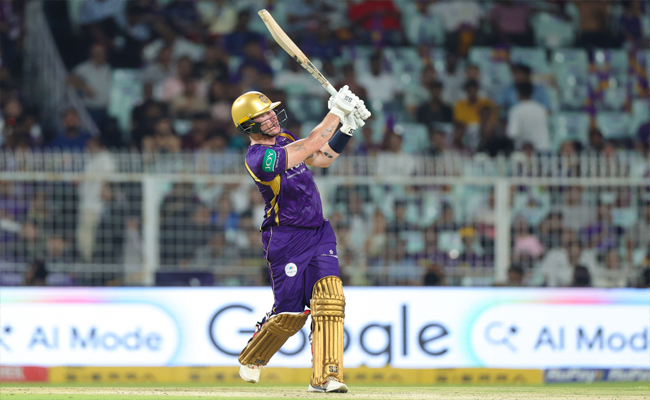
Kolkata (PTI): Finn Allen blasted a 35-ball 93, while Angkrish Raghuvanshi hit an unbeaten 44-ball 82 as Kolkata Knight Riders kept their playoff hopes alive with a 29-run win over Gujarat Titans in the IPL match here on Saturday.
Sent in to bat, Allen went on a six-hitting spree, smashing 10 maximums and four boundaries to add 95 off 41 balls with Raghuvanshi (82).
Raghuvanshi then shared another 108 off 53 balls with Cameron Green (52 not out) to power KKR to a challenging 247 for 2.
In reply, GT could manage 218-4, riding on skipper Shubman Gill's 49-ball 85 and a 35-ball 57 from Jos Buttler. Opener Sai Sudarsan was retired hurt but returned to make a 28-ball 53 not out.
Sunil Narine (2/29) claimed two wickets and Saurabh Dubey snapped one for KKR.
For GT, Mohammed Siraj (1/50), Sai Kishore (1/38) were the wicket-takers.
Brief Score:
KKR: 247 for 2 in 20 overs (Finn Allen 93, Angkrish Raghuvanshi 82 not out, Camero Green 52 not out; Mohammed Siraj 1/50).
GT: 218 for 4 in 20 overs (Shubman Gill 85, Sunil Narine 2/29).