Hardik Pandya back in Mumbai Indians after intense drama: Reports
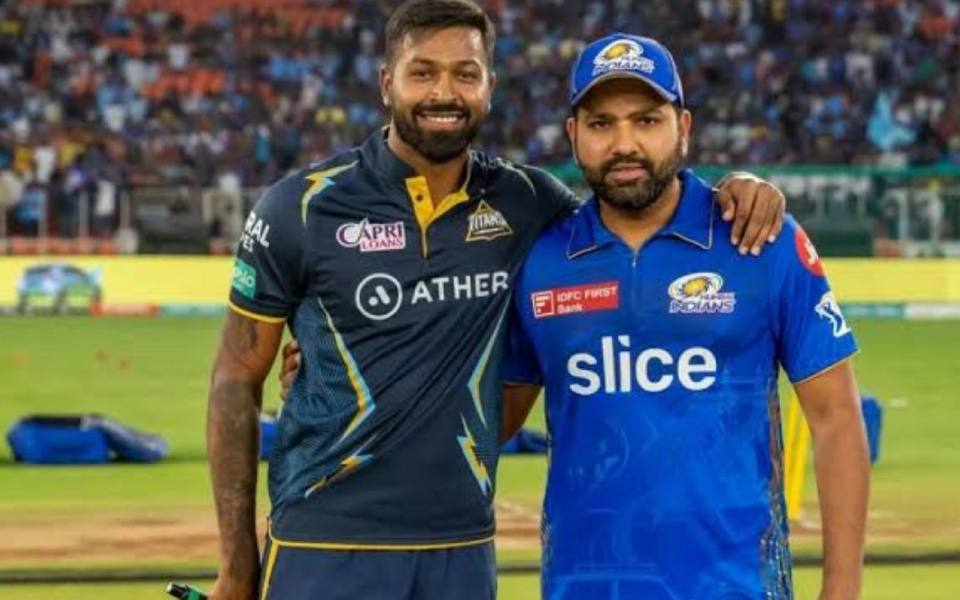
New Delhi, Nov 26: India's T20I captain Hardik Pandya on Sunday returned to his "spiritual home" Mumbai Indians after an all-cash deal trade-off with Gujarat Titans was formally completed following 72 hours of intense drama.
On Sunday at 5 pm, the IPL retention window was closed and at that point, Gujarat Titans named their IPL-winning captain in the retention list raising a lot of eyebrows.
However it was learnt that the formal paperwork wasn't yet completed and hence IPL and BCCI didn't give greenlight of approval for the most anticipated move of this transfer season.
"Yes, Hardik's trade off got completed after 5 pm. The deal is now formalised and he is a MI player. It's been a tripartite all cash deal. MI have traded their all-rounder Cameron Green to RCB in an all cash deal. After that they had requisite funds to settle an all-cash deal with Gujarat Titans and procure Hardik's services," a senior BCCI official and IPL Governing Council member told PTI on conditions of anonymity.
It must be mentioned that Green was bought by MI for a whopping Rs 17.5 crore during last auction and hence the money required to buy Hardik wasn't available till that deal was inked.
Pandya was picked by Gujarat Titans before 2022 auction from the list of available players for the two new franchises -- GT and Lucknow Super Giants.
His reported fee was Rs 15 crore and he led the side to back-to-back finals, winning the championship in maiden year and losing a thriller to CSK in 2023.
Mumbai Indians, who have one of the most systematic team building process, have roped in Pandya with a long term plan in mind as there will be mega auction in 2025 and every franchise will try to build a new team with a young core.
However with India's ODI and Test captain Rohit Sharma still very much in the mix and perhaps franchise's biggest icon with five titles under his belt, it would be interesting what kind of decision the owners and top management with regards to leadership.
This must be mentioned that those in the know of things had an inkling that Pandya after two years at Titans wanted to move back to the franchise from where he had made a name and played seven seasons.
The lure of captaining IPL's most popular franchise with biggest fan base was also a reason apart from building his brand as a national skipper in one of the formats.
Let the Truth be known. If you read VB and like VB, please be a VB Supporter and Help us deliver the Truth to one and all.
CM Suvendu hints at delimitation in West Bengal

Kolkata (PTI): West Bengal Chief Minister Suvendu Adhikari on Friday hinted at the possibility of a delimitation exercise in the state, stating that the number of constituencies in the state could increase, requiring the construction of a new assembly building.
Adhikari made the remarks in the assembly after the election of Rathindra Bose as the speaker.
Addressing the House, he said the assembly infrastructure may need major changes in the coming years.
"There is a need for several reforms in the future. State government officials present here today are witnesses to this historic session. If delimitation takes place, the number of assembly seats may increase substantially. In that case, we may need to construct a new assembly building," he said.
Adhikari's remarks are being seen as significant with the Centre's attempt to push for a nationwide delimitation exercise.
A Constitution Amendment Bill to implement reservation for women in legislatures in 2029 and increase the number of Lok Sabha seats was defeated in the Lower House on April 17.
Adhikari's remarks have also triggered speculation about whether West Bengal could eventually witness a delimitation exercise similar to the one carried out in Assam in 2023.
Opposition parties in Assam had alleged that the exercise there reduced the significance of minority voters.