Hardik Pandya can be India captain post 2023 WC if he wins 1st ODI vs Australia: Sunil Gavaskar
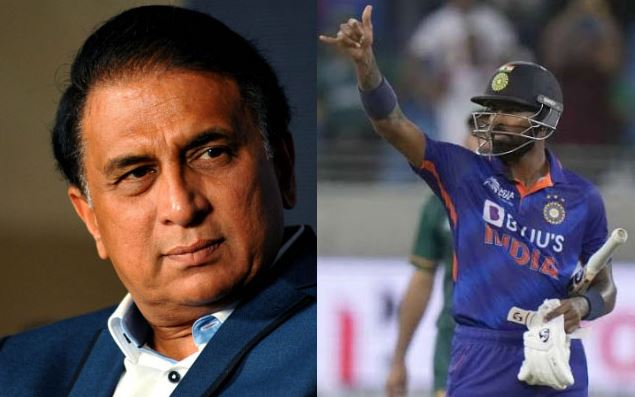
Mumbai, Mar 14: Former India captain Sunil Gavaskar reckons Hardik Pandya can stake claim for leadership role in one-dayers too after the World Cup this year, provided his side emerges victorious against Australia in the first ODI here on Friday.
With regular skipper Rohit Sharma set to miss the first ODI at the Wankhede Stadium due to family commitments, Pandya has been named the stand-in captain for the contest.
The 29-year-old all-rounder, who captained Gujarat Titans to title win in their maiden appearance in the Indian Premier League 2022 season, is already the incumbent leader for India in the shortest format.
Gavaskar told Star Sports, "I have been very impressed with his captaincy at the T20 level for the Gujarat Titans and for India when he is captaining the T20 side. I do believe that if he wins the first game in Mumbai, then you can almost stamp him as the India captain once the World Cup is over in 2023."
Gavaskar said Pandya's presence in the middle-order is essential for India.
"He can be an impact player as well as a game changer in the middle-order. Even for the Gujarat team, he was promoting himself up the order knowing that this is the time when the team needed some momentum and push, and he would do that," Gavaskar said.
"So, someone who is prepared to take on responsibility, lead from the front, and who will not ask the players to do something that he wants to do himself, is highly crucial," he said.
Gavaskar added that Pandya's captaincy style also makes him a favourite among the players.
"What you see with Hardik Pandya as a captain is a sense of comfort with the rest of the team. Maybe, it's the way he handles the players, puts his arm around the players He just seems to give the players a sense of comfort.
"That's so important... to give a player a sense of comfort so that he can go and play his natural game. I think he encourages them, which is a wonderful sign."
Meanwhile, former India player and commentator Ajit Agarkar has backed Rohit to fire with the bat once he links up with the Indian squad.
"His record speaks for itself. You do not need to say anything about Rohit's performance in white ball cricket. He has taken a slightly different approach at times, trying to be the aggressor at the top of the order," Agarkar said.
"Maybe, he changed it a little bit in the last series, giving himself a little more time and got the hundred. I just hope he plays every game that India plays from now on, every one-day, because you want your captain out there to just have a pattern of play," he added.
Let the Truth be known. If you read VB and like VB, please be a VB Supporter and Help us deliver the Truth to one and all.
Allahabad HC orders probe into 'reinstatement' of teacher in UP's Barabanki
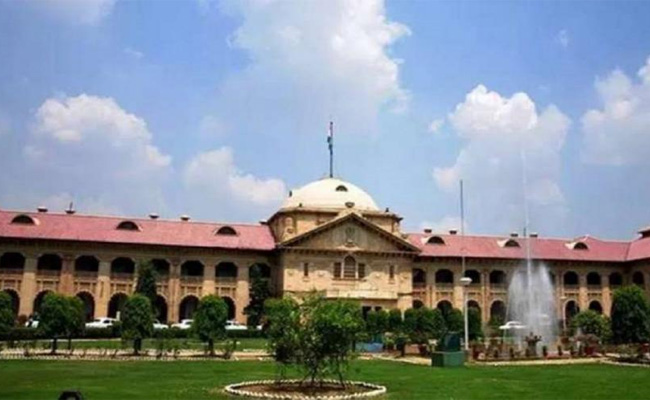
Lucknow (PTI): The Lucknow Bench of the Allahabad High Court on Friday ordered a probe by the special task force (STF) into alleged irregularities in the rejoining of a teacher at City Intermediate College in Barabanki, observing that the reinstatement appeared to be prima facie illegal.
The court also directed the recovery of the salary paid to the teacher during the disputed period.
A bench of Justice Rajeev Singh passed the order on a petition filed by the college management committee. The court expressed doubts over the roles of the District Inspector of Schools (DIOS), Barabanki, the college principal and the teacher concerned and hence, directed a detailed inquiry into the matter.
Taking note of alleged manipulation of records and misleading submissions, the court ordered the immediate transfer of the Barabanki DIOS to ensure a fair probe. It also directed the initiation of disciplinary proceedings against the then joint director of education of the Ayodhya division.
In its order, the court found that the teacher, Abhay Kumar, was initially appointed as an assistant teacher in 2018 but joined an Eklavya Model Residential School in Chhattisgarh as a lecturer in June 2024 without obtaining permission from the management. His subsequent request to retain the lien was rejected.
Despite this, he was allowed to rejoin the Barabanki College in September 2025 on the directions of the joint director of education and the DIOS, and was even paid the salary for October 2025. The court termed the rejoining "wholly illegal" and lacking any legal basis.
The bench also expressed concern over lapses in communication within the education department and directed the Uttar Pradesh chief secretary to ensure that official orders are communicated through email and WhatsApp as well, to prevent disputes.
The matter is next listed for hearing on May 28 when a compliance report is sought.