Harmanpreet's brace, Sreejesh's heroics help India beat New Zealand 3-2 in Olympic opener

Tokyo: Harmanpreet Singh scored a brace and veteran goalkeeper P R Sreejesh stood like a wall in the closing minutes as the Indian men's hockey team overcame a late surge from New Zealand to eke out a close 3-2 win in its opening Olympic Games match here on Saturday.
Harmanpreet (26th and 33rd minutes) scored a double for India, while Rupinder Pal Singh (10th) was the other goal-getter for the eight-time former champions, currently ranked fourth in the world, in the Pool A match at the Oi hockey stadium here.
For the eighth-ranked New Zealand, Kane Russell scored from a penalty corner in the sixth minute before Stephen Jenness (43rd minute) reduced the margin of defeat later in the match.
India will next play mighty Australia on Sunday.
The Indians were shocked in the sixth minute when Russell found the top right corner of the Indian goal past Sreejesh with a fierce flick.
Even though he didn't score, striker Mandeep Singh was a live-wire for India upfront and earned a penalty corner for his side, which resulted in a penalty stroke from which Rupinder drew parity in the 10th minute.
New Zealand were not to be left behind as they gave the Indian defence a run for its money securing four consecutive penalty corners but wasted all.
From a counter-attack, Gurjant came close to handing India the lead but his effort was saved by New Zealand goalkeeper Leon Hayward.
Four minutes into the second quarter, Hayward again came to the scene when he kept away India skipper Manpreet Singh's lob from a one-on-one situation.
But six minutes later, Harmanpreet gave India a 2-1 lead at the half-time.
Three minutes after the change of ends, Harmanpreet was again in the thick of things when he converted his second penalty corner of the day with a precision strike.
India secured another penalty corner minutes later but this time Harmanpreet's effort was saved by the Kiwi defence.
But the match came to life when Jenness scored with a lovely finish past Sreejesh in the near post in the 43rd minute.
Three minutes from full time, Lalit Upadhayay's strike from top of the circle was blocked brilliantly by Hayward to keep New Zealand in the hunt.
It was all New Zealand in the final few minutes of the game as they pressed hard for the equaliser and in the process earned three penalty corners in quick succession but Sreejesh came to India's rescue making some brilliant saves to keep the opponents at bay.
With 24 seconds to go, New Zealand secured another penalty corner but once again the experienced Sreejesh came to India's rescue and helped his side secure full points from the game.
Let the Truth be known. If you read VB and like VB, please be a VB Supporter and Help us deliver the Truth to one and all.
People are voting fearlessly in West Bengal this time: PM Modi
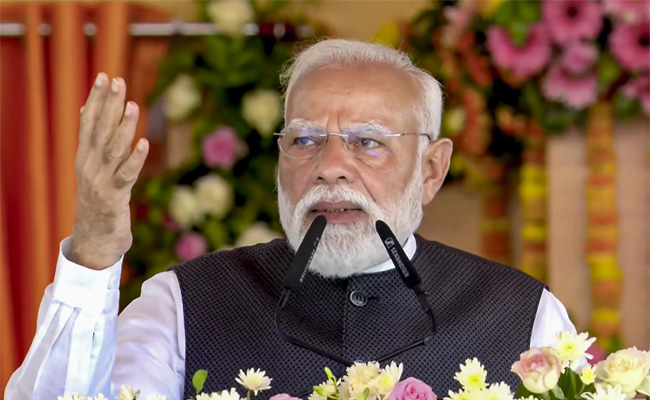
Hardoi (UP) (PTI): Prime Minister Narendra Modi on Wednesday said voters
are casting their vote in West Bengal this time in a "fearless atmosphere", which was unimaginable in the past six or seven decades.
He also asserted that the assembly poll results on May 4 will further strengthen the resolve of a developed India.
Voting is underway in 142 constituencies of West Bengal in the second and final phase of polling.
Addressing a gathering after the inauguration of the Ganga Expressway here, Modi said today marks an important day in the festival of democracy.
"Voting for the second phase is underway in Bengal, and reports indicate a massive turnout, with people stepping out in large numbers just like in the first phase. Images of long queues at polling stations are flooding social media, reflecting the enthusiasm of the people to exercise their democratic right," he said.
"What we are witnessing in Bengal today is unprecedented which was difficult to imagine in the past six to seven decades, a fearless environment where people are voting without fear," he said.
The prime minister said this is a powerful symbol of the country's Constitution and the strengthening of democracy.
"I express my gratitude to the great people of Bengal for being so aware of their rights and participating in large numbers," he said.
With several hours of voting still left, the prime minister urged the people of Bengal to continue participating in this democratic festival with the same enthusiasm.
Modi said in the recent Bihar Assembly elections, the BJP and NDA achieved a historic and decisive victory.
"Just yesterday, results of local body elections in Gujarat showed that the BJP secured victories in nearly 80 to 85 percent of municipalities and panchayats.
"The results on May 4 will further strengthen the resolve of a developed India and will infuse new energy into the pace of development of the country."
The first phase of polling for 152 seats -- out of the 294-member West Bengal assembly -- was held on April 23.
The counting of votes for assembly polls in Kerala, West Bengal, Puducherry, Assam and Tamil Nadu will take place on May 4.