Hazlewood ruled out of WTC final vs India due to side strain; Neser gets call-up

London, Jun 4: Australian fast bowler Josh Hazlewood was on Sunday ruled out of the World Test Championship final after failing to recover from the side strain he picked up during his IPL stint, dealing a huge blow to his side ahead of the marquee match against India.
The WTC final is scheduled at the Oval from June 7-11.
Pacer Michael Neser replaced Hazlewood in the squad as the selectors hoped that the latter will recover to be fit for the Ashes series.
"Josh was very, very close to being given the green light but we are cognisant that our upcoming schedule means this is not a one-off Test match for us," Chair of Selectors George Bailey was quoted as saying in cricket.com.au.
Hazlewood had sustained the side strain during his injury-marred stint with Royal Challengers Bangalore (RCB) in the recently-concluded IPL in which he played only three games without much success before flying back home.
Hazlewood had returned to bowling upon his return in Sydney, since scans had shown no damage or injury.
The five-Test Ashes series in England will start on June 16, and Hazlewood, who has already missed a plenty of Test cricket action for Australia, will get more time to be ready for the all-important series.
"This (break) will give Josh an ideal preparation leading into Edgbaston. With six Test matches in a little over seven weeks we will need all of our fast bowling assets." Bailey added.
Neser has been playing in the County Championship for Glamorgan this season and has been in fine rhythm, having taken 14 wickets in his last three games which includes 7/32 against Yorkshire. He has played two Tests for Australia and has got seven wickets.
"Michael's County form has been strong and knowing that he was going to be close by allowed for him to keep playing and for us to be able to call on him. He is a great strength to have as part of the fast bowling group," the former Australian skipper said.
However, it is fast medium bowler Scott Boland, who looks a more likely first XI starter in Hazlewood's absence, in conditions which suits seam-up, hit-the-deck the type of deliveries.
Coach Andrew McDonald said while his side is eager to win their maiden WTC title, the tight turnaround to the five-Test Ashes campaign remains a consideration in managing their fast bowlers.
"Definitely consideration for (the schedule) - we don't want to go too far ahead," McDonald told reporters.
Even though Hazlewood is considered one of the pillars of three-man Australia pace attack, the 32-year-old has not featured regularly in Test cricket, playing only four of the last 19 matches owing to a spate of injuries.
"We have got the WTC final to play, which we are excited about, but on the back of that we have to quickly turn our attention to England and the Ashes. There are short turnarounds there. That's nothing we are not used to.
"So, there'll always be considerations around management I'd say there'd be some moving parts amongst the quicks."
Let the Truth be known. If you read VB and like VB, please be a VB Supporter and Help us deliver the Truth to one and all.
SC asks states, UTs to prepare action plan to implement guidelines for intensive care services
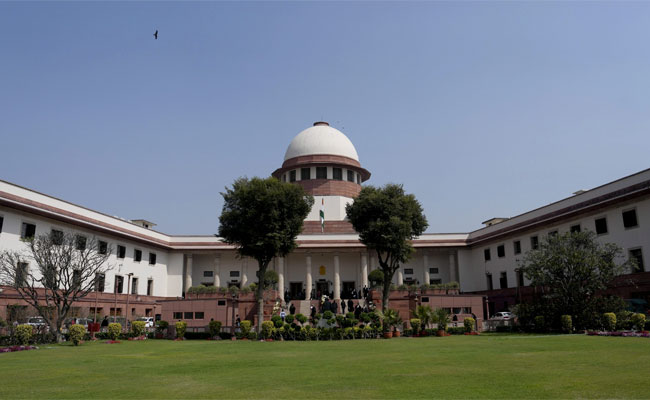
New Delhi (PTI): The Supreme Court has asked all the states and Union Territories to prepare a "realistic and practical" action plan to implement the guidelines necessary as a minimum standard for intensive care units.
The apex court was informed that "Guidelines for Organisation and Delivery of Intensive Care Services", on which there is consensus and which is practical, implementable and necessary as a minimum standard for an ICU, has been prepared.
A bench of Justices Ahsanuddin Amanullah and R Mahadevan said copies of the guidelines should be shared with all the states and UTs.
"Moving further, as an immediate measure, let all the additional chief secretaries/secretaries ... heading the department of health and medical education in the states and the UTs, convene a meeting of all experts involved in this exercise to prepare an action plan for implementation of the guidelines. Such a plan shall be realistic and practical," the bench said in its April 20 order.
The top court was hearing a matter relating to healthcare services, including guidelines for the treatment of patients in the ICU or critical care unit.
The bench said five basic issues shall be identified and prioritised in the first instance.
"The challenge ... lies in determining what ought to be treated as absolutely essential and mandatory; accordingly, an initial list of five basic requirements, in terms of priority, relating to both manpower and equipment/logistics, shall be prepared," it said.
It said a methodology should also be formulated for implementation on the ground, and more importantly, a mechanism to ensure compliance and monitoring of the implementation.
"We expect the exercise to commence immediately and the first meeting to be held within one week from today. We direct that the meeting shall be attended personally by the concerned additional chief secretary/secretary ... heading the department of health and medical education in the states and the UTs," the bench said.
It said the report prepared pursuant to the deliberations should be forwarded by the respective states and UTs to the Secretary of the Department of Health, Government of India, who in turn would circulate it to all the states and UTs.
The bench said thereafter, a meeting of all concerned should be convened where a final common agreed draft shall be prepared and circulated.
"A final report/blueprint/recommendation shall be prepared, which shall be placed before this court on the next date," it said, adding that the entire exercise should be completed within three weeks.
"Let the Ministry of Health, Government of India, formally issue the guidelines placed before us today, to the states and UTs concerned by way of an advisory. A copy of it shall also be uploaded on the website of the Ministry of Health, Government of India," the bench said, while posting the matter for further hearing on May 18.
During the hearing, it was suggested that for future requirements, the nursing staff should be trained to handle such situations since they remain with the patient round the clock, unlike doctors who may visit periodically.
"We fully endorse the suggestion, which is not only pragmatic but also imperative. Accordingly, the Indian Nursing Council and the Para Medical Council of India are impleaded as party respondents," the bench said.
It said on the next date, the newly added respondents shall come up with a plan indicating how they propose to augment the courses or curriculum and training imparted by them so that persons emerging from institutions recognised by them are capable of managing and handling situations in the ICUs.