History man Nadal sweeps to 12th French Open and 18th Grand Slam title
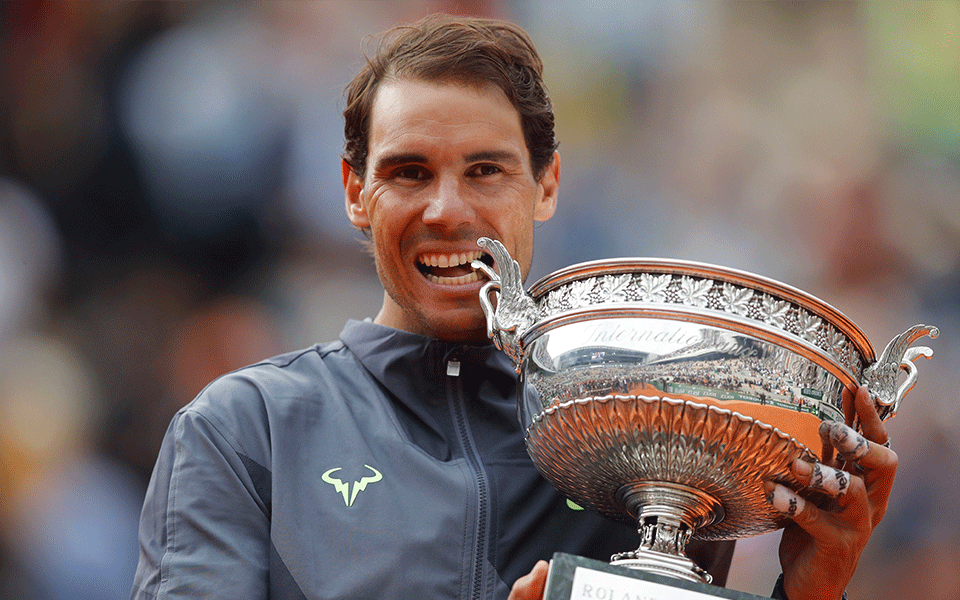
Paris, June 9: Rafael Nadal swept to an historic 12th Roland Garros title and 18th Grand Slam crown on Sunday with a 6-3, 5-7, 6-1, 6-1 victory over Austria's Dominic Thiem.
The 33-year-old Spaniard becomes the first player, man or woman, to win the same Slam 12 times after seeing off a brave challenge from a weary Thiem in a repeat of the 2018 final.
Nadal is now just two behind Roger Federer's all-time record of 20 majors and three ahead of Novak Djokovic who was knocked out by Thiem in the semi-finals.
The world number two also took his Paris record to an astonishing 93 wins and just two losses having previously won the title in 2005-2008, 2010-2014, 2017 and 2018.
Sunday's triumph confirmed the 'Big Three' stranglehold on the Grand Slams having shared the last 10 between them.
It also gave Nadal an 82nd career title and 950th match win.
In a 53-minute first set of brutal hitting and raw physicality, it was Thiem who broke first for a 3-2 lead.
But the 25-year-old's joy was short-lived as Nadal retrieved the break in the sixth game before racing away with the next three games to pocket the opener.
Thiem, who had beaten his opponent four times on clay in his career, failed to claim a single point off Nadal's first five service games of the second set.
However, the dogged Austrian pushed and pushed, forced Nadal into three rushed groundstrokes and, from nowhere, broke to take the second set.
It was the first set he had managed to take off Nadal at Roland Garros after three previous defeats.
Nadal was riled by the insult.
He swept the first 10 points of the third set, carving out a double break for 3-0 before sweeping to a third break for the set.
Thiem, bidding to become just Austria's second Grand Slam champion after Thomas Muster won in Paris in 1995, had played four successive days to reach Sunday's final and the toll was slowly telling.
He wasted break points in the first and third games of the fourth set and Nadal pounced to stretch to 3-0.
That was soon 5-1 and the relentless barrage continued with Nadal taking the title on a second match point when Thiem fired a return long.
Let the Truth be known. If you read VB and like VB, please be a VB Supporter and Help us deliver the Truth to one and all.
CJI's advice to aspirant: Join the bar, become a lawyer, don't hanker for judicial services post
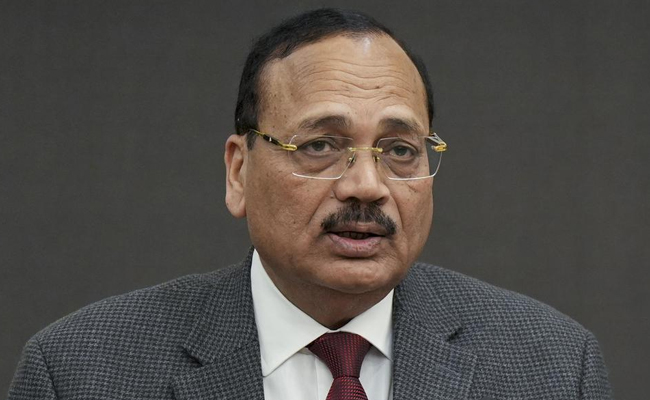
New Delhi (PTI): She came to the Supreme Court seeking a re-evaluation of her paper in the examination for joining judicial services as a magistrate. What she got instead was a rejection — and a candid confession by the Chief Justice that he too had wanted to join the judicial services in his youth but was advised by a senior judge to become a lawyer instead.
A bench comprising Chief Justice Surya Kant and Justice Joymalya Bagchi on Friday dismissed a plea filed by Prerna Gupta, the judicial services aspirant.
As Gupta pressed her case, the CJI intervened and said, "Let me share my personal story and I hope you will go happily as we cannot allow your petition."
He recounted his time as a final-year law student in 1984 when he wanted to become a judicial officer. As per requirement, he cleared the written test and was set to appear for an interview.
Judicial services is one of the two routes to become a judge after initially joining as a magistrate in lower court and thereafter rising through the ranks to become judge in a high court and possibly the Supreme Court.
The other route is to join the Bar, which means becoming a lawyer, and after building a reputation be picked from the Bar to become a judge at a senior level.
By the time the CJI's exam results came out, he had started practising at the Punjab and Haryana High Court when he was called for the interview.
The senior-most judge on the interview panel happened to be a judge before whom he had recently argued two significant matters.
"One of the matters was Sunita Rani vs Baldev Raj, where he had allowed my appeal in a matrimonial case and set aside the decree of divorce granted by the District Judge on the ground of schizophrenia," he noted.
Before the interview could take place, the judge called the young Surya Kant to his chamber and asked, 'Do you want to become a judicial officer?'
"I said 'yes.' He immediately said, 'Get out from (my) the chamber.'"
The courtroom fell silent as the CJI Justice described his initial heartbreak.
“I came out trembling. All my dreams were shattered. I thought he had snubbed me and that my career was over,” the CJI said.
However, the story took another turn the following day and the judge summoned him again, this time offering a piece of advice that would change the trajectory of his life.
“He said, ‘If you want to become (a judge), you are welcome. But my advice is, don’t become a judicial officer. The Bar is waiting for you,’” Justice Surya Kant recalled.
The CJI said he decided to skip his interview and didn't even tell his parents at first, fearing their disappointment, and instead chose to dedicate himself to his practice as an advocate.
“Now tell me did I make a bad right or bad decision,” the CJI asked and the litigant lawyer left the court with a smile on her face despite her case being dismissed.
Encouraging the petitioner to look toward the future rather than dwelling on the re-evaluation of a single paper, Justice Surya Kant said, "The Bar has much to offer."